- Home
- United Kingdom
- Westminster
About Westminster
For LGBTQ+ travellers, that political symbolism matters.
Westminster is not a nightlife district in the way that some other London neighbourhoods are; instead, its importance lies in visibility, representation, and proximity to the institutions that shape rights in the UK.The wider United Kingdom has a long and complex LGBTQ+ history.
Rights for lesbian, gay, bisexual, transgender, and queer people have advanced significantly over time, even as current assessments note that progress is not always linear.
In that context, Westminster stands out as the place where national decisions are made, making it especially relevant to travellers interested in civic life, equality, and the public history of LGBTQ+ rights.The district’s most recognisable landmarks also underscore that political and ceremonial role.
The Palace of Westminster, which houses the UK Parliament, is on the UNESCO World Heritage List, and the nearby Jewel Tower is the only surviving part of the original medieval palace.
Buckingham Palace is also closely associated with Westminster as the monarch’s official London residence.
For visitors interested in the relationship between public institutions and social change, these sites offer a concentrated view of how power is staged and historicised in the capital.Seasonal civic events add to that significance.
The State Opening of Parliament is one of the most visible occasions in the UK’s legislative calendar, drawing attention to the ceremonial life of government in a district already central to national identity.
While Westminster is not defined by a dedicated LGBTQ+ event in the source material I am using here, it remains a meaningful place to understand how law, representation, and public symbolism intersect in modern Britain.From an eco-conscious travel perspective, I see Westminster best explored on foot and by public transport, with time spent appreciating its historic streets and major civic landmarks rather than rushing between them.
That slower approach also suits a district where architecture, institutions, and public space are the real story.
Our Review
As I approach Westminster, I am looking at one of the most politically significant districts in the United Kingdom: the heart of the country’s royal and parliamentary life, and a place that many people use as shorthand for Parliament itself.
For LGBTQ+ travellers, that political symbolism matters.
Westminster is not a nightlife district in the way that some other London neighbourhoods are; instead, its importance lies in visibility, representation, and proximity to the institutions that shape rights in the UK.
The wider United Kingdom has a long and complex LGBTQ+ history.
Rights for lesbian, gay, bisexual, transgender, and queer people have advanced significantly over time, even as current assessments note that progress is not always linear.
In that context, Westminster stands out as the place where national decisions are made, making it especially relevant to travellers interested in civic life, equality, and the public history of LGBTQ+ rights.
The district’s most recognisable landmarks also underscore that political and ceremonial role.
The Palace of Westminster, which houses the UK Parliament, is on the UNESCO World Heritage List, and the nearby Jewel Tower is the only surviving part of the original medieval palace.
Buckingham Palace is also closely associated with Westminster as the monarch’s official London residence.
For visitors interested in the relationship between public institutions and social change, these sites offer a concentrated view of how power is staged and historicised in the capital.
Seasonal civic events add to that significance.
The State Opening of Parliament is one of the most visible occasions in the UK’s legislative calendar, drawing attention to the ceremonial life of government in a district already central to national identity.
While Westminster is not defined by a dedicated LGBTQ+ event in the source material I am using here, it remains a meaningful place to understand how law, representation, and public symbolism intersect in modern Britain.
From an eco-conscious travel perspective, I see Westminster best explored on foot and by public transport, with time spent appreciating its historic streets and major civic landmarks rather than rushing between them.
That slower approach also suits a district where architecture, institutions, and public space are the real story.
Social Acceptance and Safety in Westminster, London
When I assess Westminster from an LGBTQ+ travel perspective, I see a district that reflects the broader reality of the United Kingdom: legal protections for LGBTQ+ people are well established by international standards, but social experiences can still vary by place and context.
As the political core of London and the seat of the UK Parliament, Westminster is not a neighborhood that is known for a distinct nightlife-based LGBTQ+ scene.
Instead, it is an area shaped by government, ceremonial life, tourism, and public institutions.
At a national level, LGBTQ+ rights in the UK have developed significantly over time, and lesbian, gay, and bisexual rights are widely regarded as advanced in comparison with many countries.
That said, the source material also notes that international assessments have pointed to setbacks in the UK’s broader equality record.
For me, that means Westminster should be approached as a place where formal legal protections are strong, while day-to-day comfort still depends on the setting, the crowd, and the time of day.
General attitudes
Westminster is part of central London, and in practical terms that usually means a large, international, and highly public environment.
Around Parliament, government offices, major visitor attractions, and transport hubs, I would generally expect a diverse mix of residents, workers, and tourists.
That diversity tends to make overt hostility less likely in the most heavily trafficked public spaces.
However, I would not describe Westminster as an LGBTQ+ district in the way some other parts of London are known to be.
Its identity is political rather than social or nightlife-oriented.
Because Westminster is synonymous with the UK’s political life, it is also a place where public debate over equality issues can be visible.
For LGBTQ+ travelers, that visibility can be reassuring in the sense that rights are part of mainstream civic discussion, but it can also mean that protests or heated political activity may occur at times around government sites.
Safety concerns
From a safety standpoint, Westminster is best understood as a busy central London district where the usual urban precautions apply.
I would treat the area like any major capital-city destination: remain aware of your surroundings, especially late at night or in quieter side streets away from the main public buildings and transport corridors.
The source pack does not identify Westminster as a place with specific anti-LGBTQ+ hotspots, so I would avoid making that claim.
Instead, the more reliable guidance is to rely on general city safety awareness and local conditions.
For eco-conscious travel, I would also note that Westminster is well suited to low-impact exploration on foot and by public transport.
Walking between landmarks and using the Underground or buses reduces emissions and keeps you in busier, more visible areas, which can feel safer than isolated routes.
If I were traveling solo, I would plan journeys in daylight where possible and check the last trains or buses before heading out for the evening.
Practical safety tips
- Stay on main streets and around well-lit, well-used public routes, especially after dark.
- Use public transport or licensed taxis for late returns rather than walking long distances alone.
- Keep your phone charged and your route planned, particularly if you are moving between political, tourist, and residential areas.
- Be mindful that Westminster is a setting for demonstrations and public events; allow extra time and remain alert to crowd dynamics.
- As in any major city, if something feels uncomfortable, move toward busier public spaces or staffed transport points.
Areas and atmosphere
Within Westminster itself, I would characterize the atmosphere near Parliament, Whitehall, and Buckingham Palace as formal, heavily monitored, and very public.
That does not make these areas specifically LGBTQ+ friendly or unfriendly; rather, they are institutional spaces where most interactions are shaped by civic function and tourism.
In a travel context, that can be reassuring because there is a steady flow of people and a visible official presence.
By contrast, I would not frame Westminster as a district with a clearly defined LGBTQ+ social quarter.
Travelers looking for a more openly LGBTQ+ social environment will usually find that in other parts of London rather than in Westminster proper.
Within Westminster, the best experience comes from approaching it as a historic and political district that is broadly navigable, generally inclusive in a legal sense, and best explored with ordinary urban caution.
Bottom line
My overall assessment is straightforward: Westminster is a major central London district where LGBTQ+ travelers can generally move around safely if they use the same common-sense precautions they would in any large capital city.
Social acceptance is shaped more by London’s cosmopolitan character and the UK’s legal protections than by any one neighborhood identity.
For me, Westminster is not a destination to seek out for LGBTQ+ nightlife, but it is a place where visibility, public life, and national institutions make the travel experience feel open, ordered, and manageable.
Source context for this assessment can be cross-checked through Wikivoyage’s Westminster guide, Wikipedia’s overview of LGBTQ rights in the United Kingdom, and the article on the Parliament of the United Kingdom.
Travel Tips for LGBTQ+ Visitors to Westminster
When I visit Westminster, I treat it as a highly central, highly visible part of London: politically important, busy during the day, and straightforward to navigate with public transport.
From an LGBTQ+ travel perspective, that matters because Westminster is not a niche queer district in itself; it is a mainstream central-London area within the wider legal and social environment of the United Kingdom, where LGBTQ+ rights are generally well established, though experiences can still vary by setting and time of day.
Local customs and everyday behavior
I find that Westminster’s public life is shaped by government, tourism, and formal institutions.
Around Parliament and other official sites, the atmosphere is often more reserved than in London’s nightlife districts.
My practical advice is simple: dress and behave as I would anywhere in a major capital—respect local queues, keep noise down in formal or crowded spaces, and be mindful that demonstrations, media activity, and security arrangements can affect foot traffic.
For LGBTQ+ travelers, there is no need to overcompensate or hide, but I do recommend reading the room in conservative or ceremonial settings and keeping public displays modest if that feels more comfortable.
Because Westminster is one of the most visited parts of London, I also make a point of using standard urban courtesy: step aside for pedestrians, stand on the right on escalators, and expect crowded pavements near major landmarks.
These are not LGBTQ+-specific rules, but they shape how smoothly a visit goes.
Dos and don'ts
Do use Westminster as a convenient base if you want access to the rest of London.
The district is well connected, and that makes it useful for visitors who value efficient, lower-impact travel.
I prefer walking or using public transport here, both to reduce emissions and because it is usually the most practical way to move around central London.
Do choose accommodation and dining options that clearly present themselves as professional, established businesses.
In Westminster, I would not expect a dedicated LGBTQ+ hospitality scene, so I look for the general signs of a well-run venue: clear policies, recent reviews, and respectful service.
Do stay aware of your surroundings, especially late at night, on quieter streets, or when moving away from the busiest parts of the district.
Westminster is central, but like any major city area it can feel less predictable after dark.
Don't assume that every setting around Parliament or Whitehall is relaxed and informal.
These are working political spaces, and the atmosphere can be businesslike, guarded, or security-conscious.
Don't rely on Westminster for LGBTQ+ nightlife.
The district’s strengths are access, history, and proximity to the rest of London, not a concentrated queer entertainment scene.
Travel safety
From a safety perspective, I would describe Westminster as manageable rather than exceptional.
The main practical advantage is that it is heavily trafficked during the day, with lots of footfall around major landmarks and transport links.
That usually makes navigation straightforward.
As an LGBTQ+ traveler, I would still use the same common-sense precautions I use in any major city: keep my phone charged, plan my route before leaving, know where the nearest Underground or bus stop is, and avoid drifting into poorly lit side streets late at night unless I have a clear reason to be there.
I also pay attention to public events.
Westminster is the political center of the UK, so protests, marches, and state occasions can change the feel of an area quickly.
If I am traveling with a partner, I stay attentive to the environment without assuming hostility.
The broader UK legal framework is generally protective of LGBTQ+ people, but that does not replace situational awareness in a busy capital district.
Connecting with the local LGBTQ+ community
I would not approach Westminster as a destination for a concentrated local queer scene.
The more realistic way to connect with LGBTQ+ life here is to use Westminster as a base and then reach other parts of London where community venues, cultural programming, and nightlife are more established.
Since I do not have verified source material naming specific LGBTQ+ venues or support groups in Westminster itself, I avoid inventing any.
What I can say, based on the verified information available, is that Westminster’s value lies in its centrality.
For an LGBTQ+ traveler, that means easy access to the wider city, where community networks are more likely to be found.
I would look for inclusive spaces through current, locally verified listings rather than assuming a venue is queer-friendly based on location alone.
Eco-conscious travel approach
Westminster suits a low-carbon style of travel.
I can move around the district on foot, combine walking with the Underground or bus network, and avoid unnecessary taxi use.
That is better for the environment and often more efficient in a dense central area.
It also lets me experience Westminster as it is best understood: as a walkable district of civic landmarks, historic streets, and active public space.
For me, the practical takeaway is that Westminster is a sensible, central, and broadly inclusive part of London for LGBTQ+ visitors—especially those who want safe logistics, easy transit, and a quieter daytime base rather than a specialist queer neighborhood.
Verified reference points used for this overview include Westminster as a district of central London and the broader UK context for LGBTQ+ rights.
As I assess Westminster from an LGBTQ+ point of view, I see a district whose greatest strengths are its visibility, centrality, and symbolic importance.
Westminster is not an LGBTQ+ nightlife quarter, and I would not present it as such.
Its value lies instead in the fact that it sits at the heart of London’s political life, anchored by institutions such as the Parliament of the United Kingdom and described in travel references as a district that remains both historic and very much modern in its role as the centre of British government.
For LGBTQ+ travelers, that matters because many of the laws and public debates that shape everyday rights in the UK are connected to this place.
At the same time, I think it is important to be clear about Westminster’s limitations.
It is not a concentrated LGBTQ+ destination in the way some neighborhoods in London are, and the source material does not support claiming a specific queer scene here.
The district’s atmosphere is formal in many areas, especially around government and ceremonial spaces, so it is better suited to travelers seeking culture, history, and access than to those looking for a cluster of LGBTQ+-specific venues.
That said, the broader UK legal context is generally protective of LGBTQ+ people, even if public attitudes and the pace of progress have not always been straightforward, as reflected in the wider discussion of LGBTQ rights in the United Kingdom.
My practical recommendation is simple: use Westminster as a well-connected base, but plan your social and nightlife expectations carefully.
I would prioritize walking, the Underground, and buses over private transport where possible, both for convenience and for a lower-impact trip.
That approach fits Westminster well, since the district is compact, central, and easy to reach.
It also supports a more sustainable style of travel, which I always encourage when a city can be explored efficiently on foot and by public transport.
For LGBTQ+ travelers, the best way to enjoy Westminster is to treat it as a gateway to London’s wider cultural and community life.
Explore the historic core, appreciate the civic atmosphere, and use the district’s excellent connectivity to reach parts of the city where LGBTQ+ dining, nightlife, and community spaces are more established.
In short, Westminster offers safety through visibility, convenience through access, and meaning through its place in British public life.
If you come here with realistic expectations, it can be a rewarding and comfortable part of an LGBTQ+ trip to London.
Other Guides in United Kingdom
London
Where history, nightlife, and community meet after dark
Birmingham
Big-city energy, inclusive spirit, and a living LGBTQ+ history.
Southampton
Harbour heritage, urban style, and inclusive British travel
Liverpool
A waterfront city with a proud, visible queer scene.
Glasgow
Discover a city where art, nightlife, and community energy meet.
Leicester
Big nights, welcoming faces, and a culture-packed city break.
Edinburgh
A walkable capital where history meets inclusive city life.

Portsmouth
Historic harbours, open horizons, and inclusive travel on the south coast.

Worthing
Seaside heritage, local civic life, and a calm base for exploring the south coast
Manchester
Discover bold culture, nightlife, and community energy.
Belfast
Where history, heritage, and welcoming city life meet
Stoke-on-Trent
Where industrial heritage meets a welcoming cultural escape
Caerdydd
Elegant city breaks with a welcoming cultural edge
Leeds
Big-city energy, welcoming nights, and flavourful discoveries.
Nottingham
Historic streets, modern pride, and an easy city break with character.
Kingston upon Hull
Sea air, calm stays, and a thoughtful base for exploring East Yorkshire.
Bristol
Where culture, history, and inclusive city life meet by the water.
Reading
Historic streets, modern connections, and a quietly inclusive break.
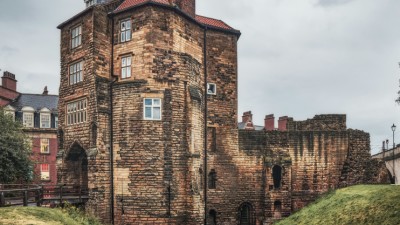
Newcastle
Where heritage meets a lively evening scene.
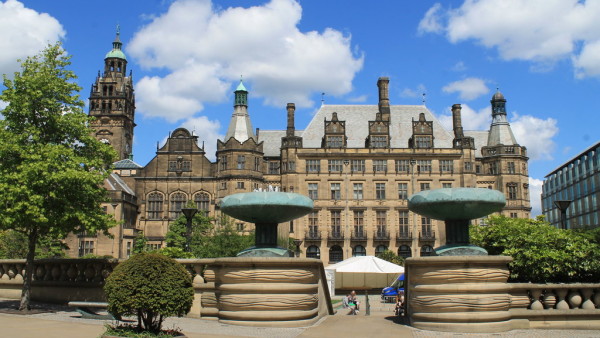
Sheffield
Where urban grit meets open horizons.
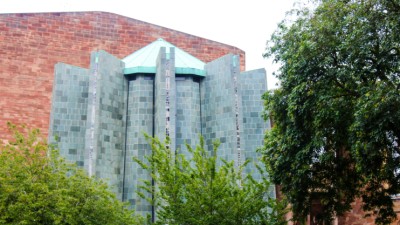
Coventry
Historic streets, modern culture, and a thoughtful city escape.
Bolton
Explore history, walk lightly, and travel with pride.
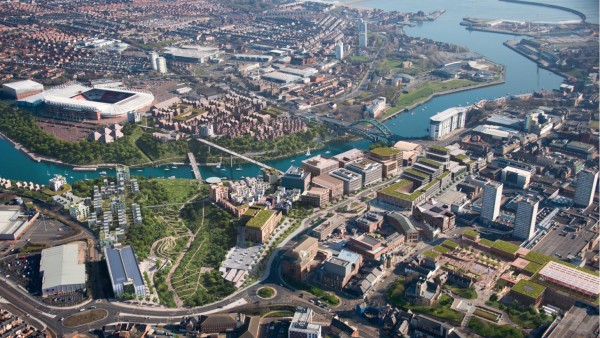
Sunderland
Coastal culture, Northern grit, and a welcoming city break.
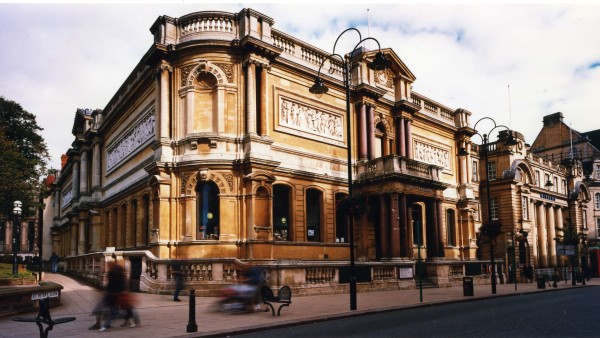
Wolverhampton
Where urban heritage meets a welcoming food-and-culture stop
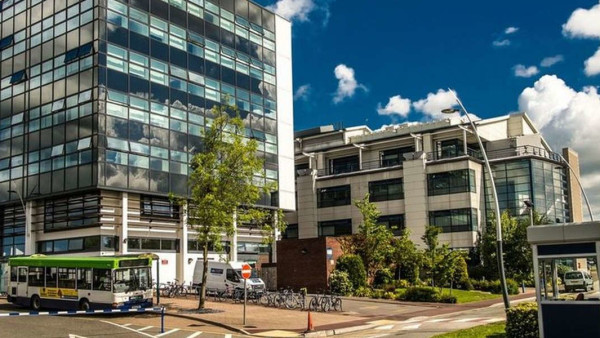
Derby
Historic streets, easy access, and a welcoming UK city break

Plymouth
A maritime city base with easy access and a wider British LGBTQ+ backdrop.
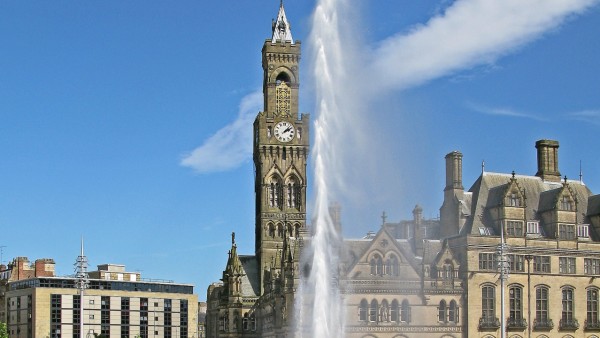
Bradford
Where heritage, film, and community meet.