- LGBTQ+ Neutral
- 1 City Guide
- 0 Likes
- Leave a comment
About Albania
Overview
Albania is one of the Balkans’ most appealing surprises: a small country with a long Adriatic and Ionian coastline, rugged mountain interiors, and a travel scene that still feels more low-key and less packaged than many better-known Mediterranean destinations.
For LGBTQ+ travelers, that combination can be especially attractive if you want a place that offers beach time, city life, history, and outdoor adventure without the heavy tourist saturation of some nearby hotspots.
The country’s compact size also makes it possible to see a lot in a single trip, from seaside towns and archaeological sites to highland villages and capital-city cafés.
Geographically, Albania sits in Southeast Europe on the western side of the Balkans, bordered by Montenegro, Kosovo, North Macedonia, and Greece, with coastline along the Adriatic and Ionian Seas.
The landscape changes quickly as you travel: fertile lowlands give way to mountains, lake regions, river valleys, and dramatic coastal stretches.
That variety is a major part of the country’s appeal.
One day can involve city museums or café culture in Tirana, and the next can bring beaches, hiking routes, or UNESCO-listed heritage sites inland and on the coast.
What draws travelers
Albania’s biggest draw is the breadth of experiences packed into a relatively small area.
Beach travelers often head to the southern Ionian coast for clear water and scenic coves, while those who prefer a more atmospheric coastal setting may explore the Adriatic side or smaller seaside towns.
Inland, the mountains are a major reason to visit, with landscapes that feel far removed from the coast and offer a different pace of travel.
The country is also known for being comparatively affordable by European standards, which makes it appealing for longer stays, road trips, and travelers who want to stretch their budgets without giving up variety.
History and culture are central to the travel experience as well.
Albania has archaeological remains from ancient times, Ottoman-era architecture in many towns, and a strong sense of local identity shaped by centuries of Balkan, Mediterranean, and regional influences.
The capital, Tirana, is the obvious starting point for many visitors: it is the country’s main transport hub, its most cosmopolitan city, and the place where contemporary Albanian life is most visible.
From there, travelers often branch out to Berat and Gjirokastër for historic townscapes, the coast for summer travel, and the north for mountains and hiking.
Culture, food, and daily life
Albanian culture is often experienced through hospitality, family-centered social life, and food.
Mealtimes tend to be relaxed and social, and the cuisine reflects the country’s position at the intersection of Balkan and Mediterranean food traditions.
Expect grilled meats, fresh salads, seafood along the coast, dairy-rich dishes, bread, vegetables, and pastries, with regional differences depending on where you are traveling.
In seaside areas, fish and shellfish are common; in mountain regions, heartier dishes are more typical.
For travelers, this makes eating in Albania part of the journey rather than just a practical necessity.
The country’s social atmosphere can feel traditional in some settings and more modern in others, especially in Tirana and in tourist-oriented coastal areas.
For LGBTQ+ visitors, that means experiences may vary significantly by location and context.
Albania has legal protections against discrimination, but same-sex households do not have the same legal recognition as opposite-sex couples.
In practice, travelers should expect the most relaxed and anonymous environments in larger cities and established tourist areas, while being more discreet in smaller towns and rural communities where social attitudes can be more conservative.
Key destinations and trip styles
Tirana is the best place to begin if you want contemporary culture, nightlife, restaurants, and an easy introduction to the country.
It is also a useful base for understanding Albania’s recent history and its rapid transformation since the end of communism.
Berat, often called the “city of a thousand windows,” is a favorite for its Ottoman-era architecture and hilltop setting.
Gjirokastër offers a similarly rich historic atmosphere, with stone houses and a distinct old-town character.
Both are especially rewarding for travelers who enjoy heritage travel and slower pacing.
For beach-focused trips, the southern coastline is the classic draw, especially if you want scenic sea views and a warm-weather holiday.
The Albanian Riviera is often mentioned for its dramatic scenery, but the exact experience can vary by season, with summer bringing the busiest conditions.
If you prefer a more nature-oriented trip, Albania’s mountain regions and national parks offer hiking, remote scenery, and a sense of travel discovery that feels less polished but often more memorable.
The north is especially appealing for travelers who want alpine landscapes and a stronger contrast with the coast.
What makes Albania distinctive
What sets Albania apart is how many different kinds of trip it can support at once: beach break, road trip, city getaway, heritage tour, or hiking holiday.
Few countries of its size offer such a sharp mix of coast, mountains, archaeology, and living tradition.
It is also distinctive for remaining somewhat under the radar compared with many parts of the Mediterranean, which can translate into more space, lower prices, and a stronger sense of discovery.
For LGBTQ+ travelers, Albania is best understood as a destination of contrasts.
It is not a place where legal equality is complete, and attitudes can be uneven, but it is also a country where many visitors are drawn by natural beauty, affordability, and a growing urban travel scene.
A trip here works best when you plan with a realistic sense of local context: enjoy the major cities, historic towns, and coast for their strong travel appeal, and be prepared to move more carefully in conservative settings.
Done well, Albania can be an engaging and rewarding destination that feels both welcoming in parts and refreshingly unspoiled.
LGBTQ+ Overview
Overview
Albania is generally a workable destination for LGBTQ+ travelers, but it is best understood as a country with strong formal legal protections and a more mixed on-the-ground social climate. Same-sex sexual activity has been legal since 1995, and Albania has anti-discrimination protections that cover sexual orientation and gender identity. At the same time, same-sex couples do not have the same legal recognition and family protections as different-sex couples, so travelers should not assume that relationship recognition, partner rights, or family-related paperwork will be treated as they would in more protective Western European destinations.
For many visitors, the experience is likely to be comfortable in larger cities and mainstream tourist areas, especially when travelers present themselves in a discreet, low-key way. Public displays of affection may attract unwanted attention anywhere in the country, and that can be more noticeable for same-sex couples. In practice, the biggest challenges are less about police action or formal legal penalties and more about uneven social attitudes, occasional discomfort, and the possibility of harassment or intrusive curiosity. Travelers who are visibly gender-nonconforming or trans may face a higher chance of stares, comments, or misgendering than lesbian and gay travelers who are not visibly paired.
Legal status and practical implications
From a legal standpoint, Albania is relatively progressive compared with many countries in the region. Consensual same-sex intimacy is legal, and anti-discrimination law provides a formal basis for recourse if a person is treated unfairly because of sexual orientation or gender identity. This matters for travelers in workplaces, services, accommodation, and other public-facing settings, even if enforcement and practical awareness are not always consistent.
The main gap is family and relationship recognition. Same-sex couples are not entitled to the same legal protections as opposite-sex couples, which affects issues such as partnership recognition and related rights. For travelers, that means it is wise to keep documentation clear and not assume that a partner will be treated as next of kin, a legal family member, or an automatic decision-maker in an emergency. If you are traveling as a couple, carry the documents you may need individually and be prepared for local systems to default to heterosexual assumptions.
Social climate
Albania’s social climate is mixed. The country has made legal progress and is generally more open in urban centers than in rural areas, but social acceptance is uneven and can lag behind the law. Younger, internationally connected people in Tirana and other cities are often more familiar with LGBTQ+ issues than older generations or people in smaller communities. Even so, travelers should not expect the level of open visibility, public discussion, or routine same-sex affection that is common in some Western European capitals.
For many visitors, discretion is the most practical approach. That does not mean hiding who you are, but it does mean reading the room carefully, especially outside major city centers. Hotels, restaurants, and transport providers in tourist areas are more likely to be matter-of-fact, yet same-sex couples may still prefer to avoid overt displays of affection in conservative settings. Trans travelers, nonbinary travelers, and people whose appearance does not fit local gender expectations may draw more attention regardless of behavior, so planning for a bit more scrutiny is sensible.
Common traveler risks
The most common risks are social rather than legal: stares, gossip, rude comments, or awkward interactions with service staff or other travelers. Serious violence is not something a traveler should assume is likely, but harassment can happen, especially if someone is visibly affectionate in public or is traveling in a way that stands out. In conservative areas, it is generally safer to keep things low-profile and avoid assuming that strangers will interpret LGBTQ+ visibility positively.
Because same-sex partnership recognition is limited, another practical risk comes from moments when a traveler needs help from authorities, medical providers, or hotel staff. If you are in an emergency with a partner, it is sensible to have identification, travel insurance details, and emergency contacts readily available. If a situation becomes tense, moving the conversation to practical matters rather than identity can sometimes reduce friction. As in any destination, ordinary travel precautions still matter: use licensed transport, keep copies of important documents, and trust your instincts if a setting feels hostile.
Support resources
Albania does have domestic LGBTQ+ advocacy and support infrastructure, but travelers should not rely on a dense network of visitor-facing services. The most useful help is often informational rather than immediately logistical, and travelers may need to seek out general embassies, their accommodation, or mainstream medical services if an issue arises. Because support availability can vary, it is a good idea to identify your country’s embassy or consulate before travel and keep emergency numbers saved offline.
If you need up-to-date context before arrival, the country’s broader rights situation is summarized in reference sources such as LGBTQ rights in Albania. Travelers should also check current advisories from their home government and confirm local norms with their accommodation if they are concerned about visibility, room arrangements, or bringing a same-sex partner. In day-to-day travel, the most practical support often comes from choosing reputable hotels in larger cities and using staff who are accustomed to international guests.
Recent trajectory
The overall trajectory in Albania has been positive in legal terms. The country has moved toward stronger anti-discrimination protections and a more rights-aware public conversation than in the past, even though social acceptance has not advanced evenly. That means the trend is encouraging, but it has not yet eliminated the real-world unevenness travelers may encounter. The country is not a high-risk destination in the way that places with criminal penalties or extreme hostility are, but it also is not fully reassuring for travelers who rely on broad social acceptance or robust relationship recognition.
In practical terms, Albania is best approached as a destination where LGBTQ+ travelers can visit safely with normal caution, especially in urban and tourist settings, while remaining mindful that attitudes can be conservative and that formal legal equality is incomplete. If you keep expectations realistic, stay discreet where appropriate, and plan for ordinary contingencies, most visits should be manageable.
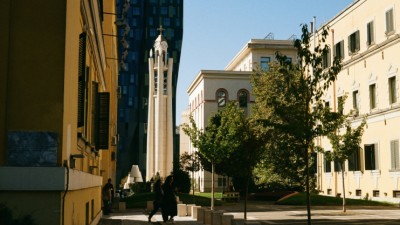
Tirana
Where café culture, nightlife, and civic change meet