- LGBTQ+ Friendly
- 1 City Guide
- 0 Likes
- Leave a comment
About Luxembourg
Luxembourg at a Glance
Luxembourg is one of Europe’s smallest countries, but it offers a surprisingly rich travel experience: a highly international capital, dramatic river valleys, quiet wine country, deep forests, and compact distances that make it easy to explore without rushing.
It sits at the crossroads of Belgium, France, and Germany, and that borderland position shapes everything from its architecture and language to its food and wine.
For LGBTQ+ travelers, Luxembourg is especially appealing as a calm, well-organized, and broadly welcoming destination in the heart of Western Europe, with the added advantage of strong public infrastructure and easy rail connections to neighboring countries.
What makes Luxembourg distinctive is the contrast between its polished urban center and its deeply rural edges.
Luxembourg City is a modern, international capital built across cliffs and gorges, where the UNESCO-listed old quarters overlook a business district filled with EU institutions, banks, and cultural venues.
Beyond the city, the country opens into the Moselle wine region, the Ardennes in the north, and the red-rock landscapes of the Müllerthal, often called “Little Switzerland.” These varied settings give travelers a chance to pair city sightseeing with hiking, wine tasting, and slow countryside exploration in a very small area.
Culture, Identity, and Travel Atmosphere
Luxembourg is multilingual and cosmopolitan.
Luxembourgish is the national language, while French and German are widely used in public life, and English is commonly understood in tourism, hospitality, and business settings.
This linguistic mix gives the country a distinctly international feel while still retaining a strong local identity.
Daily life is influenced by the country’s many cross-border workers and long history as a meeting point between larger European powers, which helps explain why Luxembourg often feels outward-looking, orderly, and practical.
For travelers, the atmosphere is generally low-key rather than flashy.
Luxembourg is not a party destination in the way some larger European capitals are, but it excels at comfort, ease, and quality.
Museums, design-forward cafés, wine bars, and contemporary cultural institutions are easy to find in the capital, while the rest of the country leans toward relaxed outdoor travel, heritage sites, and scenic drives.
LGBTQ+ visitors will likely find Luxembourg welcoming in tone, especially in the capital, where international life and a modern social environment make for a comfortable stay.
Geography and What to See
Luxembourg’s geography is one of its greatest assets.
The south is more urban and industrial, centered on Luxembourg City and the surrounding commuting belt, while the north becomes hillier and more forested, with small villages, river valleys, and castles.
The Moselle valley traces the border with Germany and is the country’s best-known wine area, producing crisp white wines and sparkling wines that reflect the region’s cool climate.
The east offers dramatic sandstone formations and woodland trails in the Müllerthal, while the far north is anchored by the Ardennes, where castles and river scenery create a more rugged, pastoral mood.
Luxembourg City is the obvious starting point.
The old city’s historic fortifications, the Bock casemates, and the cliffside viewpoints above the Grund and Pétrusse valleys show off the city’s unusual topography.
The center is compact and walkable, but it feels layered and vertical, with bridges, stairways, and overlooks connecting neighborhoods that seem stacked rather than spread out.
The Kirchberg district, by contrast, is sleek and modern, home to major institutions and contemporary architecture.
This contrast between old stone and glassy modernity is one of the country’s signature visual themes.
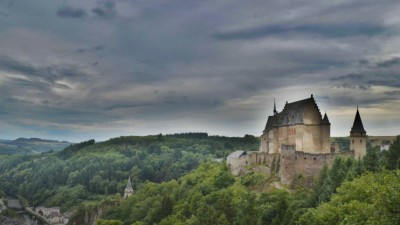
Outside the capital, travelers often head to Vianden for its fairytale castle, one of the country’s most photographed landmarks, or to Echternach, the oldest town in Luxembourg, which makes a good base for exploring the Müllerthal region.
The Moselle towns are ideal for a slower trip focused on vineyards, river views, and local dining.
Because distances are short, it is possible to see several different landscapes in a single visit without sacrificing time to long transfers.
Food and Drink
Luxembourgish cuisine reflects its location between French, German, and Belgian culinary traditions, with an emphasis on hearty, seasonal food and excellent baked goods.
Expect dishes built around pork, potatoes, cream sauces, freshwater fish, and game in the colder months, alongside pastries, bread, and café culture that feel familiar across central Europe but still distinctly local.
Traditional meals are often comforting rather than elaborate, though the country also has a strong fine-dining scene, especially in and around Luxembourg City.
The Moselle region is central to the country’s food and drink appeal.
Luxembourg is known for its white wines, including dry styles and sparkling Crémant made in the same broad tradition as nearby French regions.
Wine bars and cellars in the Moselle towns offer an easy way to experience local producers, and many restaurants across the country highlight regional wines on their lists.
Travelers who enjoy food and wine will find Luxembourg rewarding because it combines approachable local cooking with high standards and a strong emphasis on quality ingredients.
Typical Travel Appeal
Luxembourg is especially well suited to travelers who prefer a trip that feels easy, efficient, and varied.
It works well as a long weekend destination, a stop on a multi-country Europe itinerary, or a base for combining city culture with outdoor time.
Public transportation is excellent, and the country’s compact size makes day trips straightforward.
In practical terms, that means you can spend the morning in museums or cafés, the afternoon in a forested valley or vineyard, and the evening back in the capital without much logistical stress.
The country’s appeal also lies in its balance.
It is refined but not overwhelming, international but still small-scale, and scenic without requiring a wilderness itinerary.
Travelers who enjoy heritage architecture, wine country, walks in nature, and a polished urban environment will find a lot to like.
For LGBTQ+ visitors in particular, Luxembourg’s calm pace, European openness, and absence of heavy tourism pressure can make it feel like an easy place to relax.
It may not have the queer nightlife density of larger capitals, but it offers a comfortable, modern setting with a high quality of life and a strong sense of civic order.
Why Luxembourg Stands Out
What sets Luxembourg apart is the combination of sophistication and intimacy.
It is a capital city country, but one that remains manageable and green.
It has a cosmopolitan workforce and an international outlook, yet also preserves local traditions, regional food, and a distinct national language.
The result is a place that can feel both familiar and unique, especially to travelers who appreciate destinations that reveal themselves through details rather than spectacle.
For an LGBTQ+ traveler, Luxembourg is distinctive not because it is loud or trend-setting, but because it offers a reassuringly modern, well-connected, and generally welcoming environment in a compact setting full of beauty and variety.
It is the kind of destination where the pleasures come from the overall ease of the trip: scenic trains, riverside walks, excellent wine, elegant urban spaces, and a country that is small enough to understand quickly but layered enough to stay interesting.
LGBTQ+ Overview
LGBTQ+ overview: Luxembourg
Luxembourg is one of the more LGBT-friendly countries in Europe. Same-sex sexual activity is legal, discrimination on the basis of sexual orientation is prohibited in key areas of public life, and same-sex couples have had access to marriage since 2015. Same-sex adoption is also permitted. For most travelers, this means Luxembourg is straightforward and low-risk compared with many other destinations: you can generally travel openly, book shared accommodation, and use mainstream services without expecting legal barriers because of your sexual orientation.
Transgender travelers are also relatively well supported in legal and administrative terms. Luxembourg has recognized gender identity in its legal framework and allows a legal gender change through an administrative procedure without requiring sterilization or surgery. In practice, this makes it easier for residents and, indirectly, for visitors dealing with documents, though travelers should still carry passports and any supporting identity documents that match their presentation as closely as possible when crossing borders or checking in for travel.
The social climate is broadly tolerant, especially in Luxembourg City and other urban areas, where international populations and a strong EU/institutional presence contribute to a generally open environment. Public affection between same-sex couples is usually unlikely to draw attention in ordinary settings. That said, Luxembourg is small, and attitudes can be more reserved than visibly celebratory. Travelers should expect a low-key social atmosphere rather than the highly visible queer nightlife scenes found in larger capitals. In more conservative social or family settings, discretion may still be the smoother choice, even if not strictly necessary for safety.
Common traveler risks are mostly the everyday ones rather than targeted anti-LGBTQ+ threats. Harassment is not a defining feature of travel in Luxembourg, but isolated verbal hostility can still occur, particularly in nightlife settings or among intoxicated groups. The standard caution applies: avoid escalating confrontations, keep valuables secure, and use licensed transport late at night. If you are traveling as a couple or with friends, most hotels and restaurants will be unremarkable about your presence, though staff attitudes can vary from warmly professional to simply neutral.
For support, Luxembourg has a visible and established civil-society presence, including Rainbow House Luxembourg, a community center and umbrella space for LGBTQ+ groups, which can be a useful starting point for local information, community contacts, and referrals. Travelers who encounter discrimination in services or public life can also look to national equality and anti-discrimination mechanisms, although most visitors will not need them. For urgent help, Luxembourg’s emergency services are reliable and the country’s overall public safety infrastructure is strong.
Overall, Luxembourg has a positive recent trajectory: legal protections are well established, family recognition is strong, and public life is generally inclusive. The remaining gaps are less about law than about scale and visibility: there may be fewer dedicated LGBTQ+ venues and fewer immediate community resources than in larger cities, and social conservatism can still appear in pockets. For travelers, that translates to a generally easy destination with low risk, provided you use normal situational awareness.
Luxembourg
Small city, major access, and an easy base for inclusive European travel.