- LGBTQ+ Friendly
- 1 City Guide
- 0 Likes
- Leave a comment
About Mauritius
Overview
Mauritius is a compact Indian Ocean island nation that has long appealed to travelers looking for a beach destination with more depth than a simple sun-and-sea escape.
Located east of Madagascar, it combines turquoise lagoons, volcanic landscapes, mountain scenery, and a multiethnic society shaped by African, Asian, European, and Creole influences.
For many visitors, its main draw is the unusual blend of high-end resort comfort, public beaches, hiking, culture, and food in a setting that feels both easy to navigate and distinctly tropical.
For LGBTQ+ travelers, Mauritius is often considered one of the more approachable destinations in the region.
Tourism is well established, English and French are widely understood in visitor-facing settings, and the island’s hospitality sector is used to international guests.
The atmosphere can vary by place and context, as in any destination, but the overall travel experience is typically centered on relaxation, discretion, and service rather than nightlife-heavy urban energy.
That makes Mauritius especially appealing for couples, honeymooners, solo beach travelers, and anyone who values a quieter, polished island getaway.
Geography and scenery
Mauritius is small enough to cross in a few hours, yet varied enough to support different kinds of trips.
The island is volcanic in origin, with a central plateau, forested hills, rivers, and a coastline ringed by coral reef.
This reef system creates many of the calm, shallow lagoons that Mauritius is known for, especially on the west and north coasts.
The east coast is often breezier and more exposed, while the south can feel more dramatic and less developed in places.
Inland, you will find mountain viewpoints, tea fields, botanical gardens, and nature reserves that offer a contrast to the beach resorts.
The landscape is one of Mauritius’s most distinctive features.
Travelers often come expecting a classic tropical island and are surprised by how much the interior matters.
Short drives can take you from a hotel beach to black volcanic cliffs, from sugarcane fields to Hindu temples, or from a bustling market town to a protected forest trail.
This variety gives the island a stronger sense of place than many purely resort-focused destinations.
Culture and identity
Mauritian culture is famously mixed, and that diversity is visible in daily life, religion, language, architecture, and food.
Descendants of Indian laborers form a large part of the population, alongside Creole communities, people of Chinese heritage, Franco-Mauritian families, and others.
Hindu temples, mosques, churches, and Chinese temples can all be found within a relatively small geographic area, reflecting a long history of migration and coexistence.
This plural identity is one of the island’s most interesting features for travelers, and it helps shape the warm, layered character of Mauritian hospitality.
English is the official language and French is also widely used, while Mauritian Creole is the everyday language of many residents.
In tourism, this multilingual environment is generally an advantage, especially for international visitors who may want straightforward communication in hotels, restaurants, and excursion services.
Visitors who take time to explore beyond the resort strip often find that the island’s cultural richness is as memorable as its beaches.
Food and drink
Mauritian cuisine is one of the island’s strongest attractions.
It draws on Indian, Creole, Chinese, and French traditions, producing a food culture that is both familiar and distinctive.
Curries, dholl puri, farata, fried noodles, seafood, and rougaille-style dishes are all common, and street food can be as rewarding as restaurant dining.
Fresh fish and shellfish are widely available, while tropical fruit, sugarcane products, and local snacks add to the sense that the island’s food reflects its environment as much as its history.
For many travelers, one of the pleasures of Mauritius is that meals can move easily between informal and elegant settings.
You might eat simple local dishes at a roadside stall, then have a refined seafood dinner or resort meal later the same day.
Tea production is another part of the island’s agricultural identity, and tasting local tea can be a pleasant addition to a sightseeing route through the central plateau or the south-western part of the island.
Key destinations and typical itinerary appeal
Most first-time visitors focus on the north and west coasts, where there is a concentration of resorts, beaches, and easy access to restaurants and boat excursions.
The north is often associated with Grand Baie, a popular base for shopping, dining, and nightlife-oriented convenience, while nearby coastal areas offer calm water and good access to offshore islets.
The west coast is known for sunsets, protected lagoons, dolphin-spotting excursions, and easy access to inland sights.
Port Louis, the capital, gives travelers a faster-paced urban counterpoint.
Its markets, waterfront, and cultural sites provide a more local experience than the beach resort zones.
The central region offers highland scenery and a cooler climate, with viewpoints and gardens that break up a beach itinerary.
On the south and southwest coasts, visitors often seek out more dramatic scenery, national parks, waterfalls, and less-developed stretches of shoreline.
Places such as Le Morne, Black River Gorges National Park, Chamarel, and Île aux Cerfs are commonly included in broad island itineraries because they showcase different sides of Mauritius in a relatively small area.
Typical appeal comes from the flexibility of the destination.
Mauritius can be a pure resort break, a honeymoon destination, a family beach holiday, a nature-and-road-trip island, or a food-focused cultural trip.
Many visitors combine several of those goals in one stay.
The island is especially attractive to travelers who want scenic beauty without sacrificing comfort, and who appreciate a destination where a few carefully chosen excursions can add substantial variety to an otherwise restful trip.
What makes Mauritius distinctive
What sets Mauritius apart is the combination of polished tourism infrastructure, cultural diversity, and real geographic variety in a very manageable area.
It is not just a beach island: it is a place where lagoon water, volcanic peaks, market food, religious landmarks, and plantation landscapes all coexist.
That mix gives the island a sense of depth that can be rare in tropical destinations of similar size.
For LGBTQ+ travelers, the practical appeal often lies in that same combination of ease and discretion.
Mauritius is not primarily marketed as a queer nightlife destination, but it can work very well for travelers seeking a scenic, relaxed, and comfortable island holiday with strong hotel options and plenty to do beyond the beach.
Couples often find the destination especially suitable for romantic travel, while independent travelers may appreciate the island’s navigability, the range of accommodation styles, and the ability to tailor a trip between privacy, sightseeing, and local exploration.
In short, Mauritius is distinctive because it feels both familiar and specific: familiar in its international resort polish, and specific in its Creole-Indian-French cultural blend, volcanic scenery, and lagoon-fringed coastline.
For travelers looking for an island that offers more than one type of holiday, Mauritius is an easy place to build a rewarding itinerary.
LGBTQ+ Overview
Mauritius LGBTQ+ Overview
Mauritius is generally one of the more comfortable destinations in the Indian Ocean for LGBTQ+ travelers, especially compared with many countries in the wider region. Same-sex sexual activity is legal, and there is no broad criminalization of consensual same-sex relationships between adults. In practical terms, this means visitors are unlikely to face direct legal problems simply for being LGBTQ+. That said, legal equality is incomplete, and travelers should not assume the same level of protection or social acceptance they might find in Western Europe or North America.
The social climate is mixed but often relatively discreet rather than openly hostile. Mauritius is a culturally diverse country with strong religious and family norms, and public attitudes toward LGBTQ+ people can vary significantly by age, community, and setting. Many visitors report that major tourist areas are more relaxed than everyday social life, but open displays of affection may still attract unwanted attention in some contexts. For most travelers, the safest approach is a moderate one: be visible if you wish, but gauge the environment first, especially outside resorts, beaches, and international hotel settings.
From a legal standpoint, one important point is that decriminalization does not equal full equality. Mauritius does not offer comprehensive national protections against discrimination on the basis of sexual orientation and gender identity in the same way that the strongest LGBTQ+ destinations do, and same-sex couples should not expect marriage or equivalent relationship recognition. Travelers should also be aware that policies affecting transgender people, including document consistency and access to gender-affirming services, may be less straightforward than in more protective jurisdictions. If your trip involves extended stays, work, or residency, it is wise to review the latest local rules before traveling.
Common traveler risks are usually social rather than legal. Public affection between same-sex partners can draw stares, comments, or awkward attention, particularly in more conservative neighborhoods or rural areas. Harassment is not necessarily common, but subtle discrimination can happen in accommodation, taxi rides, nightlife venues, and small guesthouses. Transgender travelers may face more scrutiny around presentation, ID checks, or assumptions from service staff. As in many places, the risk level can rise when alcohol, nightlife, or isolated settings are involved. Standard travel precautions still matter: avoid being alone with strangers if a situation feels off, use reputable transport late at night, and trust your instincts if a venue feels uncomfortable.
Support resources exist, but they may be limited and uneven compared with larger LGBTQ+ hubs. The most practical source of help for serious problems is usually your country’s embassy or consulate, local emergency services, and your accommodation’s management if you need immediate assistance. For longer-term support, travelers may find it useful to research current local LGBTQ+ organizations before departure, as contact details and activity levels can change. Because reliable on-the-ground support networks may be small, it is sensible to travel with your own contingency plan, especially if you anticipate needing medical, legal, or identity-document assistance.
Mauritius has shown a generally positive trajectory over time, with decriminalization marking an important step away from the most severe legal risks. The overall direction has been toward gradual normalization rather than rapid transformation. However, progress in law does not always translate immediately into everyday equality, and social change has been slower than legal change. For travelers, that means Mauritius is best understood as a comparatively manageable destination where caution is still appropriate. Most LGBTQ+ visitors can travel without major incident, especially if they are discreet in unfamiliar settings and choose welcoming, international-standard hotels and services.
In short, Mauritius is a reasonably safe destination for LGBTQ+ travelers, with legal same-sex activity and broadly manageable day-to-day risk, but it remains a place where discretion and situational awareness are useful. The experience is generally better in tourist-centered environments than in more traditional or private settings, and travelers should expect a mixed but not unusually dangerous climate overall.
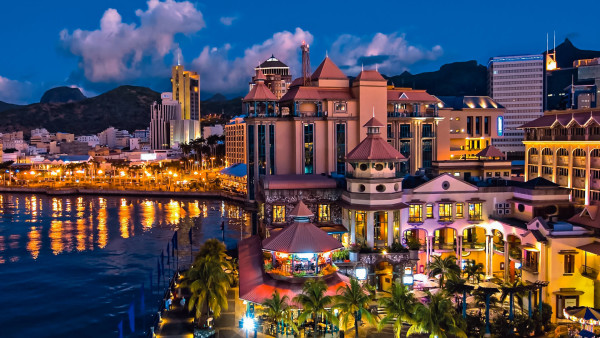
Port Louis
A bayfront capital where history, culture, and mindful travel meet.