About Ōsaka
It is the capital and most populous city of Osaka Prefecture, and one of the country’s largest metropolitan hubs.
For LGBTQ+ travelers, that scale matters: large cities in Japan generally offer more anonymity, broader accommodation choices, and easier access to dining, transit, and nightlife than smaller destinations.In Japan, LGBTQ+ rights have improved in recent years, but legal protections remain more limited than in many other developed countries.
That national context is important when I assess travel in Ōsaka: visitors may find an active and visible queer social scene, yet it is still wise to travel with the same practical awareness one would apply elsewhere in Japan.
I focus especially on verified, city-based realities rather than assumptions about openness.Ōsaka is also significant because it sits within a wider Kansai travel network that connects smoothly by rail to other major destinations.
From a sustainable-travel perspective, this makes it a strong base for low-impact itineraries: I can recommend using Japan’s efficient public transport rather than relying on short domestic flights or private transfers.For LGBTQ+ visitors, a key landmark in the city’s modern queer calendar is the Osaka Rainbow Festa, a local Pride event associated with the city’s LGBTQ+ community.
I also note that Ōsaka’s broader appeal lies in its everyday livability: dense neighborhoods, public transit, and a reputation for straightforward urban convenience all help make it a practical stop for travelers looking for both comfort and community context.
Our Review
I write about Ōsaka as one of Japan’s major urban centers in the Kansai region, and as a city that many travelers use as a gateway to culture, food, and regional exploration.
It is the capital and most populous city of Osaka Prefecture, and one of the country’s largest metropolitan hubs.
For LGBTQ+ travelers, that scale matters: large cities in Japan generally offer more anonymity, broader accommodation choices, and easier access to dining, transit, and nightlife than smaller destinations.
In Japan, LGBTQ+ rights have improved in recent years, but legal protections remain more limited than in many other developed countries.
That national context is important when I assess travel in Ōsaka: visitors may find an active and visible queer social scene, yet it is still wise to travel with the same practical awareness one would apply elsewhere in Japan.
I focus especially on verified, city-based realities rather than assumptions about openness.
Ōsaka is also significant because it sits within a wider Kansai travel network that connects smoothly by rail to other major destinations.
From a sustainable-travel perspective, this makes it a strong base for low-impact itineraries: I can recommend using Japan’s efficient public transport rather than relying on short domestic flights or private transfers.
For LGBTQ+ visitors, a key landmark in the city’s modern queer calendar is the Osaka Rainbow Festa, a local Pride event associated with the city’s LGBTQ+ community.
I also note that Ōsaka’s broader appeal lies in its everyday livability: dense neighborhoods, public transit, and a reputation for straightforward urban convenience all help make it a practical stop for travelers looking for both comfort and community context.
Social Acceptance and Safety in Ōsaka
From a traveler’s perspective, I find Ōsaka easier to navigate than many smaller Japanese cities when it comes to LGBTQ+ visibility, but I also think it is important not to overstate the level of legal or social protection.
Japan has made some progress in recent years, yet LGBTQ+ people still have fewer legal protections than in many other developed countries, according to LGBTQ rights in Japan.
That national context matters in Ōsaka too.
In practical terms, I would describe Ōsaka as a large, dense, highly urban city where diversity is easier to find and where visitors can often move anonymously.
As one of Japan’s biggest metropolitan centers, it has the kind of scale that usually supports a broader range of attitudes and more options for LGBTQ+ travelers, even though experiences can still vary by neighborhood, venue, and situation.
I would not assume universal acceptance, but I also would not approach the city as hostile.
Safety-wise, my advice is to apply the same careful judgment I would recommend anywhere in Japan: stay aware of your surroundings, avoid drawing unnecessary attention in unfamiliar settings, and be especially cautious late at night in areas you do not know well.
Japan is generally considered a safe destination for travelers, but safety for LGBTQ+ people is not only about crime rates; it is also about privacy, discretion, and how comfortable you feel expressing yourself in public.
I would keep public displays of affection modest unless I clearly know the environment is welcoming.
For accommodation and nightlife, I would favor well-reviewed, centrally located places in the city rather than remote or poorly connected areas.
In a city like Ōsaka, that usually means staying near major transit corridors, where late-night transport options are clearer and the urban environment feels more predictable.
From an eco-conscious standpoint, that also supports low-impact travel: using rail and subway connections rather than relying on taxis or private transfers reduces emissions and keeps movement around the city efficient.
As for neighborhoods, I would be careful about overclaiming “safe” or “unsafe” zones, because social comfort can change street by street.
That said, central, busy districts are generally the most practical choice for LGBTQ+ visitors because they are active, well connected, and more likely to feel anonymous.
I would be more cautious in quieter residential areas, where visibility tends to be higher and visitors can stand out more.
I am not aware of any officially designated LGBTQ+-friendly district in Ōsaka from the verified sources provided, so I would avoid naming specific neighborhoods as universally welcoming without stronger evidence.
For community visibility, the city does have an LGBTQ+ presence, and that is an important signal for travelers assessing social acceptance.
The existence of local pride-related activity, including Osaka Rainbow Festa, indicates that there is at least some organized public queer visibility in the city.
Even so, I would treat that as evidence of community presence rather than proof of broad social consensus.
My overall assessment is that Ōsaka is a workable and often comfortable city for LGBTQ+ travelers, especially if they prefer large urban environments with strong transit links and a degree of anonymity.
I would still encourage thoughtful, low-key travel behavior, especially outside central commercial areas, and I would rely on public transport, reputable accommodations, and situational awareness rather than assuming that acceptance is uniform across the city.
Travel Tips for LGBTQ+ Travelers in Ōsaka
When I write about Ōsaka from an LGBTQ+ perspective, I start with a practical reality: this is one of Japan’s largest and most connected cities, and that makes it a useful base for independent travel.
Ōsaka is the capital of Osaka Prefecture and a major urban center in the Kansai region, with dense rail links that make it easy to move around without relying on cars.
For me, that matters not only for convenience but also for sustainability.
In a city of this scale, I can keep my footprint lower by using trains and subways rather than private transport, while also staying in areas where it is easier to remain anonymous and move comfortably.
Japan as a whole remains a country where LGBTQ+ travelers should be aware that legal protections are more limited than in many other developed countries.
That does not mean I should expect hostility, but it does mean I plan carefully and avoid assuming that every setting will be equally familiar with queer guests.
In practice, I find it best to approach Ōsaka with the same disciplined awareness I would use in any large city: choose reputable accommodation, keep travel arrangements straightforward, and pay attention to how public behavior is read in local settings.
Local customs and day-to-day conduct
My rule in Ōsaka is to be discreet and observant before being expressive.
Japan generally places a high value on public consideration, and in a busy urban environment that usually translates into polite, low-key behavior.
I keep public displays of affection modest, especially outside clearly social or nightlife-oriented spaces.
I also make a point of respecting queues, quiet carriage norms on public transport, and the general expectation that visitors should not create unnecessary disturbance.
Those habits are not unique to LGBTQ+ travelers, but they help reduce friction and make travel smoother.
Language can also shape my experience.
I do not assume that every local business will be prepared for detailed LGBTQ+ conversation in English, so I keep interactions simple and practical.
Clear booking details, straightforward questions about room arrangements, and concise communication are more useful than relying on assumptions.
If I am travelling as a couple, I prefer to confirm the basics in advance rather than handling surprises at check-in.
Dos and don’ts
Do stay in central, well-connected districts that give you access to rail and subway lines.
In a city like Ōsaka, this is both practical and eco-conscious, because it reduces the need for taxis and makes evening travel easier to manage.
Do choose accommodations with strong guest reviews and transparent policies.
I look for places that are used to international travelers and that present booking information clearly.
Do use public transport as your default way of getting around.
Ōsaka’s transit network is one of its major advantages, and it supports a lower-carbon style of travel.
Do keep your plans flexible if you are hoping to explore LGBTQ+ spaces or events.
Publicly visible community activity exists in Ōsaka, but I still verify current information before I go.
Don’t assume that every restaurant, hotel, or bar will be explicitly LGBTQ+-friendly just because it is in a large city.
I treat each venue on its own merits.
Don’t rely on outdated venue lists or unverified neighborhood labels.
I only act on current, confirmed information.
Don’t expect local attitudes to mirror those in cities with stronger legal protections.
Japan’s legal framework is still comparatively limited, so discretion remains useful.
Travel safety and comfort
From a safety perspective, I view Ōsaka as a city where the main priority is situational awareness rather than alarm.
Large, busy areas tend to feel more navigable because they are well served by transit and have more people around, but I still avoid becoming overly casual late at night or in places I do not know well.
I also make sure my accommodation is easy to reach by train or subway, because that reduces stress when I return in the evening.
For LGBTQ+ travelers, comfort often depends on how much visibility you want.
Ōsaka’s size can be an advantage because it allows me to blend into the crowd when I want privacy, while still accessing more open social settings when I choose to look for them.
That balance is one reason the city works well for independent travelers who prefer to manage their own pace.
Connecting with the local LGBTQ+ community
If I want to connect with the local community, I start with verified public events rather than assuming that a specific district will serve that role.
One confirmed example is Osaka Rainbow Festa, which shows that Ōsaka has visible LGBTQ+ community activity.
Beyond that, I would check current event calendars and official listings rather than relying on hearsay.
In a city as large as Ōsaka, community life can be present without being concentrated in one clearly defined area.
My overall approach is straightforward: I stay respectful, use transit, keep plans current, and rely on verified information.
That combination makes Ōsaka a practical destination for LGBTQ+ travel, especially for visitors who value independence, urban convenience, and a lower-impact way of moving through the city.
Useful background reading
In my view, Ōsaka’s strongest appeal for LGBTQ+ travelers is its scale: it is a large, densely populated city in Japan’s Kansai region, with the anonymity, transit access, and range of services that often make urban travel feel easier and more flexible.
That matters in practice.
A major city can provide more room to move through the day without drawing attention, more accommodation choices, and easier access to public transport—an especially useful combination for travelers who prefer a low-impact, rail-based itinerary.
At the same time, I would not present Ōsaka as a city where LGBTQ+ travelers can ignore the broader national context.
Japan has fewer legal protections for LGBTQ+ people than many other developed countries, so the city’s size should not be mistaken for full legal or social parity.
The practical challenge is not only legality, but also inconsistency: comfort levels can vary by venue, neighborhood, and situation.
For me, that means the most sensible approach is to travel with expectations grounded in current realities rather than assumptions.
My recommendation is to make Ōsaka work for you by staying central, using public transport, and choosing accommodations and venues that are well established and easy to verify.
That approach is both practical and more sustainable.
Rail and subway travel reduce reliance on private transport, and staying near transit hubs can also make evenings simpler if you are exploring the city’s nightlife or community events.
I also think it is important to treat Ōsaka as a city to explore thoughtfully, not cautiously to the point of missing out.
The city has visible LGBTQ+ presence, and events such as Osaka Rainbow Festa show that queer community life is part of the urban landscape.
If you are comfortable navigating a major Japanese city with cultural awareness and discretion, you will likely find Ōsaka rewarding.
My final advice is straightforward: plan carefully, keep your itinerary realistic, use public transport wherever possible, and rely on current, verified information before you go.
Ōsaka is not a destination I would describe with sweeping claims, but it is a city where LGBTQ+ travelers can experience a dynamic urban environment, access practical travel infrastructure, and engage with local community visibility in a way that is both respectful and rewarding.
Other Guides in Japan
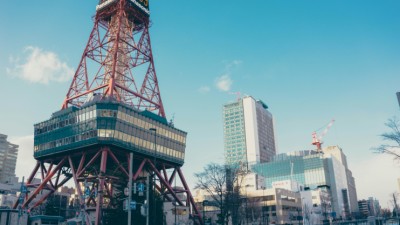
Sapporo
Big skies, safe rhythms, and winter culture with an inclusive lens.
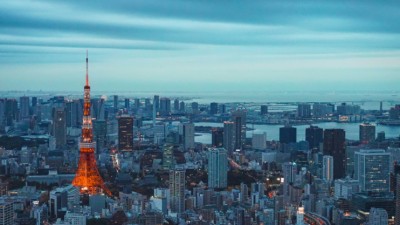
Tokyo
Discover a city of contrast, culture, and community.

Fukuoka
Gateway streets, easy transit, and a welcoming base for solo discovery.
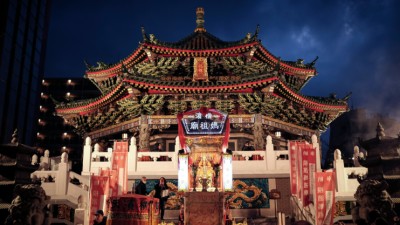
Yokohama
Where waterfront culture meets inclusive travel
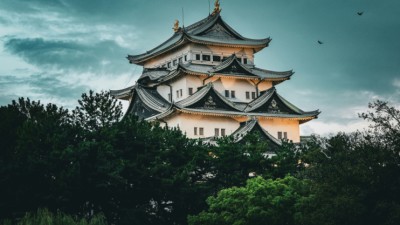
Nagoya
Where urban culture meets comfort food and a welcoming night out.