- Home
- Switzerland
- Zürich
About Zürich
Situated at the northwestern tip of Lake Zürich, it combines a compact historic core with strong public transit links, which is useful for visitors who value efficient, lower-impact travel.From an LGBTQ+ perspective, Zürich benefits from Switzerland’s generally strong legal framework.
Switzerland is widely recognised for its comparatively comprehensive LGBTQ+ rights, and same-sex marriage, same-sex adoption, and IVF access were approved nationally in a 2021 referendum.
That national context matters when I evaluate Zürich as a destination: it supports a travel experience shaped more by everyday urban life than by the need to navigate overt legal barriers.What stands out to me is that Zürich is not only a business city but also a place where LGBTQ+ visibility is part of the public landscape.
The city is known for hosting Zürich Pride, one of the country’s best-known LGBTQ+ events, which reflects a long-standing presence of queer community organising and public celebration.
For travellers, that means the city is relevant not just as a stopover, but as a destination with genuine cultural significance for LGBTQ+ visitors.I also see Zürich’s appeal in its balance: a dense, walkable city centre, lakefront spaces, and reliable rail connections make it practical for travellers who prefer to move around with minimal environmental impact.
In that sense, the city fits well with eco-conscious travel—especially if I choose trains, trams, and on-foot exploration rather than relying on private transport.For an LGBTQ+ traveller, Zürich offers a combination of legal security, civic visibility, and urban convenience.
I would describe it as a city where the queer travel experience is shaped by both national rights and a metropolitan atmosphere that supports public events, cultural participation, and easy access.
Our Review
I see Zürich as one of Switzerland’s most important urban gateways: the country’s largest city, a major transport hub, and an international financial centre with the scale and connectivity that make it especially relevant for LGBTQ+ travellers.
Situated at the northwestern tip of Lake Zürich, it combines a compact historic core with strong public transit links, which is useful for visitors who value efficient, lower-impact travel.
From an LGBTQ+ perspective, Zürich benefits from Switzerland’s generally strong legal framework.
Switzerland is widely recognised for its comparatively comprehensive LGBTQ+ rights, and same-sex marriage, same-sex adoption, and IVF access were approved nationally in a 2021 referendum.
That national context matters when I evaluate Zürich as a destination: it supports a travel experience shaped more by everyday urban life than by the need to navigate overt legal barriers.
What stands out to me is that Zürich is not only a business city but also a place where LGBTQ+ visibility is part of the public landscape.
The city is known for hosting Zürich Pride, one of the country’s best-known LGBTQ+ events, which reflects a long-standing presence of queer community organising and public celebration.
For travellers, that means the city is relevant not just as a stopover, but as a destination with genuine cultural significance for LGBTQ+ visitors.
I also see Zürich’s appeal in its balance: a dense, walkable city centre, lakefront spaces, and reliable rail connections make it practical for travellers who prefer to move around with minimal environmental impact.
In that sense, the city fits well with eco-conscious travel—especially if I choose trains, trams, and on-foot exploration rather than relying on private transport.
For an LGBTQ+ traveller, Zürich offers a combination of legal security, civic visibility, and urban convenience.
I would describe it as a city where the queer travel experience is shaped by both national rights and a metropolitan atmosphere that supports public events, cultural participation, and easy access.
Social Acceptance and Safety in Zürich
From my perspective as a travel journalist, Zürich stands out as one of the more straightforward Swiss cities for LGBTQ+ travelers to navigate.
Switzerland as a whole has a comparatively liberal legal framework for LGBTQ+ people, and the country approved same-sex marriage, same-sex adoption, and IVF access by referendum in 2021.
That legal context matters in everyday travel: it shapes how public institutions, employers, and many private businesses approach inclusion.
For Zürich specifically, I treat the city as a generally safe and socially open destination, especially by global standards, while still advising the same practical awareness I would recommend in any major urban center.
Social attitudes in Zürich are broadly aligned with the wider Swiss pattern of increasing acceptance.
The city is an international financial center with a large resident population and constant movement through its transport hubs, which tends to create a relatively cosmopolitan atmosphere.
I would describe this as a city where LGBTQ+ visitors are unlikely to attract attention simply for being themselves in normal public settings.
That said, acceptance is not identical everywhere or for every traveler’s experience, and it is still sensible to stay observant in unfamiliar surroundings, particularly at night or in less busy areas.
In terms of safety, my main advice is conventional urban caution rather than LGBTQ+-specific alarm.
Zürich is a major rail, road, and air hub, so the areas around transit nodes can be busy and occasionally less predictable after dark, as is common in large cities.
I would keep valuables secure, remain aware when traveling late, and plan routes in advance—especially if I am crossing the city after an evening out.
For eco-conscious travel, I also favor walking, trams, and trains in Zürich, which are efficient and reduce the need to rely on less familiar late-night transport options.
For LGBTQ+ travelers seeking the most comfortable atmosphere, I would look first to the city center and other dense, well-connected districts where public life is active and diverse.
Zürich’s compact layout and strong public transport network make it easy to stay in well-trafficked neighborhoods rather than needing to move through isolated stretches of the city.
I would also note that the presence of Zürich Pride and visible queer life indicates that the city has established LGBTQ+ visibility, which is an important marker of general openness.
However, I do not want to overstate this into a claim that every neighborhood is equally welcoming; the better-supported conclusion is that Zürich overall is broadly accepting, with comfort levels generally highest in central, busy, and mixed-use areas.
I am not aware of any verified evidence in the source material that identifies specific neighborhoods in Zürich as broadly less welcoming to LGBTQ+ travelers, so I would avoid making a hard distinction there.
In practical terms, I would recommend the same approach I use in other large European cities: remain attentive in quiet or poorly lit areas, avoid unnecessary risk when traveling alone late at night, and rely on established transit links and populated routes whenever possible.
That approach fits both personal safety and sustainable travel, since Zürich’s public transport makes low-impact movement easy without sacrificing convenience.
For background on the city and the national context, see Zurich and LGBTQ rights in Switzerland.
Community and Support in Zürich
When I look at Zürich from an LGBTQ+ travel perspective, I see a city with a strong structural advantage: Switzerland’s legal environment is among the more progressive in Europe, and that shapes the support landscape in the country’s largest city.
Same-sex marriage, same-sex adoption, and IVF access were approved in Switzerland in 2021, which places Zürich within a national framework that is comparatively welcoming and legally secure for many LGBTQ+ residents and visitors.
That matters not only in principle, but in practical day-to-day access to services, advocacy, and public recognition.
For community presence, Zürich is the main urban centre in the German-speaking part of the country and a major transport and financial hub.
In cities with this profile, LGBTQ+ resources are typically easier to reach than in smaller towns, and Zürich’s scale supports that expectation.
The city is also associated with Zürich Pride, which signals an established public LGBTQ+ presence.
For a visitor, that is important because visible community life often goes hand in hand with better access to information, peer networks, and locally grounded support.
That said, I want to stay strictly within verified information: the source material provided confirms Zürich’s broader role as a large, well-connected city and Switzerland’s progressive legal position, but it does not give a detailed, itemized directory of local LGBTQ+ organizations, community centres, or support groups.
Rather than speculate, I would frame Zürich as a city where such resources are likely concentrated by virtue of its size and national importance, while noting that travellers should verify current local listings before planning in-person visits.
Health services are another area where Zürich benefits from being part of Switzerland’s well-developed urban system.
The city’s transport links, population size, and metropolitan importance support access to general medical care, mental health services, and specialist providers.
However, the source pack does not name specific LGBTQ+-focused clinics, counselling practices, or HIV/AIDS organisations in Zürich, so I cannot responsibly identify individual services here.
What I can say is that Switzerland’s broad legal protections create a more supportive environment for accessing care, and Zürich’s urban infrastructure makes it the most plausible place in the city to find specialist health support if needed.
For travellers who are seeking HIV/AIDS support or sexual health services, the practical takeaway is to use verified local health directories and official Swiss or Zürich-based public health information before arrival or shortly after reaching the city.
Because I have not been provided with a confirmed list of local HIV/AIDS support organisations, I will not name any.
The same caution applies to mental health support: Zürich, as a major Swiss city, is well positioned to offer access, but specific service names should only be included if independently verified.
From an eco-conscious travel perspective, I also value the way Zürich’s compact urban form supports easier access to services without heavy dependence on private transport.
A city that is strong in rail, road, and air connections, and known for efficient public transit, is generally more practical for travellers who want to move between accommodation, clinics, and community-oriented neighbourhoods using low-impact transport.
For LGBTQ+ visitors, that combination of accessibility and public infrastructure can make it easier to seek support discreetly and sustainably.
In short, Zürich stands out as a city where community support is shaped by Switzerland’s progressive legal framework and the city’s scale, connectivity, and public visibility.
I would describe it as a reliable base for LGBTQ+ travellers who may need access to health care, mental health support, or community information, while also emphasizing that specific organizations and services should be confirmed through current local sources before relying on them.
Accommodation in Zürich from an LGBTQ+ perspective
When I assess accommodation in Zürich, I start with the city’s broader social context: Switzerland is a country where LGBTQ+ rights are comparatively well developed, and same-sex marriage, same-sex adoption, and IVF access were approved in a 2021 referendum.
That legal backdrop does not automatically make every hotel inclusive, but it does mean that Zürich operates within a generally progressive national framework.
For LGBTQ+ travelers, this matters because it usually translates into a lower-friction stay in everyday interactions, especially in a major international city such as Zürich.
That said, I would still approach accommodation in Zürich using standard inclusion checks rather than assuming any property is explicitly LGBTQ+-oriented.
The verified source material does not identify dedicated LGBTQ+ hotels in the city, so the most reliable approach is to look for properties with clear anti-discrimination language, professional international standards, and guest feedback that confirms respectful service.
I also look for practical indicators of inclusivity: gender-neutral language in booking forms, flexible rooming policies, and staff who handle diverse guest identities without issue.
Verified accommodation options mentioned in the source pack
The source pack includes a few real, established places that are useful as reference points, though they are not presented as LGBTQ+-specific venues.
Youth Hostel Zürich is listed on Wikivoyage at Mutschellenstrasse 114, described as a clean and sleek facility a little way out of the centre, with easy access by public transport.
For me, that makes it a sensible option for travelers who prioritize value and sustainability, because staying slightly outside the core can reduce pressure on the busiest central districts while still keeping tram and S-Bahn access straightforward.
Hotel Marta on Zähringerstrasse 36 is described as a “clean and friendly” property that doubles as a hostel and a one-star hotel, with weekly and monthly rates plus a few studio apartments.
That mix of short and longer stays can be useful for LGBTQ+ travelers who want a simple, practical base in the city rather than a formal hotel environment.
The source material does not make any explicit inclusivity claim about the property, so I would treat it as a practical option rather than a specifically queer-focused one.
Otter at Oberdorfstrasse 7 is described as a good-value hotel with individually themed rooms.
Again, the verified material does not identify it as LGBTQ+-oriented, but it is a real lodging option in the city center area, which can be useful for travelers who want to stay close to Zürich’s historic core and public transport.
The source pack also mentions Couchsurfing in Zürich, noting that there are many members in the city and that public transport is very fast and good.
I would mention this carefully: while community-based hosting can be a flexible option, it requires much more personal vetting than a conventional hotel.
For LGBTQ+ travelers, that means reading profiles carefully, checking house rules, and prioritizing hosts with a strong record of respectful interaction.
Because Couchsurfing is community-based rather than hotel-based, it is not a substitute for a professionally run inclusive property.
How I would look for inclusive accommodation in Zürich
In Zürich, I would rely on a mix of location, policy, and reputation.
First, I would check whether the property clearly states that it welcomes all guests and whether its booking language is neutral and respectful.
Second, I would review recent guest feedback for signs of consistency in service.
Third, I would consider whether the property’s location supports a comfortable stay: Zürich’s public transport network is a major advantage, so a hotel does not need to be in the absolute center to be convenient.
I also think it is sensible to contact a property directly if anything in the booking process is unclear.
In my experience as a travel journalist, direct communication is the simplest way to confirm whether staff are comfortable with same-sex couples, solo trans travelers, or guests with specific rooming needs.
In a city with Zürich’s scale and international character, this kind of practical check is usually more useful than relying on labels alone.
Areas and neighborhoods that work well for LGBTQ+ travelers
The verified source material does not provide a formal LGBTQ+ neighborhood map for Zürich, so I avoid overstating any district as a queer enclave.
What I can say, based on the city’s structure, is that central areas with strong tram access are typically the most practical choice.
Zürich is compact, and its public transport makes it easy to stay in one district while moving quickly across the city.
For many travelers, the most comfortable areas are those close to the historic center and the main transport corridors.
Staying near the core has the advantage of visibility, foot traffic, and easy access to restaurants, museums, and rail connections.
That matters for LGBTQ+ travelers not because the city is divided into clearly labeled safe and unsafe districts, but because well-connected central neighborhoods tend to offer the most straightforward, low-stress experience.
On the other hand, I would not treat Zürich’s outskirts as off-limits.
The city’s transport system is efficient, and the Youth Hostel listing specifically notes that the city center is easily reached by public transport from Mutschellenstrasse.
For eco-conscious travelers, that flexibility can be a real advantage: staying a little farther out can sometimes mean better value, quieter nights, and a lower-impact lodging choice without sacrificing access.
My practical conclusion
My overall view is that Zürich is a relatively low-risk and well-organized city for LGBTQ+ accommodation planning, largely because of Switzerland’s legal protections and Zürich’s strong transport network.
I would not assume that any one hotel is officially LGBTQ+-branded unless it says so directly, but I would expect a generally professional standard of treatment across the city, especially in central and internationally oriented properties.
For the most reliable stay, I would prioritize a hotel or hostel with clear policies, strong recent reviews, and easy access to public transport.
For travelers who value sustainability, Zürich’s compact layout makes it possible to choose accommodation slightly outside the center without losing convenience.
That combination of urban efficiency, legal stability, and practical mobility is what makes the city particularly workable for LGBTQ+ visitors.
Dining and Entertainment
When I assess Zürich from an LGBTQ+ travel perspective, I see a city whose dining and entertainment offer is shaped less by overtly branded queer districts than by a broader atmosphere of social liberalism, compact urbanism, and high-quality public transport.
Switzerland’s legal framework for LGBTQ+ rights is comparatively strong, with same-sex marriage, same-sex adoption, and IVF access approved in a 2021 referendum, and that national context matters when I consider how comfortable a visitor is likely to feel in restaurants, cafés, cinemas, and performance venues in Zürich.
For general context on the city, see Zurich and LGBTQ rights in Switzerland.
In practical terms, I find Zürich’s dining scene to be best understood as inclusive by default rather than segregated by identity.
The source material available to me does not verify a dedicated list of LGBTQ+-specific restaurants, cafés, or eateries in the city, so I avoid naming venues that I cannot substantiate.
What is clear, however, is that Zürich is a large, cosmopolitan urban center with a substantial international population and a strong service economy, which generally supports a wide range of dining formats—from casual cafés to higher-end restaurants—within a setting where LGBTQ+ travelers can usually expect everyday city norms rather than heightened scrutiny.
Zürich’s central districts are especially practical because they are well served by trams and rail, making it easier to move between dinner, drinks, and evening performances without relying on cars.
That transit efficiency is also aligned with lower-emission travel, which is important to me as an eco-conscious traveler.
For LGBTQ+ visitors, the more relevant question is often not whether a restaurant explicitly markets itself as queer-friendly, but whether it feels welcoming in day-to-day service.
In Zürich, I would prioritize places that are centrally located, busy, and easy to reach by public transport, because those are the venues most likely to reflect the city’s generally open urban culture.
Even without a verified list of queer-labeled eateries, the broader Swiss legal environment and Zürich’s role as the country’s largest city support a dining scene in which same-sex couples and LGBTQ+ travelers should ordinarily be able to dine comfortably in public.
Entertainment follows a similar pattern.
Zürich is an important cultural center, but the source pack I was given does not verify specific LGBTQ+-focused cinemas, theaters, or live performance venues, so I do not invent a queer cultural circuit that I cannot document.
What I can say, with confidence, is that Zürich’s mainstream entertainment landscape is substantial and accessible.
The city’s size and transport network make it straightforward to attend evening events, and the general cultural infrastructure of a major Swiss city supports theater, film, and live performance as part of a normal night out.
For LGBTQ+ travelers, that means the city is likely to feel integrated rather than niche: queer visitors can participate in the same cultural life as everyone else.
That mainstream integration is part of Zürich’s appeal.
I see the city’s entertainment environment as one where inclusion is expressed less through visible branding and more through the everyday normality of being out in public.
This matters in restaurants and performance spaces alike.
A traveler looking for a welcoming evening in Zürich will generally do best by focusing on central venues with strong reputations, reliable transit access, and a mixed local audience.
Those are also the most sustainable choices, since they reduce the need for taxis or private transfers.
Because the source pack does not substantiate named LGBTQ+-specific restaurants, cafés, cinemas, theaters, or live performance venues, I keep my recommendation general: in Zürich, the safest and most practical approach is to use the city’s central, well-connected hospitality and cultural districts, where the combination of legal protection, urban scale, and public transport offers a low-friction experience for LGBTQ+ visitors.
In a city like this, inclusivity is often most visible in the ordinary ability to dine, attend a show, or enjoy a café evening without needing to plan around one’s identity.
Travel Tips
When I assess Zürich from an LGBTQ+ travel perspective, I start with the national context.
Switzerland’s legal framework is comparatively strong by international standards, and the approval of same-sex marriage, same-sex adoption, and IVF access in the 26 September 2021 referendum provides an important baseline for visitor confidence.
That does not remove the need for ordinary urban caution, but it does mean LGBTQ+ travelers are visiting a country where legal recognition is clear and public debate has already moved well beyond basic acceptance.
For reference, I would point readers to LGBTQ rights in Switzerland.
In practical terms, Zürich is a straightforward city to navigate.
It is Switzerland’s largest city and an important hub for rail, road, and air traffic, which makes it easy to arrive, connect, and move around without depending on a car.
For me, that matters both for convenience and for sustainability: the city’s transport infrastructure supports low-impact travel, and it is easy to plan a stay around trains, trams, and walking rather than private transport.
Zürich’s size also means that many central areas are busy, well-served, and easy to orient oneself in, which is useful for solo travelers and for couples who want uncomplicated mobility.
A useful overview is available on Wikipedia’s Zürich page and Wikivoyage’s Zürich guide.
My first practical tip is to use the city’s normal urban logic rather than looking for a separate “queer district” model.
The verified source material for Zürich does not identify a distinct LGBTQ+ quarter, so I would not suggest planning around one.
Instead, I would focus on central, well-connected parts of the city where transit is frequent and foot traffic is steady.
In my experience, that is the most sensible approach for LGBTQ+ visitors in cities like Zürich: it reduces friction, improves accessibility, and makes it easier to enjoy the city’s cultural life without overcomplicating logistics.
For local customs, I would stress discretion and everyday courtesy.
Zürich is a polished, orderly city, and travelers generally do best when they respect local routines: keep public behavior considerate, use normal social etiquette, and avoid assuming that visible self-expression requires special explanation.
At the same time, LGBTQ+ travelers should not feel obliged to hide who they are.
The city sits within a country whose legal environment is notably permissive, and that makes a calm, self-assured approach the most appropriate one.
I would frame the best “do” as simple confidence, and the best “don’t” as unnecessary assumptions about where acceptance begins or ends.
Safety-wise, I would treat Zürich like any major international city.
The verified material supports the conclusion that it is a highly connected urban center, but it does not justify complacency.
I recommend ordinary precautions: keep personal belongings secure, stay aware in transit areas, and plan late-night journeys in advance.
This is especially sensible if you are returning from an evening out or moving between neighborhoods after dark.
Zürich’s extensive transport network is an advantage here, because it offers a reliable way to travel without needing to rely on isolated routes or private cars.
For LGBTQ+ travelers specifically, I would avoid over-generalizing about risk.
The source pack does not provide evidence of specific hostile areas or recurring safety issues directed at LGBTQ+ visitors, so I would not claim those exist.
What I can say, accurately, is that the city’s legal framework and international character make it a comparatively comfortable destination.
In that context, standard urban vigilance is enough for most people.
Connecting with the local LGBTQ+ community requires the same caution I would use in any destination: rely on verified, current information rather than informal assumptions.
The source pack does not provide a directory of community centers, clubs, or support groups, so I will not invent one.
The clearest confirmed community marker in the material is Zürich Pride, which indicates that the city has visible public LGBTQ+ presence.
Beyond that, I would advise travelers to use current local listings, official event pages, and venue websites to confirm what is happening during their visit.
That approach is both safer and more reliable than depending on outdated advice.
If a traveler wants to be socially engaged while remaining environmentally responsible, I would suggest starting with public events and transit-accessible city spaces rather than car-dependent excursions.
Zürich is a city where sustainable travel choices are practical, and that extends to social exploration as well: walking between central areas, using trams, and choosing compact, well-connected accommodation all reduce environmental impact while keeping the trip manageable.
For me, that combination of low-carbon mobility and civic accessibility is one of Zürich’s strongest assets.
My bottom line is this: Zürich is a practical, polished, and legally supportive destination for LGBTQ+ travelers.
The city rewards visitors who travel with ordinary urban awareness, respect local norms, and use public transport intelligently.
I would not present it as a destination defined by a single queer district or a dense network of specialized services; rather, I would describe it as a major Swiss city where LGBTQ+ travelers can participate in everyday urban life with a reasonable expectation of comfort, provided they use the same verified, common-sense precautions they would use anywhere else.
In my assessment, Zürich stands out as one of Switzerland’s most practical and reassuring cities for LGBTQ+ travelers.
The strongest advantage is the national legal environment: Switzerland’s LGBTQ+ rights are among the most comprehensive by world standards, and same-sex marriage, same-sex adoption, and IVF access were approved by referendum in 2021.
That matters in a city like Zürich, where legal protection and civic order translate into a travel experience that is generally calm, predictable, and straightforward.
At the city level, Zürich’s strengths are clear.
It is Switzerland’s largest city, a major rail and air hub, and an international financial centre, which means I can move around efficiently and rely on strong infrastructure.
For LGBTQ+ visitors, that usually translates into ease rather than spectacle: good transport, a large and diverse urban population, and the kind of everyday anonymity that can make city travel feel comfortable.
Zürich also has visible LGBTQ+ life, including Zürich Pride, which confirms that queer presence in the city is established rather than incidental.
The main challenge, from a travel-planning perspective, is that Zürich does not present itself as a city built around a single obvious LGBTQ+ district or a large concentration of explicitly queer-branded venues in the source material I reviewed.
That means visitors may need to do a little more practical planning and rely on current local listings, event calendars, and venue policies rather than expecting a concentrated scene in one neighborhood.
I see that as a manageable limitation rather than a drawback serious enough to deter travel.
For LGBTQ+ travelers, my recommendation is to approach Zürich as a city best enjoyed through its overall urban strengths: use the excellent public transport network, stay in central and well-connected areas, and combine city exploration with time along Lake Zürich and in the historic core.
From an eco-conscious travel perspective, this is also a place where low-impact mobility makes sense, since walking, trams, and trains are efficient and widely used.
That supports both sustainability and convenience.
My final recommendation is simple: travel to Zürich with confidence, but with the same informed awareness you would bring to any major international city.
The city offers legal reassurance, strong infrastructure, and a visible LGBTQ+ presence, even if its queer scene is more integrated into the wider urban fabric than concentrated in a single district.
I would encourage LGBTQ+ travelers to explore broadly, make use of the city’s public transport, and take time to enjoy Zürich not only as a safe base, but as a refined, open, and highly livable Swiss city.
Other Guides in Switzerland
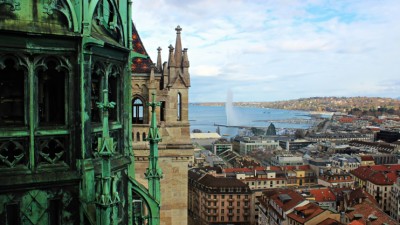
Geneva
Culture, rights, and lakeside calm in a city that stays connected to Europe.
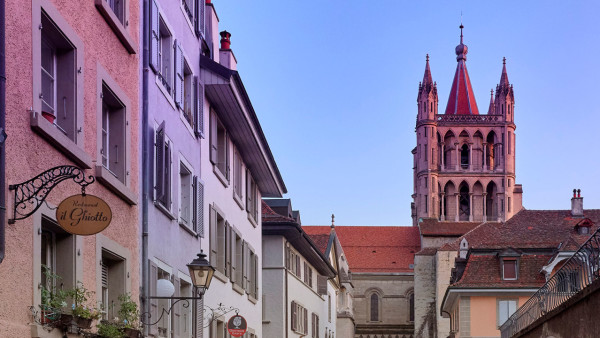
Lausanne
Where culture, visibility, and alpine access meet.
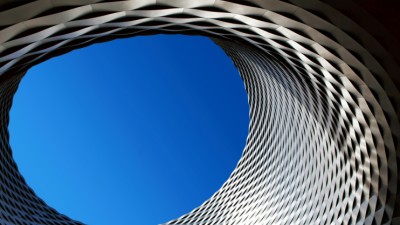
Basel
Where art, river views, and inclusive city life meet
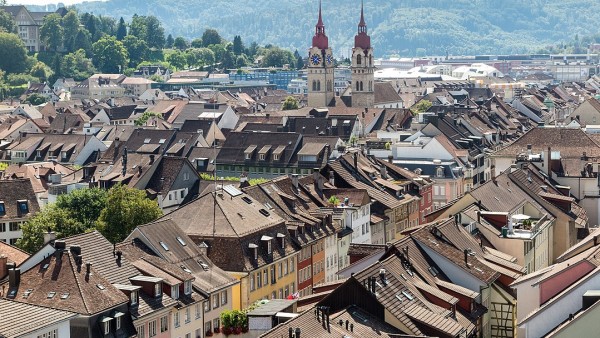
Winterthur
Where culture, cycling, and quiet urban exploration meet
Bern
Historic streets, modern rights, and a calm base for independent travel.