- Home
- South Korea
- Goyang
About Goyang
Located in Gyeonggi Province in the northern part of South Korea, Goyang is one of Seoul’s satellite cities and part of the wider Seoul Metropolitan Area.
With a population of just over 1 million, it is also among the largest cities in the region.
For travelers, that means easy access to the capital alongside a destination shaped by its own neighborhoods, including the planned city of Ilsan and the more Seoul-adjacent Deogyang District.From an LGBTQ+ perspective, I have to be clear about what is and is not documented: the available verified sources do not identify Goyang itself as a major LGBTQ+ hub, nor do they confirm any city-specific pride events or dedicated LGBTQ+ landmarks.
What can be stated with confidence is the broader national context.
South Korea’s LGBTQ+ residents face prejudice, discrimination, and barriers to social inclusion, even though same-sex intercourse is legal for civilians.
For visitors, that makes it especially important to understand the local social environment and to plan with realism rather than assumption.In practical terms, I see Goyang as a useful base for culturally minded travelers who want a city with strong metropolitan connections, rather than as a destination defined by LGBTQ+ tourism infrastructure.
Its significance lies in its scale, its place within the Seoul Metropolitan Area, and its proximity to the capital, where much of the country’s public-facing LGBTQ+ life is more visible.
For me as a travel journalist, that makes Goyang best understood as part of the larger urban landscape of contemporary South Korea, where cultural exploration and social context both matter.
Our Review
As I approach Goyang, I see a city that is closely tied to Seoul yet distinct in its own urban layout and character.
Located in Gyeonggi Province in the northern part of South Korea, Goyang is one of Seoul’s satellite cities and part of the wider Seoul Metropolitan Area.
With a population of just over 1 million, it is also among the largest cities in the region.
For travelers, that means easy access to the capital alongside a destination shaped by its own neighborhoods, including the planned city of Ilsan and the more Seoul-adjacent Deogyang District.
From an LGBTQ+ perspective, I have to be clear about what is and is not documented: the available verified sources do not identify Goyang itself as a major LGBTQ+ hub, nor do they confirm any city-specific pride events or dedicated LGBTQ+ landmarks.
What can be stated with confidence is the broader national context.
South Korea’s LGBTQ+ residents face prejudice, discrimination, and barriers to social inclusion, even though same-sex intercourse is legal for civilians.
For visitors, that makes it especially important to understand the local social environment and to plan with realism rather than assumption.
In practical terms, I see Goyang as a useful base for culturally minded travelers who want a city with strong metropolitan connections, rather than as a destination defined by LGBTQ+ tourism infrastructure.
Its significance lies in its scale, its place within the Seoul Metropolitan Area, and its proximity to the capital, where much of the country’s public-facing LGBTQ+ life is more visible.
For me as a travel journalist, that makes Goyang best understood as part of the larger urban landscape of contemporary South Korea, where cultural exploration and social context both matter.
Social Acceptance and Safety
When I look at Goyang from a LGBTQ+ traveler’s perspective, I see a city whose social climate should be understood in the broader South Korean context rather than as a destination with a clearly documented local LGBTQ+ scene.
Goyang is a large satellite city in Gyeonggi Province, part of the Seoul Metropolitan Area, and it is closely tied to the capital’s urban life.
However, based on the verified information available to me, I cannot point to city-specific evidence of established LGBTQ+ districts, dedicated pride events, or officially recognized LGBTQ+ neighborhoods in Goyang.
For general attitudes, the most reliable framing is national rather than hyper-local: LGBTQ+ people in South Korea face prejudice, discrimination, and barriers to social inclusion.
Same-sex intercourse is legal for civilians, but that legality has not eliminated social stigma.
In practical terms, I would treat Goyang as a place where discretion may still matter, especially in settings where you do not know the social environment well.
From a safety standpoint, I would advise the same common-sense precautions I would recommend in many parts of South Korea outside the best-known LGBTQ+ urban enclaves.
Keep your personal safety first, especially when meeting new people, and consider how openly you display affection in public until you have a clear sense of the environment.
If you are traveling with a partner, a lower-profile approach is likely to be the most comfortable option in everyday situations.
As in any large metropolitan area, staying aware of your surroundings, using reputable transport, and trusting your instincts remain sensible measures.
In terms of location-specific comfort, I cannot verify any neighborhoods in Goyang that are known to be especially LGBTQ+ friendly or especially unfriendly.
What I can say is that different parts of the city serve different urban functions: Ilsan is a planned district within Goyang, while Deogyang District sits closer to Seoul.
For an LGBTQ+ traveler, proximity to Seoul may be more relevant than any local labeling, because the capital is where more visible LGBTQ+ social activity is generally concentrated in South Korea.
That said, I would not present any part of Goyang itself as a confirmed LGBTQ+ hub without evidence.
So my practical conclusion is straightforward: Goyang can work well as a base for exploring the Seoul area, but I would approach it as a city where LGBTQ+ visitors should rely on general urban travel precautions rather than expect a documented local queer infrastructure.
The key is to stay informed, remain respectful of local norms, and make choices that match your own comfort level.
Community and Support
From a community-and-support perspective, I have to be precise: I could not verify any city-specific LGBTQ+ organizations, dedicated community centers, or formal support groups based in Goyang itself.
The available source material places Goyang firmly within the Seoul Metropolitan Area, as a large satellite city in Gyeonggi Province, but it does not identify a distinct local LGBTQ+ support infrastructure in the city.
That absence matters.
In practical terms, travelers and residents looking for LGBTQ+ support are more likely to find established services in Seoul than in Goyang.
I cannot responsibly name Goyang-based queer centers, health clinics, peer groups, or advocacy organizations without verified evidence.
What I can say, based on the source pack, is that Goyang’s proximity to Seoul is the city’s most relevant feature for anyone seeking broader regional access to community resources.
At the national level, the situation in South Korea is mixed.
The country does not criminalize same-sex intercourse for civilians, but LGBTQ+ people still face prejudice, discrimination, and barriers to social inclusion.
That wider social context shapes the support landscape.
When I assess Goyang as a journalist, I see a city where public, city-branded LGBTQ+ infrastructure is not documented in the source material, so visitors should not assume the presence of visible community services on the ground.
Health support is also difficult to detail at the city level from the verified material provided.
I do not have source-backed confirmation of LGBTQ+-specific mental health providers, HIV/AIDS support organizations, or specialist community health programs in Goyang.
Because of that, I will not speculate about clinics or counseling services that may exist there.
For readers seeking care, the most defensible conclusion is that Goyang should be treated as part of a larger metropolitan area, with Seoul likely offering the broader range of publicly visible support resources.
In short, Goyang does not appear, from the verified sources available to me, to function as a documented LGBTQ+ support hub.
Its value for LGBTQ+ travelers is more geographic than institutional: it is a major, well-connected city near Seoul, but not one for which I can confirm a distinct network of community organizations, health services, or resource centers.
Relevant background: Goyang | LGBTQ rights in South Korea
Events and Nightlife
From an LGBTQ+ travel perspective, I find Goyang best understood as part of the wider Seoul Metropolitan Area rather than as a standalone nightlife destination.
Goyang is a large city in Gyeonggi Province, north of Seoul, and includes areas such as Ilsan and Deogyang District.
Because of that geography, travelers often look to nearby Seoul for the most established LGBTQ+ social and nightlife options rather than expecting a dense queer scene inside Goyang itself.
On annual LGBTQ+ events, I cannot verify any city-specific Pride parade, march, or LGBTQ+ festival held in Goyang itself.
The verified sources available to me do not document a recurring local pride calendar for the city.
In practical terms, that means I would not present Goyang as a known event hub for LGBTQ+ visitors.
Travelers interested in Pride and larger queer cultural events in South Korea will generally need to look beyond Goyang and into the broader metropolitan region.
For nightlife, I also do not have verified evidence of a distinct network of LGBTQ+ bars, clubs, or dedicated queer venues in Goyang.
I cannot responsibly name specific LGBTQ+ bars or social spots here because none are supported by the source material provided.
What I can say, based on the city’s location, is that Goyang functions more as a suburban and residential extension of the capital than as a nightlife center in its own right.
Its proximity to Seoul matters: visitors staying in Goyang may use it as a base and travel into Seoul for more visible LGBTQ+-oriented nightlife and social venues.
That broader context is important because South Korea’s LGBTQ+ environment includes prejudice, discrimination, and barriers to social inclusion, even though same-sex intercourse is legal for civilians.
In my view, that helps explain why LGBTQ+ nightlife in Goyang is not prominently documented in the verified record.
For travelers, discretion and situational awareness remain sensible choices, especially if they are meeting new people or exploring unfamiliar areas at night.
As for recommendations, I cannot verify any Goyang venues that are specifically known as LGBTQ+ bars, clubs, or community hubs.
So my most accurate recommendation is structural rather than venue-based: use Goyang as a convenient base for access to Seoul, where the likelihood of finding established LGBTQ+ nightlife is higher, and keep expectations realistic about what is locally available in Goyang itself.
If your trip prioritizes queer social life, I would treat Goyang as a practical place to stay, not as the main destination for nightlife or annual LGBTQ+ events.
Sources: Goyang, Wikivoyage: Goyang, South Korea, LGBTQ rights in South Korea
Cultural and Social Activities
When I assess Goyang from an LGBTQ+ travel perspective, I find that the city’s cultural and social life is best understood as part of the wider Seoul Metropolitan Area rather than as a clearly documented LGBTQ+ destination in its own right.
Goyang is a large city in Gyeonggi Province, north of Seoul, and includes the planned city of Ilsan as well as Deogyang District, which is closer to the capital.
That geography matters: for LGBTQ+ travelers, Goyang functions primarily as a practical urban base near Seoul, not as a place with a verified, distinctive queer cultural infrastructure of its own.
Based on the verified sources available to me, I cannot confirm any LGBTQ+-specific tours, queer historical landmarks, or city-recognized LGBTQ+ cultural institutions in Goyang.
I also cannot verify dedicated LGBTQ+ museums, theaters, galleries, or walking routes in the city.
In other words, while Goyang certainly offers the kinds of mainstream cultural and social venues typical of a major Korean satellite city, I do not have evidence that any of them are specifically associated with LGBTQ+ history or programming.
That said, the city’s broader cultural setting is still relevant.
Goyang’s position within the Seoul Metropolitan Area means travelers can combine a stay in Goyang with wider cultural exploration in the capital region.
For me, that makes Goyang more of a logistics-and-access point than a standalone queer cultural center.
If I were planning a culturally focused itinerary here, I would frame the city around its general urban character and its proximity to Seoul rather than around any unverified LGBTQ+ attractions.
The social context also matters.
South Korea’s LGBTQ+ community faces prejudice, discrimination, and barriers to social inclusion, even though same-sex intercourse is legal for civilians.
That means public-facing LGBTQ+ cultural expression may be less visible than in cities with more established queer tourism industries.
For a traveler, this suggests a more cautious and context-aware approach to social activity: I would look for inclusive environments through careful local research, but I would not assume that LGBTQ+ venues or events are formally documented in Goyang unless they are clearly verified.
I also do not have verified information on notable LGBTQ+ figures or influencers who are specifically based in Goyang.
Because of that, I would avoid assigning the city a queer public profile it cannot be documented to have.
From a journalistic standpoint, it is more accurate to say that Goyang’s cultural significance for LGBTQ+ visitors lies in its proximity to Seoul and its place within a large metropolitan region, rather than in any confirmed local queer landmarks or personalities.
In practical terms, my conclusion is straightforward: Goyang is best approached as a culturally useful and well-connected city near Seoul, not as a verified LGBTQ+ cultural hub.
For LGBTQ+ travelers who prioritize museums, theaters, galleries, or historically significant queer sites, the available evidence does not support a detailed local map within Goyang itself.
What I can verify is the city’s metropolitan location and the broader South Korean context in which LGBTQ+ social life remains present but often less publicly visible.
Accommodation
When I look at Goyang from an LGBTQ+ travel perspective, I start with a basic geographic reality: this is a large city in Gyeonggi Province, part of the Seoul Metropolitan Area, and one of Seoul’s satellite cities.
It is not widely documented as an LGBTQ+ hub in its own right.
That matters for accommodation, because the city’s lodging landscape should be approached as part of the broader Seoul region rather than as a destination with a clearly defined queer hospitality district.
From the verified sources available to me, I cannot confirm specific LGBTQ+-owned or explicitly LGBTQ+-branded hotels in Goyang.
I therefore would not present any individual property as “LGBTQ+ friendly” unless it is clearly and publicly identified as such by the accommodation itself or by a reputable, current source.
In practical terms, that means I would focus on internationally recognized hotel chains, properties with consistent guest reviews, and accommodations that clearly state inclusive policies, rather than relying on assumptions.
For LGBTQ+ travelers, the most useful accommodation strategy in Goyang is to prioritize clarity and convenience.
Because Goyang sits close to Seoul, I would look first at places with easy transport access to the capital, especially if the purpose of the trip includes exploring Seoul’s more visible LGBTQ+ social and cultural spaces.
That is especially relevant in and around Ilsan, the planned city area within Goyang, and in Deogyang District, which is closer to Seoul.
These are not verified LGBTQ+ neighborhoods, but they are the city’s key geographic reference points for deciding where to stay.
When I evaluate inclusive accommodation options, I look for a few practical indicators.
First, I check whether the property has a clear non-discrimination statement and whether its booking terms are written in neutral, professional language.
Second, I read recent guest reviews for evidence of respectful service and the absence of hostile responses to same-sex couples or gender-diverse travelers.
Third, I favor hotels with established front-desk procedures and international guest experience, since those properties are often better equipped to handle questions discreetly and professionally.
These are general travel practices, but they are especially important in places where there is no strongly documented LGBTQ+ hospitality scene.
In terms of neighborhood choice, I would frame Goyang cautiously.
I cannot verify any district or neighborhood in the city as officially LGBTQ+ welcoming.
There is also no verified evidence, in the source pack I am using, of distinct queer accommodation clusters or recognized LGBTQ+ safe zones.
So rather than naming “gay-friendly” districts, I would advise travelers to choose areas based on transport links, hotel quality, and personal comfort.
In Goyang, that generally points toward the parts of the city most connected to the Seoul metro network, rather than any area described as a queer enclave.
The broader South Korean context also shapes accommodation decisions.
South Korea is a modern, highly urbanized country, but LGBTQ+ people still face prejudice, discrimination, and other barriers to social inclusion.
At the same time, same-sex intercourse is legal for civilians.
For travelers, that means accommodation is less about legal risk and more about social awareness, discretion, and the professionalism of the property.
I would be careful not to assume that a hotel’s location in a major city automatically means it is openly inclusive; the better approach is to verify policies and review recent traveler feedback.
My practical recommendation for an LGBTQ+ visitor to Goyang is straightforward: stay in a well-reviewed hotel or serviced apartment with easy access to Seoul, confirm inclusive booking terms in advance, and avoid overreading a city-wide queer scene that the evidence does not support.
Goyang’s value lies in proximity, scale, and transport convenience—not in a documented concentration of LGBTQ+ accommodation.
For travelers who want a quieter base near the capital while remaining close to Seoul’s more visible cultural offerings, that can still be a very sensible choice.
Verified city references: Wikipedia: Goyang, Wikivoyage: Goyang.
Broader social context: LGBTQ rights in South Korea.
Dining and Entertainment
When I look at Goyang from an LGBTQ+ travel perspective, I have to begin with a factual limitation: I cannot verify a distinct LGBTQ+ dining or nightlife scene in the city itself.
Goyang is a large satellite city in Gyeonggi Province, part of the Seoul Metropolitan Area, and that proximity matters more than any publicly documented queer entertainment infrastructure within the city boundaries.
In practical terms, I view Goyang as a place where visitors may dine and spend an evening comfortably, but not one where I can reliably identify a concentrated LGBTQ+ hospitality cluster.
That said, the city’s scale and urban character do support a broad range of everyday dining and entertainment options.
Goyang includes the planned city of Ilsan, spread across Ilsandong District and Ilsanseo District, and also Deogyang District, which is closer to Seoul.
These are the areas I would pay attention to as a journalist seeking accessible, modern urban environments.
However, I cannot verify LGBTQ+-owned restaurants, explicitly LGBTQ+-branded cafés, or queer-specific eateries in Goyang from the source material provided, so I will not name any.
For LGBTQ+ travelers, my analytical read is that dining choices in Goyang should be approached through a general hospitality lens rather than a queer-specific one.
In South Korea, LGBTQ+ people face prejudice, discrimination, and other barriers to social inclusion, even though same-sex intercourse is legal for civilians.
That broader social context means that visibly inclusive venues may not always be easy to identify in advance.
In the absence of verified LGBTQ+-specific establishments, I would focus on mainstream restaurants and cafés with strong reputations for professional service, clear communication, and consistently positive recent reviews.
In entertainment, Goyang is best understood as a city where the mainstream cultural offer is more relevant than any verified LGBTQ+ programming.
I can confirm the city’s metropolitan scale and its place within the greater Seoul area, but I cannot verify dedicated LGBTQ+ cinemas, theaters, live performance spaces, or recurring queer entertainment events in Goyang from the source pack.
For that reason, I would not describe the city as a documented LGBTQ+ entertainment destination.
Instead, I would frame it as a base from which travelers can access the wider cultural region, with Seoul remaining the more likely place for visible LGBTQ+ nightlife and performance culture.
For visitors who prioritize inclusivity, my practical advice is to choose venues with transparent standards rather than make assumptions based on branding.
In a city like Goyang, that means looking for restaurants, cafés, cinemas, and performance venues that are well established, professionally run, and easy to reach by public transport.
I would also recommend checking whether a venue’s staff communication, reservation policies, and general atmosphere feel comfortable before making it a regular stop.
Those factors are often more reliable than trying to infer an LGBTQ+ welcome where no verified local scene is documented.
In short, I cannot verify LGBTQ+ dining or entertainment landmarks in Goyang, but I can say that the city’s position within the Seoul Metropolitan Area gives travelers access to a large and varied urban setting.
For LGBTQ+ visitors, I would treat Goyang as a practical, mainstream dining-and-evening-out base rather than a place with a confirmed queer restaurant, café, or live performance circuit of its own.
Travel Tips
When I assess Goyang from an LGBTQ+ travel perspective, I start with the basics: this is a large city in Gyeonggi Province, north of Seoul, and part of the Seoul Metropolitan Area.
In practical terms, that means I would treat Goyang as a place where everyday urban travel norms matter more than any clearly documented LGBTQ+-specific tourism infrastructure.
The city includes Ilsan, a planned urban area, and Deogyang District, which is closer to Seoul, so getting around is relatively straightforward if I am using public transport to connect with the capital.
For LGBTQ+ travelers, the most important travel tip is to keep expectations grounded in the local context.
South Korea is a modern, highly urbanized country, but according to available sources, LGBTQ+ people still face prejudice, discrimination, and barriers to social inclusion.
Same-sex intercourse is legal for civilians, yet that does not mean social acceptance is universal.
In Goyang, I would therefore rely on the same practical caution I use in many large cities where queer visibility is not especially documented: be attentive to social cues, avoid assuming that openness will be read positively, and decide in advance how visible I want to be in public spaces.
In day-to-day interactions, I would keep my approach respectful and low-key.
I do not have verified evidence of LGBTQ+-specific neighborhoods, bars, or community centers in Goyang, so I would not plan my trip around a local queer scene that I cannot confirm.
Instead, I would focus on general urban safety and cultural awareness.
That means being polite, reading the room before discussing personal relationships, and recognizing that public displays of affection may draw attention in conservative settings.
If I were traveling with a partner, I would use discretion in the same way I would in any city where LGBTQ+ venues are not clearly established.
For safety, I would choose accommodation and transit links with convenience in mind.
Because Goyang is closely tied to Seoul, I would think strategically about access to rail and subway connections rather than searching for supposedly LGBTQ+-branded lodging that I cannot verify.
The most reliable option is a well-reviewed hotel or guesthouse with clear standards, straightforward service, and easy transport access.
I would also keep my phone charged, share my location with a trusted contact when moving around at night, and avoid isolated areas if I am unfamiliar with the neighborhood.
As for connecting with the local LGBTQ+ community, I would be careful not to overstate what can be verified in Goyang itself.
I do not have confirmed information on local LGBTQ+ support groups, community venues, or city-specific events in the city.
For that reason, I would direct my energy toward broader regional connections in the Seoul area, where LGBTQ+ social life is generally more visible.
If I were seeking community, I would look for reputable, up-to-date information from established organizations or current public listings rather than relying on assumption or outdated recommendations.
My overall advice for LGBTQ+ travelers in Goyang is simple: use the city as a comfortable and practical base, stay alert to local social norms, and plan with discretion.
Goyang’s value lies mainly in its location within the wider Seoul urban region, not in a documented queer tourism profile.
For travelers who prefer a quieter stay while keeping Seoul within reach, that can still be a sensible choice—as long as I remain realistic about what is and is not verifiable on the ground.
Useful references:
In my assessment, Goyang’s main strength for LGBTQ+ travelers is practical rather than symbolic: it is a large, well-connected city in Gyeonggi Province and part of the Seoul Metropolitan Area, so it can work as a convenient base for reaching the capital and the wider region.
Its scale, urban infrastructure, and proximity to Seoul are real advantages, especially for visitors who want to balance city access with a slightly less intense setting than central Seoul.
At the same time, the city’s main challenge is visibility.
Based on the verified sources I have reviewed, I cannot confirm any established LGBTQ+-specific district, venue cluster, or city-branded queer tourism infrastructure in Goyang itself.
That means LGBTQ+ travelers should set their expectations accordingly: this is a city to approach as a functional and comfortable place to stay, rather than as a documented LGBTQ+ destination in its own right.
The broader South Korean context also matters.
LGBTQ+ people in South Korea face prejudice, discrimination, and barriers to social inclusion, even though same-sex intercourse is legal for civilians.
For me, that means the most responsible travel advice is to be informed, discreet when needed, and attentive to local social cues.
I would not frame Goyang as unsafe, but I would describe it as a place where visibility and community infrastructure are limited compared with more internationally recognized queer destinations.
My final recommendation for LGBTQ+ travelers is to use Goyang strategically: stay here for convenience, transportation access, and proximity to Seoul, then look to the capital for more clearly established LGBTQ+ venues, events, and community spaces.
If your travel style is culture-focused, Goyang can still be rewarding as part of a broader metropolitan itinerary, especially when paired with visits to Seoul’s museums, neighborhoods, and public spaces.
So, while Goyang is not a documented LGBTQ+ hub, it can still be a sensible and comfortable part of an inclusive South Korea trip.
I would encourage travelers to explore it with realistic expectations, appreciate its place within the Seoul Metropolitan Area, and enjoy it as a well-positioned base for cultural discovery rather than as a destination defined by queer nightlife or institutions.
Other Guides in South Korea
Seoul
Where fast-paced city life meets hidden queer stories
Busan
Where harbor views meet inclusive travel awareness.
Daegu
Where big-city energy meets regional flavor and changing conversations on inclusion.
Daejeon
Explore thoughtfully, travel lightly, and find the city’s modern pulse.
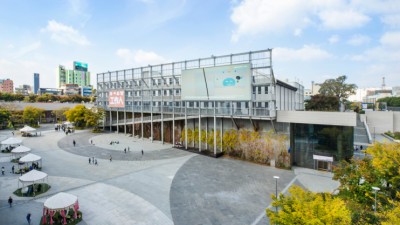
Gwangju
Where culture, cuisine, and city life meet on every corner.
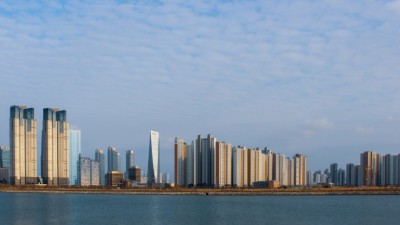
Incheon
A smart base for exploring Korea with ease and perspective.
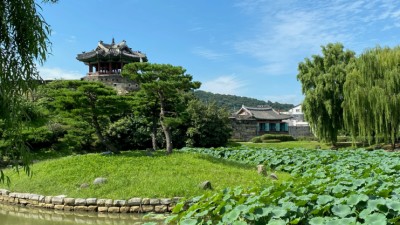
Suwon
Where fortress walls meet modern-day travel access.
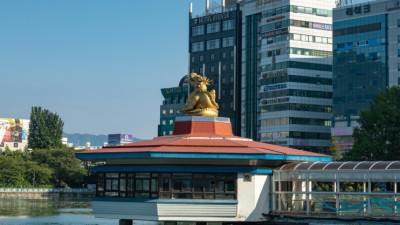
Changwon
A quieter Korean city perspective with room to explore independently.
Ulsan
Industrial coastlines, quiet discovery, and a wider regional context.