About Cork
With a population of 224,004 at the 2022 census, it is a city that combines a compact scale with the energy of a major regional destination.From an LGBTQ+ travel perspective, Cork sits within the wider context of the Republic of Ireland, where LGBTQ+ rights are regarded as among the most progressive in Europe and the world.
Ireland’s shift from conservative social attitudes to broad public acceptance has taken place within a single generation, which gives cities like Cork an especially relevant place in contemporary Irish travel and social life.In practical terms, Cork is known for its historic merchant-port character, Georgian architecture, and lively arts, music, and food scenes.
That matters to LGBTQ+ visitors because it suggests a city where cultural life is central to the visitor experience rather than limited to a single district or venue.
The city’s reputation as the “Rebel City” also reflects a strong civic identity, which can be felt in its independent-minded atmosphere.At present, I would frame Cork’s LGBTQ+ significance less around a single globally famous landmark and more around the broader national context of equality, visibility, and a lively urban culture.
For travelers seeking a refined city break, Cork offers a blend of history, dining, and social openness that makes it a credible stop on an Ireland itinerary.
Our Review
I am approaching Cork as one of Ireland’s most important urban centers: the country’s second-largest city, the county town of County Cork, and the largest city in Munster.
With a population of 224,004 at the 2022 census, it is a city that combines a compact scale with the energy of a major regional destination.
From an LGBTQ+ travel perspective, Cork sits within the wider context of the Republic of Ireland, where LGBTQ+ rights are regarded as among the most progressive in Europe and the world.
Ireland’s shift from conservative social attitudes to broad public acceptance has taken place within a single generation, which gives cities like Cork an especially relevant place in contemporary Irish travel and social life.
In practical terms, Cork is known for its historic merchant-port character, Georgian architecture, and lively arts, music, and food scenes.
That matters to LGBTQ+ visitors because it suggests a city where cultural life is central to the visitor experience rather than limited to a single district or venue.
The city’s reputation as the “Rebel City” also reflects a strong civic identity, which can be felt in its independent-minded atmosphere.
At present, I would frame Cork’s LGBTQ+ significance less around a single globally famous landmark and more around the broader national context of equality, visibility, and a lively urban culture.
For travelers seeking a refined city break, Cork offers a blend of history, dining, and social openness that makes it a credible stop on an Ireland itinerary.
Travel Tips
When I assess Cork from an LGBTQ+ travel perspective, I start with the most important practical fact: the city sits within the Republic of Ireland, whose LGBTQ+ rights framework is widely regarded as among the most progressive in Europe and the world.
Ireland’s shift toward overwhelmingly liberal public attitudes in the space of a generation matters for day-to-day travel, because it shapes the tone of service, public life, and the overall sense of safety visitors can expect in a city like Cork.
For a traveler seeking a polished, low-stress city break, that national backdrop is a meaningful advantage.
Cork itself is Ireland’s second-largest city and the county town of County Cork, with a 2022 census population of 224,004.
In practical terms, that makes it large enough to offer urban amenities, but still compact enough to navigate without the friction that can come with bigger metropolitan destinations.
I find that this scale is useful for LGBTQ+ travelers: it is easier to move between hotels, restaurants, galleries, and nightlife without spending much time on transit, and it makes it simpler to keep evenings flexible and discreet if desired.
In terms of local customs, Cork is best approached as a city with a strong civic identity and a proud, independent outlook.
The city is often called the “Rebel City,” and that sense of local character is part of its appeal.
My advice is to engage with Cork in the same way I would with any well-established Irish city: be polite, direct, and respectful in conversation; avoid making assumptions about people’s backgrounds; and remember that friendliness in service settings is generally warm but not intrusive.
That combination tends to serve LGBTQ+ travelers well, particularly in hospitality settings where professionalism is valued.
For dos and don’ts, I would keep the guidance simple and grounded in verified realities.
Do choose accommodation with clear standards, central access, and reliable reviews, especially if you want an upscale base for exploring the city comfortably.
Do make use of Cork’s compact city centre, since central locations are the most practical for dining, culture, and evening plans.
Do stay observant in any unfamiliar setting, as I would anywhere, and trust your judgment when selecting venues or moving about at night.
Don’t assume that a property or business is LGBTQ+-specific simply because it appears modern or stylish; inclusivity should be checked through policy statements, reviews, and direct communication when necessary.
I also would not expect a formally designated LGBTQ+ district here, so the city’s appeal is more distributed across its broader hospitality and cultural scene.
On safety, Cork benefits from Ireland’s generally progressive legal environment, but I still recommend standard urban precautions.
I would plan late returns in advance, keep digital copies of reservations, and use well-reviewed transport options when moving around after dark.
If I were traveling as a couple or with friends, I would feel comfortable being open in most public settings, while still reading the room in more conservative or crowded contexts, as one would in any city.
For a luxury-oriented trip, I would prioritize central lodging with 24-hour reception, strong guest services, and easy access to the city’s core dining and cultural areas, because that combination reduces friction and increases privacy.
Connecting with the local LGBTQ+ community in Cork requires a practical, evidence-based approach.
I would not invent a scene that I cannot verify, and the available source material does not confirm specific LGBTQ+-focused venues, community groups, or support services in the city.
So, rather than naming unverified organizations, my advice is to check current local listings, official tourism information, and updated community resources before arrival.
In a city like Cork, connection is likely to happen through broader cultural and social spaces rather than a single concentrated queer district.
That means cafés, arts venues, food-focused spots, and well-reviewed bars can be a natural starting point, provided current information confirms they are open and welcoming.
For LGBTQ+ travelers who value comfort and discretion, Cork works best as a refined, culture-led city break.
Its strength lies not in spectacle, but in the combination of a progressive national climate, a walkable urban core, and a strong historic identity.
I would frame the experience as one where careful planning pays off: book centrally, verify inclusivity, use standard safety habits, and let the city’s arts, architecture, and food culture shape the visit.
Within those parameters, Cork is a sensible and appealing destination for LGBTQ+ travelers seeking an elegant, low-risk stay in Ireland.
Verified references: Cork (city); Wikivoyage: Cork; LGBTQ rights in the Republic of Ireland.
In my view, Cork’s greatest strength for LGBTQ+ travelers is the combination of a genuinely progressive national context and a city that feels culturally rich, compact, and easy to navigate.
Ireland’s record on LGBTQ+ rights is among the strongest in Europe, and that matters: it creates a reassuring baseline for visiting Cork, even without relying on a highly concentrated queer district.
Cork itself, as Ireland’s second-largest city and the principal city of County Cork, has the scale to offer quality dining, arts, music, and nightlife, while still feeling manageable for a city break.
Its historic merchant-port identity and Georgian streets add polish and character, which suits travelers looking for a more refined experience.
The main limitation is also clear: I cannot verify, from the source material provided, a clearly documented LGBTQ+ nightlife cluster, Pride event, or dedicated community infrastructure in Cork.
That does not make the city unwelcoming; rather, it means LGBTQ+ visitors should approach it as an inclusive general destination instead of expecting a highly visible queer quarter.
For me, that is an important distinction.
Cork appears best suited to travelers who value a calm, elegant base, want to enjoy the city’s wider cultural life, and are comfortable exploring through well-reviewed mainstream venues rather than a single branded scene.
My recommendation is straightforward: choose central accommodation, use the city’s compact layout to your advantage, and check current listings before you go if you are looking for LGBTQ+-friendly spaces or events.
If you prefer a luxury-leaning trip, Cork rewards that approach well—think strong restaurants, atmospheric hotels, and a city centre that is practical for walking between dinner, drinks, and cultural stops.
I would also advise treating the city as part of a wider Irish itinerary, since Cork’s strengths are amplified by the country’s broader reputation for LGBTQ+ inclusion.
Ultimately, I would encourage LGBTQ+ travelers to explore Cork with confidence and curiosity.
It is not presented here as a city defined by a single scene, but as a place where history, hospitality, and modern Irish openness intersect.
That makes it worth enjoying on its own terms: unhurried, stylish, and grounded in a social climate that is broadly supportive of LGBTQ+ people.
Other Guides in Ireland
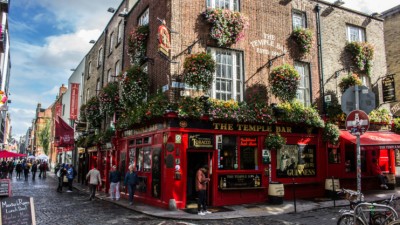
Dublin
Culture, nightlife, and community spirit in a city that knows how to celebrate identity.