- LGBTQ+ Neutral
- 2 City Guides
- 0 Likes
- Leave a comment
About Bulgaria
Overview
Bulgaria sits in Southeast Europe, on the eastern edge of the Balkans, with the Danube to the north and the Black Sea to the east.
For LGBTQ+ travelers, it is best understood as a destination that combines classic European city breaks, mountain and seaside escapes, and a strong sense of regional identity.
Bulgaria is not a country that revolves around tourism alone; its appeal comes from the way everyday life, layered history, Orthodox heritage, and dramatic landscapes all come together in one compact and relatively affordable destination.
Its geography gives travelers a lot of variety for a country of its size.
You can move from the streets of Sofia to the peaks of the Balkan Mountains, from the wine regions and spa towns of the interior to the Black Sea coast and its resort cities.
That diversity makes Bulgaria especially appealing for travelers who want more than one kind of trip in a single visit: culture, nature, food, and relaxation are all within reach.
What Bulgaria is like to visit
Bulgaria’s culture reflects centuries of interaction between Thracian, Roman, Byzantine, Ottoman, and Slavic influences.
The result is a country with deep historical layers and a distinctive identity of its own.
In cities and towns, you will see Orthodox churches, Ottoman-era mosques, Roman ruins, and modern urban neighborhoods side by side.
Traditional customs remain visible in festivals, crafts, music, and food, while the larger cities feel increasingly contemporary and connected to the wider European travel circuit.
For many travelers, Bulgaria’s appeal lies in this contrast: it can feel familiar enough for easy independent travel, but still distinctive enough to be memorable.
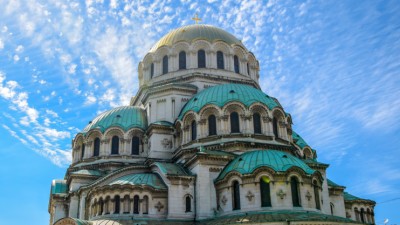
Sofia, the capital, is a practical gateway with museums, cafes, parks, and an active city atmosphere.
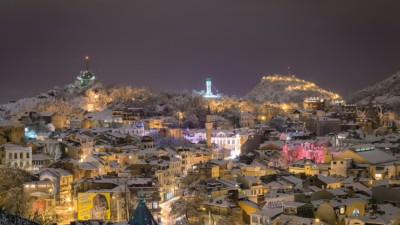
Plovdiv is one of the country’s most atmospheric destinations, known for its old town, Roman remains, and creative energy.
Varna and Burgas open onto the Black Sea and offer a different pace, with beach access and summer travel appeal.
Veliko Tarnovo, with its hilltop setting and historic character, is another major draw for visitors interested in architecture and history.
Landscape, climate, and outdoor appeal
Geographically, Bulgaria is unusually varied.
The Danubian Plain stretches across the north, the Balkan Mountains run through the center, and the Rhodope Mountains shape parts of the south.
This means the country offers both accessible lowland travel and more dramatic mountain scenery.
It also has a long Black Sea coastline, which gives it a strong summer tourism season and adds a beach holiday option that pairs well with city sightseeing.
That range of landscapes is part of what makes Bulgaria distinctive.
In one trip, travelers can combine urban life, mountain views, spa towns, river valleys, and seaside stays.
Winter brings skiing and mountain travel, while summer is ideal for the coast and for exploring inland cities without extreme temperatures.
For LGBTQ+ visitors who prefer destinations where they can keep a trip varied and self-directed, Bulgaria can be especially rewarding because the country offers multiple travel styles without requiring long internal journeys.
Food and drink
Bulgarian cuisine is hearty, fresh, and shaped by both Balkan and broader Mediterranean and Ottoman influences.
Travelers will encounter grilled meats, yogurt-based dishes, salads, pastries, stews, and seasonal vegetables.
The national culinary identity is strongly tied to dairy, fresh produce, and simple flavors rather than elaborate presentation.
Meals are often generous and best experienced slowly, especially in traditional restaurants or family-run places.
Food is also one of the easiest ways to connect with local culture.
Markets, bakeries, and casual restaurants give a good feel for everyday life, while wine and spirits play a role in social dining.
The country’s wine regions are increasingly recognized by travelers, and the combination of local food, café culture, and relatively affordable prices adds to Bulgaria’s appeal for longer stays as well as short breaks.
Key destinations
Sofia is the natural starting point for most international travelers.
It is the country’s largest city and main transport hub, and it offers a mix of national landmarks, religious architecture, parks, galleries, and nightlife.
Plovdiv is especially important for travelers interested in history and atmosphere, with its preserved old quarter and Roman heritage giving it a very different feel from Sofia.
Varna and Burgas are the main Black Sea cities and are useful bases for coastal travel, summer leisure, and access to nearby beach destinations.
Beyond the major cities, Bulgaria has several destinations that deepen a trip.
Veliko Tarnovo is closely associated with the country’s medieval past and scenic river setting.
The Rila Monastery is one of Bulgaria’s best-known cultural landmarks and a major stop for travelers interested in religious heritage and mountain landscapes.
The town of Bansko is known for winter sports and mountain access, while smaller towns across the country can offer a slower pace and a more local experience.
UNESCO-listed sites in Bulgaria also highlight the country’s long historical depth and make it attractive to travelers who enjoy combining cultural sightseeing with leisure travel.
Typical travel appeal for LGBTQ+ visitors
As a travel destination, Bulgaria tends to appeal to LGBTQ+ visitors who value independence, cultural sightseeing, and flexible itineraries over a highly curated scene.
It offers the fundamentals of a good European trip: walkable city centers, historic architecture, good food, rail and road connections, mountain and seaside options, and a generally manageable scale for first-time visitors to the region.
It can be an appealing choice for travelers who want a destination with substance, not just nightlife.
For LGBTQ+ travelers, the country’s practicality is part of the draw.
Bulgaria gives you the chance to focus on museums, neighborhoods, scenery, and cuisine while moving between urban and outdoor settings.
Like much of the Balkans, the social atmosphere can vary by place and setting, so travelers often find larger cities more comfortable for open expression than smaller towns or conservative areas.
As in any destination, discretion and situational awareness are useful, but Bulgaria remains a destination with real depth, strong cultural rewards, and a wide range of travel experiences packed into one country.
What makes Bulgaria distinctive
Bulgaria stands out because it feels both familiar and singular.
It is European in ease of access and infrastructure, but its historical blend of empires, religions, and regional traditions gives it a character that is very much its own.
The mix of mountain scenery, Black Sea coastline, historic cities, and affordable travel makes it unusually versatile.
Travelers who are drawn to places with a strong sense of place, rather than only polished tourist branding, will likely find Bulgaria especially satisfying.
For an LGBTQ+ trip, that combination of variety, affordability, and cultural depth is a major strength.
Bulgaria is not just a single-style destination; it is a country where you can design a trip around history, food, beaches, hiking, or city life and still feel that you are seeing something authentic.
That flexibility is one of the reasons it remains an appealing and distinctive stop in Southeast Europe.
LGBTQ+ Overview
LGBTQ+ overview
Bulgaria is a legally mixed but socially uneven destination for LGBTQ+ travelers. Same-sex sexual activity is legal, and there are no countrywide laws that broadly criminalize LGBTQ+ identity or expression. At the same time, Bulgaria does not provide comprehensive nationwide legal protection against discrimination on all grounds relevant to LGBTQ+ travelers, and legal recognition for same-sex couples is not available. For visitors, this usually means that day-to-day travel is possible without major legal exposure, but comfort and safety can vary significantly depending on location, setting, and how openly you present.
In practical terms, Sofia is generally the most tolerant environment in the country, with a visible if modest LGBTQ+ scene and more familiarity among younger people, hotel staff, and service workers. Outside the capital, attitudes can become more conservative more quickly, particularly in smaller towns and rural areas. Public displays of affection between same-sex couples may attract unwanted attention anywhere, but the likelihood of staring, comments, or social discomfort tends to rise outside cosmopolitan settings. Travelers who value discretion may find that a low-key approach is the simplest way to reduce friction, especially when using taxis, public transport, or staying in smaller local accommodations.
The main traveler risks are usually social rather than legal. These can include harassment, stares, verbal hostility, or awkward treatment if your relationship status or gender expression becomes obvious. Trans travelers may face additional scrutiny because gender nonconformity can draw attention in public spaces and during routine interactions such as hotel check-in or ID checks. While serious violence is not something most LGBTQ+ visitors encounter, isolated incidents can happen anywhere, and the risk is higher if you are alone late at night, in nightlife districts after closing time, or in places where alcohol and crowds are factors. As in many countries in the region, it is wise to avoid arguments with strangers and to leave situations that feel tense rather than trying to explain yourself to an unreceptive audience.
For legal and administrative matters, same-sex marriage is not recognized, and there is no full equivalent of spousal rights for visiting couples. That matters for travelers planning an extended stay, medical decision-making, or family travel, because rights that might be taken for granted at home may not carry over in Bulgaria. If you are traveling as a couple, it is sensible to bring ordinary travel documents, proof of accommodation, and any paperwork relevant to children, guardianship, or medical needs, and not to assume that a partner will automatically be treated as next of kin. If you are trans or nonbinary, carry identification that matches the document you use for travel and be prepared for occasional confusion if your presentation differs from the photo or name on your passport.
Support resources do exist, but they are limited compared with more established Western European destinations. Travelers generally do best by relying on mainstream emergency and consular support first, and using local LGBTQ+ organizations or community contacts if they need non-emergency advice, social support, or help understanding the local climate. Because publicly available resources and service quality can change, it is best to confirm current contacts shortly before travel rather than relying on outdated information. If you need help in an urgent situation, standard emergency services and your embassy or consulate are the most dependable starting points.
On the whole, Bulgaria has made some gradual progress in visibility and urban acceptance, especially in Sofia, but the broader trajectory is still uneven. Public debate around LGBTQ+ issues remains politically sensitive, and social acceptance has not advanced at the same pace as basic legal permission to exist and travel. For LGBTQ+ visitors this creates a destination that is usually manageable with sensible precautions, but not one where broad protection, consistent acceptance, or low-risk travel can be assumed everywhere. Discretion, awareness of local attitudes, and a preference for larger cities and established tourism settings will improve the experience for most travelers.