About Sofia
For LGBTQ+ travellers, Sofia is best understood as Bulgaria’s political and cultural heart, and as a city where visibility and everyday travel realities matter as much as architecture or dining.Bulgarian LGBTQ+ rights are shaped by a mixed legal and social picture.
Same-sex relationships are legal, and discrimination on the basis of sexual orientation has been banned since 2004, but same-sex couples do not receive the same legal protections as opposite-sex couples, and challenges remain for many LGBTQ+ residents and visitors.
That makes it important for me to present Sofia honestly: this is a city where travellers should stay informed, travel thoughtfully, and rely on current local guidance when planning nights out or community-focused experiences.In the city itself, one of the most recognisable urban landmarks is the Sofia Central Mineral Baths, a reminder of the mineral springs that have long been part of the city’s identity.
While Sofia is not defined by a single globally famous LGBTQ+ landmark, it does stand out as Bulgaria’s capital and as the natural base for anyone combining culture, city luxury, and a more considered LGBTQ+ travel itinerary in Southeast Europe.
For me, that means Sofia is a place to explore with good hotels, smart dining, and a realistic understanding of the local context.For orientation, I also find it useful to look at the broader national picture before planning a trip; the country context is outlined in trusted references such as Sofia and LGBTQ rights in Bulgaria.
Our Review
As I arrive in Sofia, I’m immediately struck by how much the city offers in one place: a capital with a long history, a central position in Bulgaria, and a setting that reaches from the Sofia Valley to the slopes of Vitosha Mountain.
For LGBTQ+ travellers, Sofia is best understood as Bulgaria’s political and cultural heart, and as a city where visibility and everyday travel realities matter as much as architecture or dining.
Bulgarian LGBTQ+ rights are shaped by a mixed legal and social picture.
Same-sex relationships are legal, and discrimination on the basis of sexual orientation has been banned since 2004, but same-sex couples do not receive the same legal protections as opposite-sex couples, and challenges remain for many LGBTQ+ residents and visitors.
That makes it important for me to present Sofia honestly: this is a city where travellers should stay informed, travel thoughtfully, and rely on current local guidance when planning nights out or community-focused experiences.
In the city itself, one of the most recognisable urban landmarks is the Sofia Central Mineral Baths, a reminder of the mineral springs that have long been part of the city’s identity.
While Sofia is not defined by a single globally famous LGBTQ+ landmark, it does stand out as Bulgaria’s capital and as the natural base for anyone combining culture, city luxury, and a more considered LGBTQ+ travel itinerary in Southeast Europe.
For me, that means Sofia is a place to explore with good hotels, smart dining, and a realistic understanding of the local context.
For orientation, I also find it useful to look at the broader national picture before planning a trip; the country context is outlined in trusted references such as Sofia and LGBTQ rights in Bulgaria.
Events and Nightlife in Sofia, Bulgaria
When I look at Sofia through an LGBTQ+ travel lens, I see a city that is best approached with realism and a little local research.
Bulgaria permits same-sex relationships, and discrimination on the basis of sexual orientation has been banned since 2004, but same-sex couples do not have the same legal protections as opposite-sex couples.
That means the city’s LGBTQ+ scene exists in a broader social environment that can still be uneven.
For annual community events, the most important reference point is SOFIA PRIDE, the city’s best-known LGBTQ+ gathering.
Because event dates and programming can change from year to year, I would always check official current listings before planning a trip around it.
If I were timing a visit for atmosphere and visibility, Pride would be the key event to watch in Sofia.
In terms of nightlife, Sofia does not present itself as a large, globally branded LGBTQ+ nightlife capital.
What matters here is selectivity: I would focus on central, well-connected areas of the city, where bars, cafés, and late-night venues are more likely to feel comfortable and accessible.
The city’s compact layout makes it practical to move between dinner, drinks, and a late-evening stop without long cross-town journeys.
Because verified venue information is limited in the source material I’m using, I can’t responsibly list specific LGBTQ+ bars or clubs as recommendations.
What I can say is that Sofia’s social life is concentrated in the city center, and that is where I would look first for LGBTQ+ friendly spaces, particularly places that attract an international crowd.
As a travel journalist, I would approach nightlife here with an eye for discretion, atmosphere, and ease of access rather than expecting a dense queer district.
For travelers who prefer a more polished evening, Sofia’s strengths are in its city-center dining, hotel bars, and walkable nightlife zones.
That makes it possible to build a refined night out without depending on a dedicated LGBTQ+ venue.
I would pair a good restaurant with a central cocktail bar and keep transport straightforward, especially late at night.
My practical advice is simple: check current Pride details before your trip, stay in the central districts, and choose venues that are busy, established, and easy to reach.
Sofia can feel welcoming when you know where to go, but the scene is best enjoyed with informed planning rather than assumptions.
Sofia | LGBTQ rights in Bulgaria
Cultural and Social Activities
When I spend time in Sofia through an LGBTQ+ lens, I approach the city as a place where culture is the main draw rather than a clearly mapped queer entertainment district.
Sofia is Bulgaria’s capital and largest city, set in the Sofia Valley at the foot of Vitosha mountain, and that mix of urban life, history, and easy access to nature gives it a distinctive rhythm.
For LGBTQ+ travelers, I find that the most rewarding experiences are often cultural: museums, galleries, landmark buildings, and public spaces that help me read the city’s past and present.
The most important context is Bulgaria’s legal framework.
Same-sex relationships are legal, and discrimination on the basis of sexual orientation has been banned since 2004, but same-sex couples do not have the same legal protections as opposite-sex couples.
That means I travel with the same practical awareness I would use in any city where legal progress has outpaced full social equality.
In Sofia, cultural outings are a strong way to experience the city comfortably and respectfully.
Cultural activities I would prioritize
For a first visit, I would begin with Sofia’s major museums and cultural institutions rather than trying to search for a specifically LGBTQ+ scene that is not well documented in the verified sources I have.
The city’s historic center is where I would focus my time, using it as a base for museum visits, architectural walks, and relaxed café stops between cultural sights.
Sofia’s identity is shaped by layers of history, and that is best understood by moving through its central streets and public squares.
One landmark that stands out is the Sofia Central Mineral Baths.
I include it not only because it is one of the city’s best-known historic buildings, but also because it reflects a very Sofia-specific feature: the city’s mineral springs.
Even if I am not going there for a spa day, I find this area useful as a cultural reference point, since it connects the city’s built heritage with its long relationship to water and wellness.
I also recommend keeping time for the broader historic core of the city, where Sofia’s layers of Roman, Ottoman, imperial, and modern Bulgarian history are visible in close proximity.
For me, this is one of the most rewarding ways to understand the city as a traveler: walking, observing, and letting the architecture tell the story.
Art galleries and contemporary culture
Sofia’s contemporary art and gallery scene is part of what makes the city feel current and interesting to me as a journalist.
While the source pack does not verify individual LGBTQ+ galleries or queer-led cultural spaces, I can say that the capital is the most likely place in Bulgaria to find a broad cultural audience and international-minded programming.
In practical terms, I would use central galleries and exhibition spaces as part of a refined city itinerary, pairing them with lunch or dinner in the center for an elegant, low-stress day out.
Because verified source material here does not confirm specific LGBTQ+ exhibitions or regular queer cultural programming, I would avoid naming venues that are not documented.
Instead, I would suggest that LGBTQ+ travelers treat Sofia as a city for thoughtful cultural exploration: architecture in the morning, a museum or gallery in the afternoon, and a dinner reservation in the evening.
LGBTQ+ specific tours and landmarks
At the time of writing, I do not have verified information on dedicated LGBTQ+ history tours in Sofia, and I would not invent one.
What I can say is that Sofia does not appear, from the verified sources provided, to have a widely documented LGBTQ+ heritage route or officially recognized queer landmark network.
For that reason, I would frame the city’s LGBTQ+ cultural value more broadly: as a national capital where visibility, rights, and public life are all part of a larger social context.
When I travel here, I would therefore build a self-guided itinerary around the city’s major civic and historical landmarks, using them as a way to understand contemporary Bulgaria.
That approach feels both realistic and rewarding, especially for travelers who appreciate culture with substance rather than performative branding.
Notable LGBTQ+ figures and public voices
I do not have enough verified information to name notable LGBTQ+ figures or influencers specifically tied to Sofia without risking inaccuracy.
To stay grounded, I would omit personal claims rather than speculate.
The verified sources provided focus on the city itself and Bulgaria’s legal context, not on documented queer public figures based in Sofia.
How I would experience Sofia as an LGBTQ+ traveler
If I were planning a polished city break, I would use Sofia’s cultural strengths to shape the trip: central hotels, daytime sightseeing, museum visits, and relaxed evenings in the city center.
The city works well for this style of travel because it is compact, historically layered, and easy to navigate.
I would keep expectations realistic about LGBTQ+ visibility, but I would not let that overshadow the city’s appeal as a capital with strong cultural texture.
For LGBTQ+ travelers who value atmosphere, history, and a sense of place, Sofia offers a grounded and interesting experience.
It is not a city I would describe as having a heavily documented queer culture circuit, but it is a city where the broader cultural landscape is worth exploring carefully and with confidence.
Useful background reading: Sofia | LGBTQ rights in Bulgaria
Accommodation
When I plan a luxury-leaning stay in Sofia from an LGBTQ+ perspective, I focus less on a label and more on location, standards, and discretion.
Sofia is Bulgaria’s capital and largest city, set in the Sofia Valley at the foot of Vitosha Mountain, and that geography matters: the city’s most practical and comfortable base for most travelers is its central core, where the best hotels, restaurants, and transport connections are concentrated.
There are no verified, widely documented LGBTQ+-specific hotels in the source pack, so I would not claim that any property in Sofia is officially queer-branded or community-designated.
Instead, I look for established international or upscale hotels in central districts, where service is typically more polished and where arriving, checking in, and moving around the city feels straightforward.
In Sofia, that usually means prioritizing the center rather than outer neighborhoods, especially if I want a smoother, more private stay.
For LGBTQ+ travelers, my first rule is simple: I choose accommodation based on professionalism and location.
I look for hotels with strong guest reviews, 24-hour reception, secure entry, and easy access to taxis or ride-hailing.
In a city like Sofia, staying central also makes it easier to enjoy the capital’s cultural highlights without unnecessary transit time.
That is particularly useful if I’m pairing a hotel stay with fine dining, museum visits, or an evening out in the city.
Because Bulgaria’s legal framework is not fully equal for same-sex couples, I also prefer properties that feel international in their standards and service culture.
That does not mean I assume anything negative about smaller locally run accommodations; it simply means I value predictability.
I want a place where I can check in calmly, get clear service, and avoid having to explain myself more than necessary.
For me, that is part of luxury travel: ease, privacy, and confidence.
As for neighborhoods, I would keep my search concentrated in Sofia’s central districts.
The city center is the most practical choice for most visitors, especially for those who want a refined, walkable stay with access to the capital’s main sights.
Sofia’s historic and civic core is where the strongest hotel infrastructure is found, and it is also where I would feel most comfortable basing myself as an LGBTQ+ traveler.
I would be more selective about areas farther from the center unless I had a specific reason to stay there, such as a particular hotel or business appointment.
When I choose an inclusive accommodation option, I also pay attention to the wording on booking platforms and hotel websites.
I look for clear non-discrimination policies, professional multilingual service, and guest feedback that mentions respectful treatment.
If a property presents itself as international, business-friendly, or design-focused, that can be a useful sign of a well-run stay, though I still verify recent reviews before booking.
For a more elevated Sofia experience, I would combine a central hotel with the city’s strengths: access to the Sofia Central Mineral Baths area, proximity to cultural landmarks, and easy movement around the center.
Sofia’s appeal is not about a large documented LGBTQ+ hotel scene; it is about choosing a polished base in the right part of the city and using it as a comfortable launch point for a sophisticated city break.
In short, my accommodation advice for Sofia is to stay central, book well-reviewed properties, and prioritize privacy and service quality.
Verified information does not support naming specific LGBTQ+-branded hotels, so I prefer to keep the recommendation practical: choose established accommodation in the city center, and you will be well placed for a comfortable, elegant stay in Bulgaria’s capital.
Dining and Entertainment
When I plan an LGBTQ+ city break in Sofia, I think in terms of comfort, discretion, and quality rather than a formally branded queer scene.
Bulgaria’s capital is a large, cosmopolitan city, but verified public information does not give me a reliable list of LGBTQ+-specific restaurants, cafés, or entertainment venues to recommend by name.
What Sofia does offer is a strong, central dining-and-nightlife core, and that is where I focus my time on the ground.
For dining, I make the city center my base.
Sofia’s compact core is where I am most likely to find polished restaurants, hotel dining rooms, cafés, and wine bars with professional service and a mixed international clientele.
The area around the historic center is especially practical because it keeps me close to major sights, transport, and evening options without long cross-city journeys.
Sofia itself sits in the Sofia Valley at the foot of Vitosha mountain and is known for its mineral springs, including the Sofia Central Mineral Baths area, which adds a distinctive architectural backdrop to a meal or an evening stroll.
Because same-sex relationships are legal in Bulgaria, I feel comfortable recommending Sofia as a city where LGBTQ+ travelers can eat out and enjoy the evening, but I would still choose venues with a high standard of service and a discreet atmosphere.
In practice, that means I would look for established restaurants with strong recent reviews, clear reservation systems, and central locations rather than trying to guess at venues that may or may not be welcoming.
I do not have verified evidence of dedicated LGBTQ+-themed restaurants or cafés in Sofia, so I would avoid naming any without solid confirmation.
For a luxury-minded traveler, Sofia’s most reliable dining experiences are often the elegant, centrally located places that serve modern Bulgarian or international cuisine in a refined setting.
The city’s restaurant culture is strongest where business travelers, residents, and visitors intersect, and that usually translates into a more relaxed and professionally managed atmosphere.
I also find that hotel restaurants and rooftop bars can be a smart choice in Sofia: they tend to offer dependable service, multilingual staff, and a more private setting for couples or solo travelers who prefer a lower-profile evening.
When it comes to entertainment, I treat Sofia as a city for culture-first evenings.
The capital is Bulgaria’s main stage for theaters, cinemas, concert halls, and live performance spaces, and that makes it especially appealing if I want a polished night out rather than a club-focused one.
Sofia is the country’s largest city and cultural center, so it naturally offers the widest choice of established venues for film, opera, theater, and concerts.
I would concentrate on the central districts, where major venues are easiest to reach and the overall experience feels most straightforward for visitors.
That said, I cannot verify any specific theaters, cinemas, or live-performance venues as especially LGBTQ+-inclusive from the source pack alone, so I would keep my guidance general and practical.
In a city like Sofia, the safest approach is to choose reputable, mainstream cultural venues with current programming and good online visibility.
For LGBTQ+ travelers, that usually means a setting where I can enjoy the performance, leave comfortably, and move easily back to my hotel afterward.
If I were planning an evening out, I would build it around a central dinner, followed by a theater, concert, or cinema visit, and finish with a drink in a polished hotel bar or an established city-center lounge.
That style of evening suits Sofia well: it is elegant, manageable, and grounded in the parts of the city where I can move with the most ease.
It also fits the reality of Bulgaria’s current legal landscape, where same-sex relationships are legal but same-sex couples do not yet have the same protections as opposite-sex couples LGBTQ rights in Bulgaria.
My overall advice is simple: in Sofia, I would prioritize central, reputable, and well-reviewed venues for both dining and entertainment.
The city’s strongest appeal for an LGBTQ+ traveler lies not in a documented queer venue scene, but in the quality of its mainstream hospitality, its cultural calendar, and its easy access to the heart of the capital.
Travel Tips
When I plan an LGBTQ+ trip to Sofia, I approach it as I would any elegant city break in Southeast Europe: with good judgment, a central base, and a clear sense of the local context.
Sofia is Bulgaria’s capital and largest city, set in the Sofia Valley at the foot of Vitosha Mountain, and it is a practical place to explore if you want a mix of culture, easy logistics, and a lower-key urban experience.
From an LGBTQ+ point of view, the first thing I keep in mind is the legal framework.
In Bulgaria, same-sex relationships are legal, and discrimination based on sexual orientation has been banned since 2004.
At the same time, same-sex couples do not have the same legal protections as opposite-sex couples.
In practice, that means I would not assume the same level of visibility or support I might expect in a Western European capital.
I plan accordingly and stay discreet when needed.
My strongest practical tip is to stay central.
Sofia’s center is where the city is easiest to navigate, with the best access to hotels, dining, public transport, and the main cultural sights.
For a luxury-minded traveler, this also makes it simpler to choose a polished hotel with 24-hour reception, secure entry, and straightforward taxi access.
A well-located base reduces hassle and helps me move confidently through the city, especially in the evening.
As for local customs, I keep my public behavior low-key and read the room.
Sofia is a large, modern capital, but it is still sensible to be mindful with public displays of affection, particularly outside the most international central areas.
I do not interpret discretion as fear; for me, it is simply smart travel etiquette in a city where social attitudes can vary.
In terms of safety, I use the same standards I would in any major city: I prefer established accommodation, I avoid unplanned late-night wandering in unfamiliar areas, and I arrange transport in advance when I’m going out after dark.
The city’s compact core makes this easy.
I also keep my personal information and travel plans on the conservative side when I’m meeting new people, particularly if I have not yet gauged the environment.
If I want to connect with the local LGBTQ+ community, I start by checking current, verified event listings before I travel, rather than assuming there will be a large visible scene on arrival.
The source material confirms the legal context, but it does not verify specific local organizations, bars, or recurring community venues, so I would not rely on guesswork.
In Sofia, the most responsible approach is to look for up-to-date listings and current local guidance once I am in the city.
I also think Sofia works best for LGBTQ+ travelers who enjoy a culture-first itinerary.
The city’s historic center, mineral springs heritage, and easy access to Vitosha make it ideal for a polished day out followed by a quiet evening in a reputable restaurant, hotel bar, or café in the center.
That suits my preferred style of travel: comfortable, elegant, and unhurried.
My bottom line is simple.
Sofia is a sensible and interesting destination for LGBTQ+ travelers, provided I keep expectations realistic, stay central, and prioritize privacy, good accommodation, and verified current information.
I would travel there with confidence, but I would do so thoughtfully.
Helpful background reading: Sofia, LGBTQ rights in Bulgaria.
Conclusion
When I assess Sofia from an LGBTQ+ travel perspective, I see a city with real strengths, but also clear limitations that matter.
As Bulgaria’s capital and largest city, Sofia has the scale, services, and urban rhythm that make travel straightforward.
I find its setting especially appealing: the city lies in the Sofia Valley at the foot of Vitosha mountain, with the added character of mineral springs and landmarks such as the Sofia Central Mineral Baths.
That combination gives Sofia a polished, atmospheric backdrop for a city break.
For LGBTQ+ travelers, the strongest point is that same-sex relationships are legal in Bulgaria and discrimination on the basis of sexual orientation has been banned since 2004.
That said, I would be careful not to overstate the level of equality.
Same-sex couples still do not have the same legal protections as opposite-sex couples, and that remains an important reality for visitors to understand before they arrive.
In practical terms, I would treat Sofia as a destination where informed travel choices matter more than assumptions.
My recommendation is to stay central, choose reputable accommodation, and enjoy the city in a way that feels comfortable and discreet.
Sofia rewards travelers who value culture, architecture, mineral-bath heritage, and a well-run city stay.
I would also advise checking current local information before setting out, especially if you plan to look for LGBTQ+ social spaces or events, since verified public information remains limited.
At the same time, I would not approach Sofia with hesitation alone.
I would approach it with curiosity.
This is a city where you can enjoy elegant dining, explore the historic core, and take in the mountain backdrop, all while experiencing one of Southeast Europe’s most important capitals.
For LGBTQ+ travelers who appreciate a refined, practical city break, Sofia is worth exploring—just with realistic expectations and a thoughtful itinerary.
Other Guides in Bulgaria
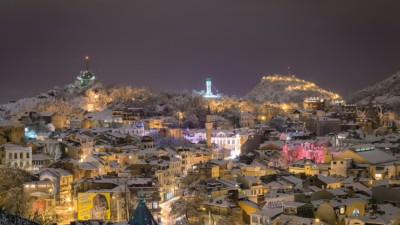
Plovdiv
Ancient streets, modern culture, and a taste of the Balkans.