About Guadalajara
For LGBTQ+ travelers, that broader context matters.
Mexico has seen significant expansion of LGBTQ+ rights in the 21st century, and Guadalajara sits within that national setting while also offering the kind of museums, plazas, and historic landmarks that help travelers understand local identity beyond nightlife alone.From a practical and cultural standpoint, I see Guadalajara as a city where heritage and everyday life overlap.
The Centro Histórico is anchored by landmarks such as Guadalajara Cathedral, the Government Palace, and the Cabañas Cultural Institute, the last of which is a UNESCO World Heritage Site and an important stop for anyone interested in art and social history.
The City Museum also provides a useful lens on the city’s long development.
For visitors, these sites are not only architectural highlights; they are part of the civic fabric that shapes how the city presents itself today.In an LGBTQ+ travel context, I would frame Guadalajara as a destination to approach with the same care and curiosity as any major Mexican city: with attention to local culture, public spaces, and the legal and social landscape.
While this introduction focuses on the city’s broader identity rather than specific nightlife venues, it is worth noting that Guadalajara is often included in discussions of LGBTQ+ travel in Mexico because it combines a large urban population with an established cultural infrastructure and nationally significant landmarks.In short, I find Guadalajara compelling not just as a destination, but as a place where heritage, art, and contemporary city life meet.
That makes it especially relevant for travelers who want their trip to engage with culture as much as community.
Our Review
I write about Guadalajara as one of Mexico’s major cultural cities: it is the capital of Jalisco and the country’s second-largest city, with a long colonial and post-independence urban history that gives the center a distinctly historic character.
For LGBTQ+ travelers, that broader context matters.
Mexico has seen significant expansion of LGBTQ+ rights in the 21st century, and Guadalajara sits within that national setting while also offering the kind of museums, plazas, and historic landmarks that help travelers understand local identity beyond nightlife alone.
From a practical and cultural standpoint, I see Guadalajara as a city where heritage and everyday life overlap.
The Centro Histórico is anchored by landmarks such as Guadalajara Cathedral, the Government Palace, and the Cabañas Cultural Institute, the last of which is a UNESCO World Heritage Site and an important stop for anyone interested in art and social history.
The City Museum also provides a useful lens on the city’s long development.
For visitors, these sites are not only architectural highlights; they are part of the civic fabric that shapes how the city presents itself today.
In an LGBTQ+ travel context, I would frame Guadalajara as a destination to approach with the same care and curiosity as any major Mexican city: with attention to local culture, public spaces, and the legal and social landscape.
While this introduction focuses on the city’s broader identity rather than specific nightlife venues, it is worth noting that Guadalajara is often included in discussions of LGBTQ+ travel in Mexico because it combines a large urban population with an established cultural infrastructure and nationally significant landmarks.
In short, I find Guadalajara compelling not just as a destination, but as a place where heritage, art, and contemporary city life meet.
That makes it especially relevant for travelers who want their trip to engage with culture as much as community.
Social Acceptance and Safety in Guadalajara
When I assess Guadalajara from an LGBTQ+ travel perspective, I see a city that sits within Mexico’s broader 21st-century progress on LGBTQ+ rights, while still reflecting the social contrasts of a large metropolitan area.
Nationally, Mexico has seen significant legal advances for LGBTQ+ people in recent decades, and that matters for Guadalajara because it is one of the country’s major urban centers and cultural capitals.
Still, legal progress does not automatically translate into uniform everyday acceptance, so I approach the city with the same measured, realistic lens I would use for any large Latin American destination.
In practical terms, Guadalajara is generally experienced as a major city where travelers can move through central areas, museums, and historic districts without needing to make their identity a constant focus.
At the same time, public expressions of affection or visible gender nonconformity may attract attention in some settings, particularly outside the most urban and tourism-oriented parts of the city.
My advice is to read the room, especially in more conservative or residential environments, and to rely on the same situational awareness that I would recommend anywhere in a busy Mexican city.
General attitudes
Guadalajara is not a small provincial town; it is Mexico’s second-largest city and the capital of Jalisco, with a large, diverse population.
That scale tends to create more anonymity and more space for different lifestyles than one might find in smaller destinations.
In my experience as a travel journalist, large cities often offer a broader range of social attitudes, and Guadalajara is no exception.
However, because the city is also rooted in a strong historical and cultural identity, visitors should not assume that every neighborhood or social setting will feel equally open.
For LGBTQ+ travelers, I would characterize the city’s atmosphere as one where discretion can still be useful, even when the environment is broadly urban and modern.
The historic center and major public areas are important for sightseeing, but they are not automatically the most visibly LGBTQ+-oriented parts of the city.
I therefore recommend approaching acceptance as context-dependent rather than citywide and uniform.
Safety overview
As with any large destination, safety in Guadalajara depends on time of day, location, and personal behavior.
My primary recommendation is to use standard urban precautions: stay aware of your surroundings, keep valuables secure, and avoid appearing distracted in unfamiliar areas.
This is especially important around transport hubs, crowded streets, and during late-night travel.
Because Guadalajara is a major city, I would also advise travelers to plan transport carefully rather than relying on improvisation at night.
Use reputable transportation options, confirm your route in advance, and avoid walking long distances alone after dark in areas you do not know well.
If you are meeting people or going out in social settings, it is wise to share your plans with a trusted contact and keep your phone charged.
For LGBTQ+ visitors, the main safety principle is to balance openness with awareness.
In places where the social environment is clearly welcoming, travelers may feel comfortable being more visibly themselves.
In more conservative settings, a lower profile may be the safer and more practical choice.
I would treat that not as a limitation on identity, but as a travel strategy rooted in local context.
Neighborhoods and areas
The source material I am using does not verify specific LGBTQ+-designated neighborhoods, and I do not want to speculate.
What can be said confidently is that Guadalajara’s historic center is one of the city’s most important cultural areas, home to landmarks such as the Guadalajara Cathedral, the Government Palace, the Cabañas Cultural Institute, and the City Museum.
This is where I would expect many visitors to spend time during the day, and it is a logical starting point for understanding the city’s civic and cultural life.
At the same time, I would be cautious about labeling any district as universally welcoming or unwelcome without direct verification.
In a city this size, attitudes can vary block by block, and even within the same neighborhood there can be a wide range of experiences.
Rather than making broad claims, I would advise LGBTQ+ travelers to look for signs of comfort in the setting itself: the clientele, the tone of service, and whether the space feels relaxed and inclusive.
Practical guidance I would give travelers
- Use common-sense urban precautions, especially at night and around transport corridors.
- Observe local cues before being openly affectionate or highly visible in unfamiliar environments.
- Prioritize well-traveled central areas for sightseeing and daytime exploration.
- Avoid making assumptions about acceptance based on the city as a whole; experiences can differ by neighborhood and setting.
- Rely on current, verified information before going out, since local conditions and social dynamics can change.
From my perspective, Guadalajara offers LGBTQ+ travelers a serious and culturally rich urban experience, but one that benefits from thoughtful navigation.
Its historic center and major institutions make it especially rewarding for travelers interested in architecture, history, and civic culture, while its place in Mexico’s broader legal and social evolution provides an important national context.
I would describe it as a city where awareness and cultural sensitivity are the best tools for a safe and rewarding visit.
Verified background sources: Wikivoyage: Guadalajara; LGBTQ rights in Mexico.
Community and Support in Guadalajara
When I look at Guadalajara from an LGBTQ+ travel perspective, I see a large Mexican metropolis with the kind of scale that can support specialized services, but also a city where travelers should rely on confirmed, up-to-date information rather than assumptions.
Guadalajara is Mexico’s second-largest city and the capital of Jalisco, and it is described in Wikivoyage’s Guadalajara guide as a major urban center with a distinct historic character.
That context matters: in a city of this size, community support is shaped by broader municipal and state services as well as by civil society resources.
Mexico’s legal environment is also important background.
According to LGBTQ rights in Mexico, LGBTQ+ rights expanded significantly in the 21st century.
That national framework does not tell me exactly what support looks like in every neighborhood of Guadalajara, but it does help explain why many travelers and residents can access services and legal protections through mainstream institutions rather than only through informal networks.
Community organizations and support groups
In the source pack provided to me, I do not have verified names or addresses for specific LGBTQ+ organizations, community centers, or support groups in Guadalajara.
To stay accurate, I won’t invent any.
What I can say is that in a city of this size, visitors seeking community support should verify current information through local government health services, reputable civil society directories, or national LGBTQ+ rights resources before traveling or arriving.
For practical planning, I would treat Guadalajara as a place where support may be distributed across different institutions rather than concentrated in one official LGBTQ+ center.
That makes current verification especially important for anyone looking for peer support, counseling, or legal guidance.
Health services, including mental health and HIV/AIDS support
I do not have source-backed confirmation of specific LGBTQ+-focused clinics, mental health programs, or HIV/AIDS support organizations in Guadalajara from the materials provided here.
So I cannot responsibly list particular providers.
What I can note is that Guadalajara is a major urban center with an international airport and broad regional connectivity, which usually means access to general healthcare infrastructure is more developed than in smaller towns; however, the existence of infrastructure is not the same as verified LGBTQ+-specific support, so I avoid making that leap.
For LGBTQ+ travelers, the safest evidence-based approach is to identify health services before arrival and to confirm whether they offer inclusive care, mental health referrals, and HIV testing or treatment.
If you need urgent or ongoing care, use verified local health channels and ask directly about confidentiality, English-language support if needed, and current referral pathways.
How I would frame the support landscape
From a journalist’s perspective, Guadalajara’s support environment should be understood as part of a broader metropolitan reality: a culturally important city in a country where LGBTQ+ rights have expanded, but where the traveler still needs to verify each resource individually.
I would not present the city as having a single, well-defined LGBTQ+ district of support unless I had direct source confirmation.
Instead, I would describe it as a city where community and care likely exist through a mix of mainstream health services, civil society contacts, and local networks, all of which should be checked for current availability.
In short, my verified takeaway is this: Guadalajara has the urban scale and national legal context that matter for LGBTQ+ community support, but the specific organizations, health services, and support groups must be confirmed locally before use.
Accommodation in Guadalajara: what I can verify for LGBTQ+ travelers
When I look at Guadalajara from an LGBTQ+ travel perspective, I am careful to separate what is broadly true from what is specifically documented.
The city is large, historic, and highly urban, and that matters for accommodation because bigger cities in Mexico generally offer more choice, more anonymity, and more flexibility for different kinds of travelers.
Guadalajara is the capital of Jalisco and Mexico’s second-largest city, and it is served by Guadalajara International Airport, which makes it a practical base for domestic and international arrivals.12
What I can say about LGBTQ+ friendly hotels and accommodations
I do not have a verified source pack that names specific LGBTQ+-owned hotels, queer guesthouses, or certified inclusive properties in Guadalajara, so I will not invent any.
What I can state with confidence is that Guadalajara’s scale and its role as a major Mexican city make it reasonable to expect a range of mainstream accommodation options—from international hotel chains to locally run independent stays.
For LGBTQ+ travelers, that usually means the best approach is to prioritize properties with clear professional standards, consistently strong guest reviews, and transparent policies rather than assuming inclusivity based on branding alone.
Mexico’s legal context also matters.
LGBTQ+ rights in Mexico expanded significantly in the 21st century, and that broader framework is relevant when choosing where to stay, even though legality does not guarantee the same guest experience everywhere.4
How I look for inclusive accommodation in practice
In a city like Guadalajara, I would use the same method I use for any destination where I want to minimize risk and maximize comfort: I check recent reviews, read the property’s policies carefully, and look for evidence of professional, non-discriminatory service.
I would pay particular attention to the language used in booking platforms, the property’s response to guest questions, and whether staff communication is clear and respectful.
If a hotel is vague about identity-neutral check-in policies, room configurations, or guest privacy, I treat that as a warning sign rather than filling in the gaps myself.
I also recommend that LGBTQ+ travelers confirm practical details before booking: whether the property requires both names on a reservation to match IDs, how it handles double occupancy, whether visitors are permitted, and whether the staff can communicate in a language the guest is comfortable using.
These are not Guadalajara-specific concerns; they are simply good travel practice in any large city.
Areas and neighborhoods I would consider first
Because I do not have verified source material identifying specific LGBTQ+-welcoming neighborhoods in Guadalajara, I will stay within what is known about the city’s geography and visitor patterns.
The most practical area for many travelers is the city center and nearby central districts, especially if the goal is to be close to major cultural landmarks, public transport, and well-traveled streets.
Guadalajara’s historic core includes the cathedral, the Government Palace, the Cabañas Cultural Institute, and the City Museum, all of which make the center a strong base for visitors who want culture and convenience in the same stay.2
For me, that central location is also the most sensible choice for travelers who want a more straightforward arrival and departure routine, easier access to taxis or ride-hailing, and shorter transit times to museums and historic sites.
I cannot verify any district as officially LGBTQ+-friendly from the sources provided, so I would avoid making a stronger claim than that.
A practical, city-focused accommodation strategy
If I were advising an LGBTQ+ traveler heading to Guadalajara, I would recommend staying where the city’s public life is most visible and established, rather than choosing a property on the basis of assumptions about neighborhood identity.
Guadalajara’s historic and civic center is the most verifiable anchor point for that approach.
From there, a traveler can reach museums, colonial-era architecture, and major public buildings while staying in an area that is well understood and easy to navigate.2
In short, my conclusion is cautious but useful: Guadalajara is a major city with the infrastructure and breadth of accommodation that large urban destinations typically provide, but I can only verify general travel advantages—not specific LGBTQ+ branded stays or officially designated queer districts.
For an LGBTQ+ traveler, the safest and most evidence-based approach is to book a centrally located property with strong reviews, clear policies, and professional guest service, then use Guadalajara’s historic center as the most reliable base for exploring the city.
Dining and Entertainment in Guadalajara: an LGBTQ+ Friendly Overview
When I look at Guadalajara from an LGBTQ+ travel perspective, I find that its dining and entertainment scene is best understood through the city’s broader urban culture rather than through a narrow list of explicitly queer-branded venues.
Guadalajara is Mexico’s second-largest city and the capital of Jalisco, and that scale matters: it supports a dense mix of restaurants, cafes, cinemas, theaters, and live-performance spaces that cater to both residents and visitors.
From a journalistic standpoint, I think the most reliable way to approach the city is to focus on verified places that are established, central, and easy to reach, while remembering that inclusive atmosphere is often something travelers gauge in practice rather than something a venue always advertises publicly.
Mexican legal and social context also matters here.
LGBTQ+ rights in Mexico expanded significantly in the 21st century, and that wider framework shapes the environment in which travelers move through Guadalajara.
Still, I avoid assuming that all venues are explicitly LGBTQ+ oriented.
In a city this large, the more responsible reading is that many restaurants and cultural venues are simply part of a diverse metropolitan landscape, where travelers can choose settings that feel comfortable, welcoming, and discreet when needed.
Restaurants and casual dining
For food, Guadalajara offers several verified places that are useful for travelers who want approachable, well-known options in different parts of the city.
In the historic center, Birrería Las Nueve Esquinas is a notable stop.
It sits at Cristóbal Colón 384, Zona Centro, in the area known as Las Nueve Esquinas because of its unusual street layout.
It is especially known for lamb birria, a Jalisco specialty.
From a cultural point of view, this is one of the clearest dining experiences in the city for visitors who want to connect food with regional identity rather than with trend-driven branding.
Another verified option is Kamilos 333, at José Clemente Orozco 333, Santa Teresita.
The restaurant serves traditional Mexican food and is described as a place where meat dishes are a major focus.
Breakfast is served daily.
For international travelers or anyone who prefers a straightforward, established dining room over a more stylized setting, Kamilos 333 reads as a practical, dependable choice.
The source notes that non-Spanish speakers may have some difficulty, which is useful to know in advance when planning a meal.
For lighter meals, sandwiches, salads, and cafe-style dining, Chop is a verified listing at México 2328, Ladrón de Guevara.
It is a deli owned by a local chain of coffeehouses and sits midway between Chapultepec and Minerva.
Its menu includes salads, sandwiches, wraps, paninis, calzone, pizza, and breakfast service.
In my view, this kind of venue is often especially useful for LGBTQ+ travelers because it offers a relaxed, everyday setting rather than a nightlife-only environment.
It is the sort of place where one can pause, plan the day, and move comfortably between sightseeing and evening culture.
For classic street-level eating, Tacos Providencia at Rubén Darío 534, Lomas de Guevara is another verified stop.
The source highlights the tacos al pastor as its specialty and notes that its tacos have been described as among the best in Guadalajara.
Quesadillas are also served.
I include it because tacos are part of the city’s everyday culinary language, and simple, highly regarded eateries often matter just as much as formal restaurants when travelers are mapping where they feel comfortable.
Entertainment and culture
For entertainment, I find Guadalajara especially compelling because its cultural life extends well beyond nightlife.
While the source pack does not verify specific LGBTQ+-themed theaters, cinemas, or performance venues, it does support a broader reading of the city as a place with strong public culture and a substantial urban audience.
That means travelers can reasonably look to mainstream cultural institutions for films, plays, concerts, and live performances, even when a venue is not specifically marketed to LGBTQ+ visitors.
The city center remains the most important cultural reference point.
Guadalajara’s historic core includes major landmarks such as the cathedral, the Government Palace, the Cabañas Cultural Institute, and the City Museum.
Although these are not entertainment venues in the narrow sense, they shape the city’s cultural rhythm and often anchor the routes travelers use between meals, performances, and evening outings.
For LGBTQ+ visitors, this matters because a welcoming travel day in Guadalajara is often built from a combination of dining, walking, and cultural observation rather than from a single designated district.
As a journalist, I would characterize Guadalajara’s entertainment environment as one where inclusivity is likely to be experienced through the city’s size, anonymity, and range of public-facing cultural spaces, rather than through a handful of explicitly identified queer venues in the source pack.
That is not a limitation so much as a factual constraint: based on the verified information available here, I can responsibly recommend the city’s established dining spots and cultural centers, but I cannot name LGBTQ+-specific theaters, cinemas, or live-performance houses without stronger documentation.
What this means for LGBTQ+ travelers
For LGBTQ+ visitors, the practical takeaway is that Guadalajara offers a varied and legitimate dining landscape, from traditional Jalisco food to casual cafe fare.
The verified venues listed above are not all explicitly LGBTQ+ branded, but they are useful because they are established, real, and embedded in the city’s everyday life.
In my experience as a travel writer, that often produces the most authentic and comfortable experience: places that feel normal to locals tend to feel easier to navigate for travelers who value discretion, quality, and cultural texture.
In short, I would describe Guadalajara’s dining and entertainment scene as culturally rich, reliably urban, and broadly accessible, with strong options for travelers who want to eat well and experience the city through its public life.
The available verified sources support a grounded recommendation: focus on the city’s proven restaurants and its major cultural core, and treat any further venue-level claims only with local confirmation.
Verified sources: Wikivoyage: Guadalajara, LGBTQ rights in Mexico, Birrería Las Nueve Esquinas, Chop, Kamilos 333, Tacos Providencia
Travel Tips
When I assess Guadalajara from an LGBTQ+ travel perspective, I start with the city’s practical reality: it is a large, established urban center, the capital of Jalisco, and one of Mexico’s major transport hubs.
That matters because, in a city of this scale, most day-to-day travel decisions are shaped less by identity alone than by neighborhood, time of day, and local context.
Guadalajara International Airport (https://en.wikipedia.org/wiki/Guadalajara_International_Airport) connects the city with destinations across Mexico, the Americas, and Europe, which makes arrivals and departures relatively straightforward for international visitors.
My first practical recommendation is to approach Guadalajara as I would any major Latin American city: with ordinary urban caution, but without assuming hostility.
Mexico has seen significant LGBTQ+ rights advances in the 21st century, and that national context matters when I’m planning a visit.
At the same time, legal progress does not mean every setting is equally comfortable or welcoming.
I therefore keep my expectations grounded in the facts: I do not rely on broad stereotypes, and I adjust my behavior to the setting rather than assuming that one citywide attitude applies everywhere.
Local customs in Guadalajara are shaped by the city’s historic character and by a social atmosphere that can be more traditional than visitors may expect.
In public spaces, I find it sensible to be respectful and observant, particularly outside nightlife or explicitly LGBTQ+-friendly settings.
That does not mean hiding who I am; it means reading the room, as I would in any culturally specific destination.
In practice, I avoid forcing intimacy or public displays that might draw unwanted attention in conservative contexts, especially if I am unfamiliar with a neighborhood.
For safety, I rely on the same basics I would recommend to any informed traveler.
I keep valuables secure, I remain alert in crowded areas, and I plan transport carefully after dark.
Guadalajara is a major city, and major cities come with ordinary risks: traffic, distance between districts, and uneven street activity at different hours.
I would be especially cautious when moving around at night and prefer reputable transport rather than improvising in unfamiliar parts of the city.
I also make a point of confirming where I am going before I leave, since the city’s size can make spontaneous navigation less reliable than it seems on a map.
When I think about connecting with the local LGBTQ+ community, I stay conservative in my assumptions.
I do not have verified information in this source pack about specific community organizations, support groups, or dedicated LGBTQ+ venues in Guadalajara, so I would not name any without confirmation.
Instead, I would begin with general, well-established city information, ask locally for current recommendations, and verify everything through trusted, up-to-date sources before visiting a venue or attending an event.
In a city like Guadalajara, that kind of confirmation is especially useful because the social landscape can vary sharply from one area to another.
I also think it helps to remember that Guadalajara is known not only for being a large city, but for its cultural depth.
As the capital of Jalisco, it offers the kind of public life—historic streets, civic buildings, museums, and everyday urban activity—that makes it easier to experience the city at a measured pace.
For LGBTQ+ travelers, that often means the most reliable way to connect is through culture first: observe how people use public spaces, learn the city’s rhythms, and allow local context to guide how visible or reserved I choose to be.
My bottom line is simple.
Guadalajara can be a rewarding destination for LGBTQ+ travelers, but I would approach it with the analytical habits I use in any serious travel reporting: verify before trusting, respect local norms, and rely on common-sense safety practices.
That is the most realistic way to travel well in a large, historically layered city where comfort and caution should always be balanced.
In conclusion, I find Guadalajara to be a city of real depth for LGBTQ+ travelers: large enough to offer anonymity and range, historic enough to reward slow exploration, and grounded in a national context where LGBTQ+ rights have expanded in the 21st century.
As Mexico’s second-largest city and the capital of Jalisco, Guadalajara combines urban scale with a strong civic identity, and that matters for visitors looking for both culture and practicality.
Its international airport, Guadalajara International Airport (GDL), also makes it a relatively accessible entry point for travelers arriving from Mexico, the Americas, and Europe.
Guadalajara International Airport
At the same time, I think it is important to be clear about the city’s limits as well as its strengths.
Guadalajara is not a destination where I would assume uniform social openness in every setting.
Mexico’s legal progress has been meaningful, but day-to-day comfort for LGBTQ+ people still depends on context, neighborhood, and individual situation.
In practical terms, that means using the same judgment I would recommend in any major city: stay aware of surroundings, choose transportation carefully at night, and read local social cues before deciding how visible to be.
The city center can be busy and, at times, a little formal in atmosphere, so a measured approach is sensible.
What makes Guadalajara especially rewarding, from my perspective, is that its appeal is not limited to nightlife.
I would encourage LGBTQ+ travelers to spend time in the historic center, where the city’s colonial and independence-era character is visible in the architecture and public spaces.
That broader cultural setting is part of what makes the city feel meaningful to explore.
Guadalajara is a place where museums, plazas, and historic buildings can give as much insight into local life as any single venue can.
My final recommendation is to treat Guadalajara as a city to experience deliberately.
Plan carefully, confirm information locally when needed, and be open to the city’s cultural richness.
For LGBTQ+ travelers, that means balancing caution with curiosity: enjoy the city’s public life, make use of its accessibility, and approach any LGBTQ+ offerings with the same informed discretion you would bring anywhere else.
Guadalajara rewards travelers who are attentive, respectful, and willing to explore beyond the obvious.
Other Guides in Mexico
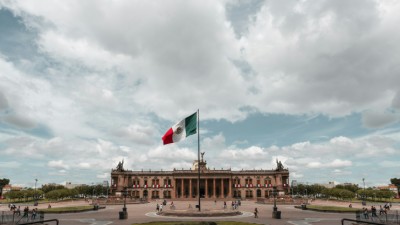
Mexico City
Where culture, activism, and inclusive travel come together.
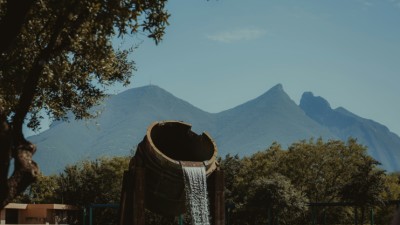
Monterrey
Mountain views, bold flavors, and a modern urban pulse
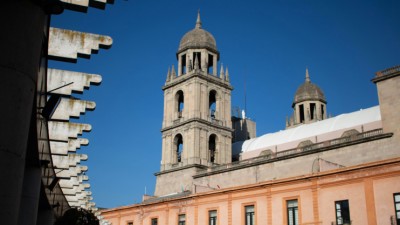
Toluca
High-altitude culture, regional access, and a useful base for the central plateau.
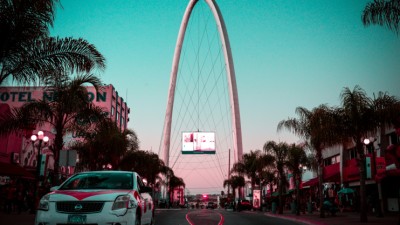
Tijuana
Where border energy meets nightlife, culture, and connection.
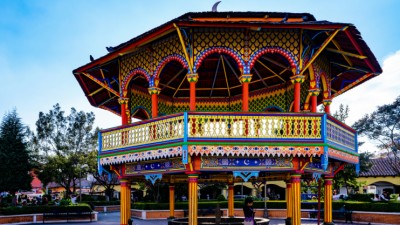
Puebla
Baroque streets, mountain views, and a welcoming city break beyond the ordinary.
Nezahualcóyotl
Where urban energy meets a wider metropolitan queer scene
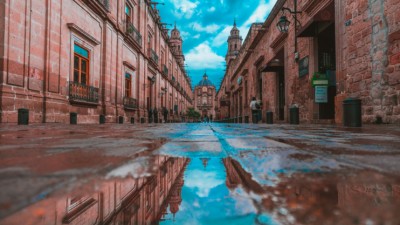
Morelia
Historic beauty, walkable streets, and a slower pace for thoughtful travel.
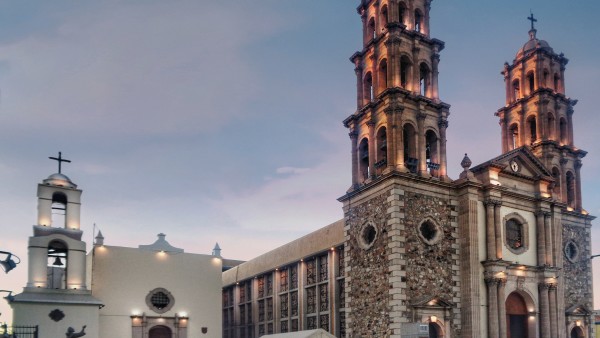
Juárez
Cross the border, feel the pulse.
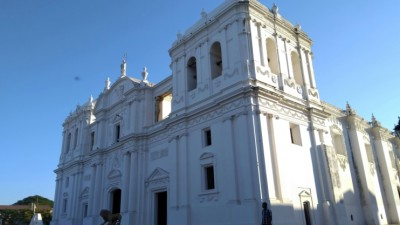
León de los Aldama
Explore the city with open eyes and an informed perspective.
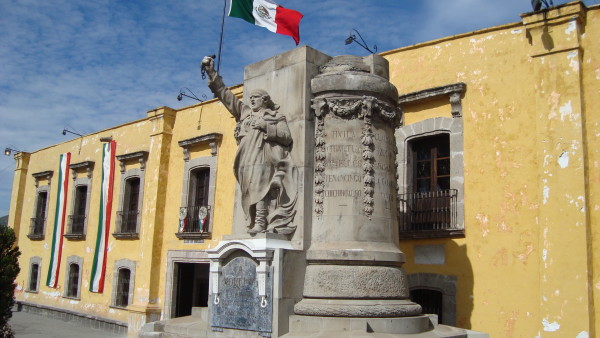
Ecatepec
Explore a bustling urban gateway where everyday street life meets the wider culture of Mexico City.
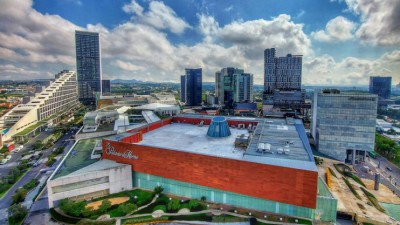
Zapopan
Heritage streets, regional flavors, and a wider Jalisco backdrop
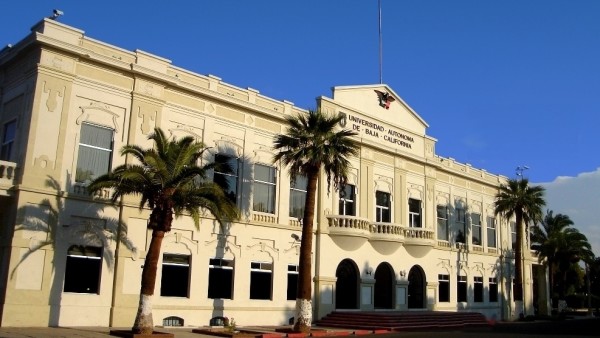
Mexicali
Border energy, desert nights, and a welcoming base for exploring Baja California.
Ciudad Nezahualcóyotl
Discover a vibrant urban gateway with easy access to queer life nearby.