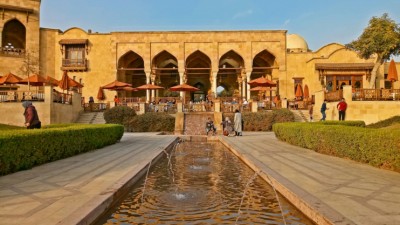
About Alexandria
It remains Egypt’s principal seaport and its second-largest city, with a shoreline that stretches for about 40 km along the Mediterranean coast.
For any traveler, that mix of sea air, urban energy, and deep history makes it a compelling stop.From a LGBTQ+ perspective, I also have to be clear: Egypt is a place where LGBTQ+ people face serious legal and social challenges, including reports of discrimination, violence, and police prosecution.
I therefore treat Alexandria as a destination where discretion and local awareness matter.
I do not find verified evidence of major LGBTQ+ events or dedicated LGBTQ+ landmarks in the city in the source material available to me, so I would not assume a visible queer scene on the ground.What Alexandria does offer is a rich travel experience built around its public culture and food traditions.
I would come for the sea-facing promenade, the city’s historic reputation as a cosmopolitan port, and the chance to spend time around major cultural landmarks such as the Bibliotheca Alexandrina, the modern library built on the site associated with the ancient Library of Alexandria.
For me, that makes Alexandria especially appealing to food- and culture-minded travelers who want a city break with substance, but who should also travel thoughtfully and remain mindful of local sensitivities.
Our Review
I approach Alexandria as one of the Mediterranean’s great historic cities: a long, coastal metropolis in northern Egypt, founded by Alexander the Great in 331 BC and long associated with scholarship, trade, and culture.
It remains Egypt’s principal seaport and its second-largest city, with a shoreline that stretches for about 40 km along the Mediterranean coast.
For any traveler, that mix of sea air, urban energy, and deep history makes it a compelling stop.
From a LGBTQ+ perspective, I also have to be clear: Egypt is a place where LGBTQ+ people face serious legal and social challenges, including reports of discrimination, violence, and police prosecution.
I therefore treat Alexandria as a destination where discretion and local awareness matter.
I do not find verified evidence of major LGBTQ+ events or dedicated LGBTQ+ landmarks in the city in the source material available to me, so I would not assume a visible queer scene on the ground.
What Alexandria does offer is a rich travel experience built around its public culture and food traditions.
I would come for the sea-facing promenade, the city’s historic reputation as a cosmopolitan port, and the chance to spend time around major cultural landmarks such as the Bibliotheca Alexandrina, the modern library built on the site associated with the ancient Library of Alexandria.
For me, that makes Alexandria especially appealing to food- and culture-minded travelers who want a city break with substance, but who should also travel thoughtfully and remain mindful of local sensitivities.
Social Acceptance and Safety in Alexandria, Egypt
When I visit Alexandria, I’m struck by how much the city’s identity is shaped by the sea, its long history, and its busy everyday life as Egypt’s largest seaport and a major Mediterranean city.
That said, for LGBTQ+ travelers, the social climate is important to understand before planning a trip.
General attitudes toward LGBTQ+ people
Egypt is not a destination where LGBTQ+ visibility is widely accepted in public life.
Verified information on LGBTQ rights in Egypt indicates that LGBTQ+ people face severe challenges, including widespread discrimination and violence, and that police frequently prosecute gay and transgender individuals.
In practical terms, that means I would not expect open LGBTQ+ expression to be broadly welcomed in Alexandria.
As a travel journalist, I approach Alexandria as a place where discretion matters.
Public displays of affection between same-sex couples, overt discussion of sexuality with strangers, or reading a neighborhood as “queer-friendly” without strong evidence would be unwise.
The city’s social atmosphere is shaped by the wider Egyptian context, not by an openly visible LGBTQ+ scene.
Safety concerns and how I’d stay safe
My advice is simple: keep a low profile and stay alert.
Because of the legal and social risks documented in Egypt, I would avoid anything that could draw unwanted attention.
That includes being cautious with social media posts while traveling, meeting new people in private or semi-private settings only when I feel confident, and being selective about whom I trust with personal information.
When I’m traveling in a city like Alexandria, I also choose transport and accommodation carefully, stick to well-traveled areas, and avoid walking alone late at night in unfamiliar places.
These are sensible precautions for any visitor, but they are especially relevant in a place where LGBTQ+ people can face discrimination.
For food-focused travelers like me, Alexandria’s cafés, seafood restaurants, and shoreline promenades are part of the appeal.
Even so, I would treat restaurant and nightlife settings as social spaces where it is best to be reserved rather than openly expressive.
A relaxed meal on the Corniche or in a busy central café can still be enjoyable without attracting attention.
Areas and neighborhoods
Based on the verified source material, I cannot confirm any neighborhoods in Alexandria that are known to be LGBTQ+ friendly, nor can I verify specific districts as especially welcoming or hostile.
So I would avoid labeling any area as queer-friendly without evidence.
What I can say is that the city’s better-known visitor areas include the waterfront, central cultural sites, and places tied to Alexandria’s role as a Mediterranean port city.
These are practical places for sightseeing and dining, but not verified LGBTQ+ hubs.
I would not assume that a busy, cosmopolitan feel translates into social acceptance.
My bottom line
Alexandria is rewarding for its history, sea views, and food culture, but LGBTQ+ travelers need to be careful and discreet.
The verified information on Egypt makes it clear that legal and social risks are real.
In my view, that means traveling thoughtfully, keeping personal safety first, and not expecting an openly LGBTQ+ environment in the city.
Community and Support
When I look for LGBTQ+ support in Alexandria, I have to be candid: I do not find any verified, city-specific LGBTQ+ organizations, community centers, or openly established support groups in the source material provided to me.
That absence matters.
It reflects the broader reality in Egypt, where LGBTQ+ people face severe challenges, including discrimination, violence, and police prosecution, as documented in the source pack.
For a traveler, that means I would not rely on finding a visible local queer network on the ground in Alexandria.
Alexandria itself is a large, historically cosmopolitan Mediterranean port city and Egypt’s second-largest city, with major cultural landmarks such as the Bibliotheca Alexandrina.
But when it comes to LGBTQ+ community infrastructure, I have to stick to what is verified: I cannot confirm dedicated community centers, meeting spaces, or support groups in the city from the available sources.
For health services, I also do not have verified city-level listings for LGBTQ+-specific mental health providers or HIV/AIDS support organizations in Alexandria from the source pack.
So, rather than naming unverified clinics or counseling services, I would advise travelers to plan ahead and identify general medical care before arrival.
In a city as large as Alexandria, standard hospitals, private clinics, and pharmacies are available, but I cannot confirm which of them offer LGBTQ+-competent care or specialized HIV/AIDS support based on the sources I was given.
Because the local environment can be sensitive, I would personally recommend that LGBTQ+ travelers keep important health information with them in a discreet way, including any prescriptions, emergency contacts, and copies of insurance details.
If you need mental health support, it is safest to arrange remote care or to identify a trusted provider before traveling, since I do not have verified local LGBTQ+-specific counseling resources to recommend.
In practical terms, my advice for Alexandria is simple: enjoy the city’s food, sea views, and historic atmosphere, but do not assume that community support will be easy to find in public spaces.
For verified general background on the city, I would start with Wikipedia’s Alexandria page and Wikivoyage’s Alexandria guide.
For the broader legal and social context affecting LGBTQ+ travelers in Egypt, the source pack also points to LGBTQ rights in Egypt.
Dining and Entertainment in Alexandria, Egypt: an LGBTQ+ travel perspective
When I travel to Alexandria, I come for the city’s Mediterranean energy first and foremost: a long northern shoreline, a busy port-city rhythm, and a strong cultural identity shaped by centuries of history.
Alexandria is Egypt’s second-largest city and its principal seaport, and its food scene reflects that coastal setting.
For LGBTQ+ travelers, though, I keep one reality firmly in mind: Egypt is not a place where public LGBTQ+ visibility can be assumed to be safe, and reliable information on explicitly LGBTQ+-inclusive venues in Alexandria is limited.
That means I approach dining and entertainment here as a matter of discretion, comfort, and careful choice rather than expecting a clearly identified queer nightlife district.
In practical terms, I focus on mainstream restaurants, cafés, and cultural venues in busy, central parts of the city.
Alexandria’s strengths are easy to enjoy in a low-key way: seafood meals by the water, coffee breaks in established cafés, and daytime visits to museums, libraries, and cinemas.
The city’s famous modern cultural landmark, the Bibliotheca Alexandrina, is especially worth including in a relaxed day out.
The broader city is also known for its cultural attractions and Mediterranean setting, as described in Wikivoyage’s Alexandria guide.
Where I eat
Alexandria is a city where I would naturally lean into the local seafood culture.
As a port city on the Mediterranean, it is well placed for fresh fish and other coastal dishes, and meals here often feel tied to the sea.
For LGBTQ+ travelers, the safest and most comfortable option is usually to choose well-established, mainstream restaurants with clear reviews and a steady local or tourist clientele.
I would avoid making assumptions about a venue being explicitly LGBTQ+-friendly unless that is directly verified by current, reliable information.
I also find that cafés are one of the easiest ways to enjoy the city without drawing attention.
A relaxed café stop, especially in a busy district, lets me take in Alexandria’s atmosphere while keeping interactions simple and public.
In a place where LGBTQ+ people in Egypt can face discrimination and police scrutiny, this kind of low-profile dining approach is often the most practical.
The verified source pack notes that LGBTQ+ people in Egypt face severe challenges, including reports of discrimination and violence, with police frequently prosecuting gay and transgender individuals.
What I look for in an inclusive venue
Because there is no verified source material here identifying specific LGBTQ+ restaurants, bars, or cafés in Alexandria, I do not claim any venue as queer-owned or queer-specific without evidence.
Instead, I look for signs of general inclusiveness: professional service, respectful staff, international or mixed clientele, and a calm, non-intrusive atmosphere.
In a city like Alexandria, that usually means choosing places in central, well-trafficked areas rather than isolated spots.
For couples or friends traveling together, I would also favor venues where dining is straightforward and public: places with table service, visible pricing, and a predictable setting.
That makes it easier to enjoy the meal without unnecessary attention.
This is especially important in Egypt, where public LGBTQ+ expression can carry social and legal risk.
Entertainment: what feels realistic and comfortable
For entertainment, I keep expectations grounded in what Alexandria is actually known for.
The city is far more reliably rewarding for its cultural institutions than for any verified LGBTQ+ nightlife scene.
If I want an evening out, I would first look to established cinemas, theaters, or live-performance venues that are part of the mainstream urban fabric.
However, I would still approach these spaces discreetly and choose widely attended, reputable venues rather than anything marketed around identity.
Daytime and early-evening cultural outings are often the best fit.
Alexandria’s historical identity as a center of scholarship and culture makes it particularly suited to museum visits, library time, and general sightseeing.
The city’s old cosmopolitan reputation is still felt in its atmosphere, even if the current reality is much more subdued.
That gives the city a pleasant, layered feel for travelers who enjoy a more reflective kind of entertainment.
My practical advice for LGBTQ+ travelers
- Choose mainstream restaurants and cafés with strong recent reviews.
- Favor busy, central neighborhoods and public venues.
- Keep social behavior low-key; do not assume public comfort with LGBTQ+ visibility.
- Avoid relying on unverified information about queer-specific nightlife or events.
- Plan entertainment around daytime culture, food, and the city’s waterfront atmosphere.
Alexandria rewards travelers who enjoy a city through its flavors, cafés, and cultural institutions.
For LGBTQ+ visitors, the safest and most realistic way to experience it is quietly and selectively: eat well, stay in public spaces, and let the city’s history and Mediterranean character do most of the talking.
Travel Tips
When I travel to Alexandria as an LGBTQ+ visitor, I treat the city as a place for quiet observation, good food, and careful choices rather than open expression.
Alexandria is Egypt’s principal seaport and its second-largest city, stretching along the Mediterranean coast, with a strong cultural legacy and a famous food-and-seafront appeal.
But because LGBTQ+ people in Egypt can face discrimination and police prosecution, I keep my plans discreet and practical.
My first rule is simple: I avoid public displays of affection and I do not assume that strangers, hotel staff, or fellow diners will be comfortable with LGBTQ+ identities.
In Alexandria, I behave as I would in any conservative destination: polite, low-key, and respectful of local norms.
If I am with a partner, I travel and socialize in ways that do not attract attention.
That is especially important in restaurants, taxis, and shared public spaces.
For daily safety, I choose busy, central areas and I keep my movement focused on places with a steady flow of people.
Alexandria’s seafront, major tourist zones, and cultural sights are the parts of the city I find easiest to navigate on a low-profile trip.
The city’s appeal is strongest in its history, waterfront atmosphere, and cultural institutions, so I use that to shape a calmer itinerary.
I also stay aware of my surroundings at night and avoid putting myself in isolated areas.
When it comes to accommodation, I look for mainstream, well-reviewed hotels with professional front desks and clear house rules.
I read the property policies before booking, especially around ID checks, visitor access, and couple stays.
In a city where discretion matters, I prefer predictable, established lodging over anything that feels informal or unvetted.
I am careful with my phone and social media too.
I do not post live location updates or publicly share details that could expose me while I am in Egypt.
If I need to contact someone about my plans, I do it privately.
I also keep essential documents and booking confirmations easy to reach, so I can handle check-ins smoothly and leave quickly if a situation changes.
For food, I lean into what Alexandria does best: seafood and straightforward local dining.
I find that the most comfortable meals are often in busy, ordinary restaurants and cafés rather than places that try to signal a niche scene.
As a foodie traveler, I enjoy using food as my bridge into the city: a long lunch by the coast, a café stop after sightseeing, or a seafood dinner in a lively area where I can blend in naturally.
On the question of connecting with the local LGBTQ+ community, I stay realistic.
I have not found verified evidence of openly documented LGBTQ+ venues, events, or community spaces in Alexandria in the source material I’m working from.
For that reason, I do not go looking for a visible scene, and I do not rely on unverified tips or social media rumors.
If I want to connect with people, I do so cautiously and only through trusted private introductions, while keeping personal information limited.
My overall advice is to visit Alexandria for what is firmly established and publicly accessible: its coastline, history, and food culture.
I enjoy the city most when I keep my profile low, choose reputable places, and respect the local context.
That approach lets me experience Alexandria safely while still appreciating its character as one of Egypt’s great Mediterranean cities.
For background reading, I also rely on Wikipedia’s Alexandria page and the Wikivoyage guide to Alexandria, alongside the general context on LGBTQ rights in Egypt.
When I think about Alexandria from an LGBTQ+ travel perspective, I see a city of striking contrasts.
On one hand, it is one of Egypt’s great historic and cultural destinations: a long Mediterranean port city founded by Alexander the Great, with a coastline that stretches for roughly 40 km and a reputation that still draws visitors for its museums, sea views, and the Library of Alexandria.
On the other hand, I have to be clear that Egypt is not a country where LGBTQ+ travelers can assume broad public acceptance or legal safety.
Verified sources describe severe challenges for LGBTQ+ people in Egypt, including discrimination, violence, and police prosecution of gay and transgender individuals.
That reality shapes any honest guide to the city.
So, Alexandria’s strength is not an openly visible LGBTQ+ scene.
Rather, it is a city where I can still enjoy the essentials of a good trip: the waterfront, the cultural landmarks, and, as a Foodie Traveller, the local cafés and seafood restaurants that make a day by the Mediterranean feel memorable.
Its challenge is equally straightforward: I would not treat it as a destination for public LGBTQ+ expression.
Discretion matters here, and it is wise to keep personal details private and avoid assuming that any venue or neighborhood is LGBTQ+ friendly unless that is clearly and reliably verified.
My recommendation for LGBTQ+ travelers is to explore Alexandria carefully and confidently, but with a low profile.
Focus on mainstream, busy areas, use established hotels and restaurants, and plan your days around the city’s most reliable public attractions.
Alexandria rewards travelers who come for its history, shoreline, and food culture.
If I were writing this trip for myself, I would center it on a slow walk along the Corniche, a visit to the city’s historic core, and time at the Library of Alexandria, where the city’s intellectual legacy is most visible.
My final advice is simple: come for the culture, the sea air, and the food; stay aware of the local legal and social realities; and enjoy Alexandria in a way that puts your safety first.
For LGBTQ+ travelers, that means choosing discretion over visibility, and substance over spectacle.
The city may not offer a clearly documented LGBTQ+ nightlife or public community scene, but it does offer something I always value as a journalist and traveler: a rich, atmospheric place to experience through its streets, its shoreline, and its table.