- LGBTQ+ Neutral
- 1 City Guide
- 0 Likes
- Leave a comment
About Trinidad and Tobago
Trinidad and Tobago Overview
Trinidad and Tobago is a two-island nation at the southern edge of the Caribbean, just off the coast of Venezuela, and it feels distinct from many of its island neighbors in both atmosphere and travel appeal.
Trinidad is the larger, more populous, and more industrial island, with the country’s capital, Port of Spain, serving as its cultural and political center.
Tobago is smaller and quieter, known for its beaches, reefs, forested hills, and a more relaxed pace.
Together they offer a trip that can combine urban energy, festival culture, wildlife, and classic Caribbean scenery in one itinerary.
For LGBTQ+ travelers, the country’s appeal is shaped less by a singular resort identity and more by its layered culture, lively public celebrations, and strong sense of place.
Trinidad and Tobago is internationally known for Carnival, one of the Caribbean’s most famous festivals, as well as for music, food, and a bold street culture that gives the destination a vivid personality.
The experience is often about being present for local life: calypso and soca rhythms, bustling markets, roadside food, Hindu and Christian traditions, and a diverse population shaped by African, Indian, Indigenous, European, Middle Eastern, and Chinese heritage.
That blend gives the country a cultural depth that many travelers find memorable.
Geographically, Trinidad is a low-lying island with mangrove wetlands, beaches, hills, and some of the region’s most unusual natural landscapes.
The south of the island is famous for the Pitch Lake, a natural asphalt deposit and one of the country’s most distinctive sights.
The island also offers birdlife, coastal viewpoints, and easy access to nature near the capital.
Tobago, by contrast, is smaller and more traditionally vacation-oriented, with calm coves, coral reefs, the Main Ridge Forest Reserve, and scenic roads connecting fishing villages, lookout points, and beach towns.
It is the better-known choice for travelers seeking quieter downtime, snorkeling, diving, and resort-style relaxation.
The food is one of Trinidad and Tobago’s strongest draws.
Travelers encounter a highly flavorful street and home-cooking culture built around curries, roti, doubles, bake and shark, pelau, callaloo, and abundant fresh seafood.
Trinidad’s Indian-influenced dishes sit comfortably alongside West African, Creole, and other culinary traditions, creating a food scene that is both approachable and specific to the islands.
Sweet and savory snacks, rum-based drinks, and casual roadside meals are all part of the experience, and eating well is an essential part of understanding the country.
Key destinations reflect the two-island contrast.
Port of Spain is the starting point for many visitors, especially those interested in museums, nightlife, public parks, and Carnival-related activity.
The Northern Range near the city adds mountain scenery and hiking possibilities.
In Tobago, Crown Point, Scarborough, Pigeon Point, and the island’s east coast are common bases or day-trip targets, while the more rural interior offers a slower, greener experience.
Smaller coastal communities and nature areas give Tobago much of its charm, especially for travelers who want a more relaxed setting than Trinidad’s urban rhythm.
What makes Trinidad and Tobago distinctive is the combination of intense cultural vitality and island variety.
Trinidad is not a stereotypical beach-first Caribbean destination; it is louder, more layered, and often more dynamic, with a strong calendar of festivals and a reputation for nightlife, music, and public celebration.
Tobago, meanwhile, delivers the classic Caribbean escape in a more low-key form.
For many travelers, the country works best when approached as two complementary experiences: one energetic and culturally dense, the other restorative and scenic.
That contrast is part of the destination’s lasting appeal.
Travelers should also expect a destination where practical planning matters.
The islands are well connected by air, and the inter-island flight is an important link between them.
Weather is tropical, with a drier season and a wetter season, and conditions can differ between islands and regions.
As in any destination, local norms, personal discretion, and situational awareness are important, particularly for LGBTQ+ visitors who may prefer to assess comfort levels case by case.
What remains consistent is the country’s strong character: Trinidad and Tobago offers far more than a beach holiday, and for many visitors that richness is exactly what makes it compelling.
LGBTQ+ Overview
Overview
Trinidad and Tobago is a socially conservative Caribbean country where LGBTQ+ travelers will find a mixed environment: the legal picture has improved in important ways, but day-to-day life can still be cautious and private, especially outside established urban or tourist settings. Same-sex intimacy between consenting adults is no longer criminalized, following a 2018 High Court decision that struck down the former anti-sodomy law. That was a major step forward, and it significantly reduced the risk of criminal prosecution for private consensual conduct.
Even so, legal protection is incomplete. There is no comprehensive national anti-discrimination law covering sexual orientation and gender identity across all areas of life, and there is no broad legal recognition of same-sex relationships or marriage. Transgender and gender-diverse people may also encounter paperwork and presentation issues in practice, particularly when traveling, using official services, or dealing with institutions that are slow to update internal policies. The result is a country where legal risk is lower than it once was, but structural equality is still limited.
Social climate
The social climate is uneven. In larger cities and more private, cosmopolitan, or tourism-facing settings, LGBTQ+ travelers may encounter discretion and occasional openness, especially among younger people and in hospitality contexts. At the same time, public attitudes remain conservative overall, and same-sex couples or gender-nonconforming visitors may attract unwanted attention, comments, or stares if they are visibly affectionate or do not conform to local gender norms.
Travelers should expect a strong preference for privacy in many settings. Open displays of affection between same-sex partners are more likely to draw notice than they would in many North American or Western European destinations. This does not mean violence is inevitable, but it does mean that prudence and situational awareness are useful. Solo travelers and gender-nonconforming travelers may be more conspicuous than same-sex couples who keep a low profile.
Common traveler risks
The most common risks are social rather than legal. These include verbal harassment, uncomfortable questioning, gossip, and in some settings a lack of consistent service professionalism. Most visitors are unlikely to face direct legal trouble for private conduct, but travelers should not assume the same degree of public acceptance found in more LGBTQ+-friendly destinations. Police and other officials may not always be well trained on LGBTQ+ issues, so it is wise to remain calm, avoid unnecessary disclosure in tense situations, and keep travel documents in order.
Accommodation and nightlife can be a particular source of variability. Some hotels, guesthouses, and bars are welcoming or at least discreet, while others may be less comfortable if a same-sex couple requests a shared room or if a gender-diverse traveler is visibly nonconforming. Booking with larger, established properties and reading recent reviews can reduce friction. If you are traveling as a couple, it can help to reserve one room under one name and be prepared for occasional awkwardness rather than confrontation.
As in any destination, general safety matters as much as LGBTQ+ status. Use standard urban precautions at night, especially in unfamiliar neighborhoods or when leaving bars and events. Do not rely on assumptions that an explicitly LGBTQ+-friendly venue will exist nearby or that staff everywhere will be trained to respond sensitively.
Support resources
There are local civil society voices and advocacy efforts in Trinidad and Tobago, but the availability of directly traveler-facing LGBTQ+ support is limited and may change over time. If you need help, your most dependable first contact is often your embassy or consulate, particularly if the issue involves harassment, lost documents, detention, or a medical emergency. Major hotels can also be useful intermediaries for practical problems such as transport, translation, or finding a reputable clinic.
For travelers seeking community-oriented guidance, it is best to confirm current local contacts before arrival through reputable rights organizations or your accommodation, rather than relying on outdated online information. Because venues and support networks can shift, avoid depending on a single club, bar, or informal contact as your only source of assistance.
Recent trajectory
The overall trajectory has been cautiously positive on the legal front. The 2018 court ruling decriminalizing same-sex intimacy was an important milestone and signaled that outright criminal punishment for private consensual same-sex activity is no longer the central issue it once was. However, broader equality has not advanced at the same pace, and social change is slower than legal change. For travelers, that means the country is meaningfully safer than it was under criminalization, but not yet a destination with broad, visible LGBTQ+ inclusion.
In practical terms, Trinidad and Tobago is best approached as a place where respectful discretion will usually serve travelers well. LGBTQ+ visitors who keep expectations realistic, avoid public displays of affection in conservative settings, and choose accommodations and activities carefully can often travel without major problems. Still, compared with more openly inclusive destinations, the margins for comfort are narrower, and transgender or highly visible travelers may want to plan more carefully.
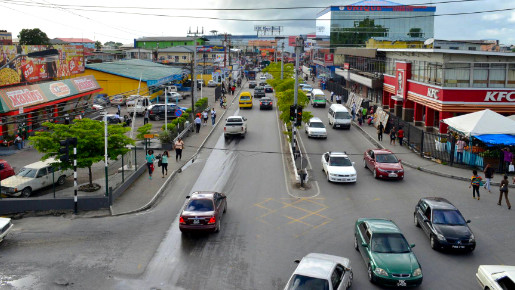
Chaguanas
A calm, culturally rich stop in the Caribbean’s largest municipality.