- LGBTQ+ Friendly
- 2 City Guides
- 0 Likes
- Leave a comment
About Portugal
Travel overview
Portugal is a compact but highly varied country on the southwestern edge of Europe, shaped by the Atlantic Ocean, a long maritime history, and a culture that feels both unmistakably European and distinctly its own.
For travelers, that combination creates a destination with broad appeal: walkable old cities, beach resorts, dramatic coastlines, island escapes, excellent food and wine, and a generally welcoming atmosphere that makes it easy to explore at an unhurried pace.
Mainland Portugal lies on the Iberian Peninsula, bordered by Spain to the north and east, while the Atlantic archipelagos of Madeira and the Azores add volcanic landscapes, green hills, and some of the country’s most memorable scenery.
Portugal’s major draw is the way its historic character and modern travel comforts sit side by side.
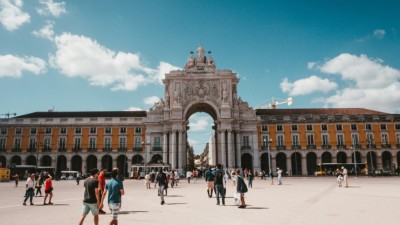
Lisbon and Porto offer atmospheric neighborhoods, tiled façades, riverfront views, strong dining scenes, and easy access to nightlife and culture.
Smaller cities and towns are part of the country’s appeal as well, especially places where centuries-old architecture, churches, and cobbled streets still structure everyday life.
At the same time, Portugal has a well-developed tourism infrastructure, so it works well for first-time visitors, return travelers, and anyone looking for a destination that feels rich in culture without being difficult to navigate.
The country is also known for its outdoor variety.
On the mainland, the long Atlantic coastline brings beaches, surf, fishing villages, and cliff-backed scenery, while the interior can feel quieter and more rural, with vineyards, rolling hills, and historic towns.
Nazaré is internationally known for its huge waves, drawing surfers and spectators, while the Algarve remains one of Europe’s best-known beach regions.
In winter, Portugal even offers some skiing in the Serra da Estrela, which surprises many travelers who think of the country only as a warm-weather destination.
Culturally, Portugal is marked by a strong sense of history and by traditions that remain visible in daily life.
The country’s past is present in its architecture, from city squares and hilltop castles to monasteries, churches, and azulejo tilework.
Music, food, pilgrimage, and local festivals all play a role in the travel experience.
Fátima is one of the country’s most famous religious destinations, drawing visitors for pilgrimage as well as cultural interest, while the country’s broader identity is shaped by its Atlantic orientation and long connections beyond Europe.
Portuguese society is also often described as friendly and hospitable, which contributes to the country’s ease as a travel destination.
Food is one of the strongest reasons to visit.
Portugal has a rich gastronomy that reflects its coastal geography and seafaring history, with seafood central to many menus.
Travelers can expect grilled fish, shellfish, stews, pastries, and regional dishes that vary across the country.
Lisbon and Porto both have lively restaurant scenes, but memorable meals are just as likely in small-town taverns, coastal cafés, and family-run spots in the interior.
Wine culture is also important, especially in regions such as the Douro Valley, where landscapes and food traditions are closely intertwined.
For LGBTQ+ travelers, Portugal is especially notable for its comparatively advanced legal protections and broadly progressive framework by global standards.
That does not mean every part of society is identical in attitude, but in practical travel terms it is one of the more straightforward countries in Europe to visit as an LGBTQ+ person.
Large cities tend to offer the broadest range of social and nightlife options, while smaller towns may be more traditional.
As in any destination, the most comfortable experience often comes from reading local context, especially when moving between urban centers, coastal resorts, and rural areas.
What makes Portugal distinctive is its balance: it is a country where a traveler can combine city culture, beach time, history, food, and island scenery without covering huge distances.
The scale is manageable, the atmosphere is generally relaxed, and the diversity of experiences is high.
Whether you are drawn by Lisbon’s energy, Porto’s river views, the Algarve’s beaches, Madeira’s mountains, or the Azores’ volcanic landscapes, Portugal offers a trip that feels both easygoing and characterful.
For many visitors, that mix of warmth, beauty, and cultural depth is exactly what makes the country so appealing.
LGBTQ+ Overview
LGBTQ+ Overview
Portugal is generally a strong destination for LGBTQ+ travelers. National law offers broad protections, and the country is widely regarded as one of the more inclusive places in Southern Europe. Same-sex sexual activity was decriminalized in 1982, and since then Portugal has made major legal progress, including wide-ranging anti-discrimination protections. For most visitors, the overall experience is comfortable in major cities and tourist areas, with lower day-to-day risk than in many parts of the world.
The social climate is often described as increasingly accepting, especially in Lisbon, Porto, and other urban or heavily visited areas. Travelers will usually find it easy to move around publicly as an LGBTQ+ person without needing to hide. That said, Portugal is still a mixed-society country rather than one with complete uniform acceptance everywhere. Attitudes can be more conservative in smaller towns, rural areas, and among older or more religious populations, so public displays of affection may draw more attention outside the main urban centers. As in many countries, casual stares or unsolicited comments are more likely to be a nuisance than a serious threat, but discretion can still be wise in less cosmopolitan settings.
Legal protections are robust by regional standards. Portugal has broad anti-discrimination laws and is among the European countries with advanced LGBTQ+ rights. Travelers should still understand that legal equality does not always translate into the same experience everywhere, especially in more traditional settings or when interacting with people who may not be accustomed to openly LGBTQ+ visitors. For trans travelers, Portugal is comparatively supportive in legal terms, but practical experiences can still vary depending on documentation, service settings, and whether staff are experienced with gender-diverse clients.
Common traveler risks are usually low to moderate and are more about situational discomfort than targeted danger. The main issues are likely to be occasional verbal harassment, unwanted attention, or discomfort in conservative environments rather than systematic violence. Nightlife in major cities is generally safer than in many countries, but standard travel precautions still apply: watch drinks, keep an eye on belongings, and be cautious when leaving bars or clubs late at night. If you are meeting someone new, use normal dating-app safety habits, since the biggest risks are often the same ones any traveler faces in an unfamiliar city.
Support resources are strongest in Portugal’s larger cities, where you are more likely to find LGBTQ+-friendly accommodation, health services, and nightlife. In an emergency, travelers should use local emergency services as they would anywhere else in Europe. If you need help with discrimination, document what happened and seek support through your hotel, embassy or consulate, or local legal assistance. Because this guide avoids listing unverified organizations, it is best to check current local sources before traveling if you anticipate needing community support, gender-affirming care, or advice on nightlife and safe neighborhoods.
Overall, Portugal’s trajectory has been positive. The country moved from criminalization under the Estado Novo era to decriminalization in 1982, and protections and public acceptance have continued to improve over time. For travelers, that means a broadly welcoming environment with relatively low risk in most places, though not complete uniformity in social attitudes. If you stay aware of local context and use ordinary urban safety habits, Portugal is usually an easy and rewarding destination for LGBTQ+ visitors.