- Not LGBTQ+ Friendly
- 1 City Guide
- 0 Likes
- Leave a comment
About Maldives
Maldives Travel Overview
The Maldives is one of the world’s most recognisable island destinations: a chain of low-lying coral atolls scattered across the Indian Ocean, famous for white-sand beaches, exceptionally clear water, and overwater resorts that have helped define the modern luxury-island holiday.
For many travellers, the appeal is straightforward and powerful: this is a place to slow down, swim, snorkel, dive, and wake up with the sea on every horizon.
It is also a destination where the setting itself is the main attraction, with each island feeling self-contained and remote, even when it is only a short boat ride from the capital region.
Geographically, the Maldives is very different from most countries.
It is made up of roughly 1,200 islands grouped into 26 atolls, stretching across a wide swathe of the Indian Ocean southwest of India and Sri Lanka.
Only a small number of islands are inhabited, and many others are dedicated to resorts, diving, or conservation.
The country’s terrain is extremely low-lying, which gives the Maldives its extraordinary lagoon-and-reef scenery but also shapes daily life, infrastructure, and the long-term conversation around climate resilience.
For visitors, this means the landscape is intimate and marine-focused: beaches, reefs, channels, sandbanks, and palms are the core of the experience rather than mountains, cities, or highways.
Travel in the Maldives is usually centered on one of two experiences.
The first is the classic resort stay, where an island hotel provides accommodation, dining, watersports, and privacy in a self-contained setting.
The second is island-to-island travel among local inhabited islands, where guesthouses and small hotels give visitors a more affordable and culturally grounded way to explore the country.
In recent years, local-island tourism has expanded, making it easier to experience the Maldives beyond the traditional luxury model.
This broader access has been especially useful for travelers who want to combine beach time with a more everyday view of Maldivian life.
The country’s culture is shaped by its Indian Ocean location and by centuries of contact with South Asia, the Arab world, and East Africa.
Maldivian society is predominantly Muslim, and local customs reflect that religious and cultural framework.
On inhabited islands and in the capital, Malé, travelers should expect a more conservative social environment than on resort islands, particularly with regard to dress, public behavior, and alcohol restrictions.
At the same time, Maldivian hospitality is often warm and quietly attentive, and many visitors are struck by the contrast between the calm, minimalist resort atmosphere and the lively rhythms of local life in inhabited communities.
Culinary traditions in the Maldives are closely tied to the sea and to the ingredients that can grow or be brought in reliably.
Fish, especially tuna, is central to local cooking, and coconut appears in many forms, from grated flesh to coconut milk.
Rice, flatbreads, curries, and sambals are common, and breakfasts often include simple, sustaining foods built around fish and bread.
Visitors staying in resorts will find broad international menus and polished fine dining, while those on local islands can try more distinctly Maldivian dishes and straightforward cafés.
The food culture is not especially elaborate in the way some larger destinations are, but it is fresh, regional, and closely connected to island life.
For LGBTQ+ travelers, the Maldives is best understood as a destination where the travel experience is usually shaped more by resort privacy and local social norms than by an openly visible queer scene.
The country’s legal and social environment is conservative, and public expression of same-sex relationships is not part of mainstream social life.
That makes discretion important, especially on inhabited islands and in public spaces.
At the same time, the Maldives remains a major international leisure destination, and many resorts are highly professional, service-oriented, and accustomed to hosting a wide range of guests.
Couples seeking a private, low-key beach escape often find the Maldives attractive for its seclusion, but it is wise to choose accommodations and activities with an awareness of local context.
Among the key destinations, Malé is the country’s compact capital and main gateway.
It is not the Maldives’ strongest draw for sightseeing, but it can be useful for understanding the country beyond the resorts, with markets, mosques, seafront views, and the bustle of a densely populated island city.
Hulhumalé, connected to the airport area, is important as a transit and accommodation base.
Beyond the capital region, many travelers head straight to atoll resorts or guesthouses in South Malé Atoll, North Malé Atoll, Ari Atoll, Baa Atoll, or other island groups known for good diving, reef life, and lagoon scenery.
The specific atoll matters less than the experience you want: easy airport access, whale shark or manta opportunities, quieter beaches, or a more developed selection of resort properties.
The Maldives is especially distinctive for marine travel experiences.
Snorkeling and diving are among the biggest reasons people come, with coral reefs, colorful fish, turtles, rays, and seasonal sightings of larger species in some regions.
Boat excursions are part of the rhythm of the islands, whether for sunset cruises, fishing trips, sandbank visits, or transfers between islands.
Even travelers who do not plan to dive often find themselves spending a lot of time in the water, since the natural environment is the country’s defining feature.
This makes the Maldives appealing not just as a place to relax, but as a destination where the sea is continuously present and central to the experience.
What makes the Maldives stand out is the combination of extreme geography, luxury resort culture, and a growing but still limited local-island tourism scene.
It is a place that can feel both indulgent and minimal, remote and easy to reach, highly curated and deeply elemental.
For many visitors, that contrast is the heart of the appeal.
The Maldives is not a destination for major urban exploration or a dense schedule of landmarks; it is a destination for water, quiet, sun, and space.
For travelers who value seclusion and a strong sense of place, it offers one of the most memorable island settings in the world.
LGBTQ+ Overview
Overview
The Maldives presents a high-risk environment for LGBTQ+ travelers. Same-sex sexual activity is criminalized, and the country’s legal framework also reflects broader restrictions on expression and identity that can affect LGBTQ+ people in daily life. Public discussion of LGBTQ+ issues is limited, and there is no comparable local infrastructure of openly operating advocacy groups, community venues, or official support networks that many travelers might expect in more supportive destinations.
Current legal status
Under Maldivian law, same-sex sexual activity is prohibited. The country is a Muslim-majority republic, and its legal system includes provisions that can be used to penalize conduct associated with homosexuality. In practical terms, this means LGBTQ+ travelers should not assume that privacy or discretion will protect them from legal exposure if a matter comes to official attention. Travel decisions should be made with a clear understanding that the legal environment is not protective and that local authorities are unlikely to provide recourse in the event of discrimination or harassment.
Because the Maldives does not have a broad legal framework recognizing same-sex relationships, gender identity, or anti-discrimination protections for LGBTQ+ people, travelers should expect that legal recognition common in some other countries is absent. This can matter in situations ranging from hotel check-in issues to medical emergencies, especially if partners need to advocate for one another or if documentation does not reflect a person’s lived identity.
Social climate
Social attitudes in the Maldives are generally conservative, and open LGBTQ+ expression may draw negative attention. The traveler experience can vary depending on location, but discretion is important throughout the country, including in resort settings. While some international resorts are likely to be more accustomed to serving a diverse clientele, they still operate within the national legal and cultural context, and travelers should not assume that private behavior will be treated casually by all staff or guests.
Public displays of affection are not advisable for same-sex couples, and travelers should be careful about anything that could be perceived as openly challenging local norms. Even when interactions appear friendly, LGBTQ+ visitors may prefer to keep conversations about relationships, identity, and activism private unless they are certain of the setting and the trustworthiness of the person they are speaking with. This is a destination where low-profile travel is the safest approach.
Common traveler risks
The main risks for LGBTQ+ travelers in the Maldives are legal exposure, social hostility, and the possibility of being reported or confronted if identity or behavior becomes visible. These risks are heightened outside private resort spaces and in more locally inhabited areas. Travelers should be particularly cautious with photos, social media posts, messaging apps, and public discussions that could reveal their orientation, gender identity, or relationship status.
There is also the practical risk of uneven service or support if a traveler needs help from staff, police, or medical providers. In a restrictive environment, misunderstandings can escalate quickly, and travelers may not be able to rely on institutions to respond in an LGBTQ+-affirming way. Those who are transgender or gender nonconforming may face additional scrutiny related to appearance, travel documents, or social expectations, so planning for privacy and documentation consistency is especially important.
Support resources
There are no widely known, readily accessible LGBTQ+ support organizations that travelers can depend on in the Maldives. Visitors should not expect to find established local community centers, helplines, or visible legal advocacy groups with an open public presence. If something goes wrong, the most realistic sources of assistance are usually the traveler’s own embassy or consulate, the hotel management in a private resort setting, and emergency medical services if a health issue arises.
Before arrival, travelers should save the contact details for their embassy or consulate and review their travel insurance coverage carefully. It is also wise to identify, in advance, how to contact medical help and how to get to a safer private location if a situation becomes uncomfortable. Because local support options are limited, self-reliance and pre-planning matter more here than in many other destinations.
Recent trajectory
There has not been a meaningful recent shift toward legal protection or broader public acceptance for LGBTQ+ people in the Maldives. The overall direction remains cautious to hostile from a traveler-safety perspective, and there is no basis for treating the country as having improved into a lower-risk category. Visitors should continue to plan on the assumption that the current legal and social constraints remain in force.
For travelers who must visit, the safest approach is strict discretion, careful choice of accommodation, and conservative public behavior. Couples should keep interactions private, avoid drawing attention, and be aware that local laws and norms are not aligned with LGBTQ+ rights or protections.
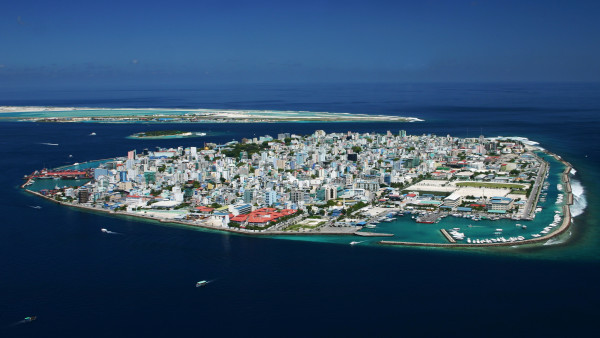
Male
Where island life meets responsible travel.