- LGBTQ+ Friendly
- 3 City Guides
- 0 Likes
- Leave a comment
About Finland
Travel overview
Finland is a Nordic country in Northern Europe that feels both unmistakably modern and deeply tied to landscape.
Its capital and largest city, Helsinki, is the obvious starting point for most visitors, but the country’s appeal reaches far beyond the capital.
Finland is bordered by Sweden, Norway, and Russia, with the Gulf of Bothnia to the west and the Gulf of Finland to the south, and that geography helps shape a travel experience defined by sea coasts, forests, lakes, and long seasonal changes.
For many travelers, Finland is attractive precisely because it offers a calm, orderly, low-stress trip in a country where cities are compact, transport is reliable, and nature is never far away.
What makes Finland distinctive is the way urban life and wilderness sit so close together.
You can spend a morning in a design-forward café, a museum, or a sauna in Helsinki and then head out toward archipelagos, national parks, or thousands of lakes.
The country is famous for its clean-air reputation, sparse population outside the major cities, and wide open spaces.
In summer, long daylight hours make it easy to pack in sightseeing, hiking, boating, and outdoor dining.
In winter, the mood changes completely: snow, ice, and darkness create a quieter, more atmospheric travel season that appeals to visitors looking for winter sports, cozy interiors, and the chance to experience northern Nordic life at its most seasonal.
Culturally, Finland sits at the meeting point of Scandinavian and broader Baltic and Eurasian influences, while still feeling very much like its own place.
Finnish and Swedish are the official languages, and both are part of the country’s public identity.
Design, architecture, education, and public well-being are often associated with Finland, and travelers will notice that cities tend to be efficient and easy to navigate without needing to build an entire trip around one landmark.
The atmosphere is generally restrained rather than flashy, and that understated style is part of the charm.
Finland is a good fit for travelers who prefer substance over spectacle and who enjoy destinations that reward slowing down, paying attention, and exploring carefully.
Food in Finland tends to be seasonal, practical, and rooted in local ingredients rather than heavy culinary theatrics.
Expect plenty of fish, especially in coastal and lake regions, along with rye bread, potatoes, berries, mushrooms, game, and dairy products.
In cities and towns, you’ll find a mix of traditional dishes and contemporary Nordic cooking that often emphasizes freshness and simplicity.
For travelers, this means Finland is not usually about a single famous cuisine so much as about eating well in ways that reflect the landscape: seafood near the coast, freshwater fish inland, and berries and foraged ingredients across much of the country.
The best-known destinations give a good sense of Finland’s range.
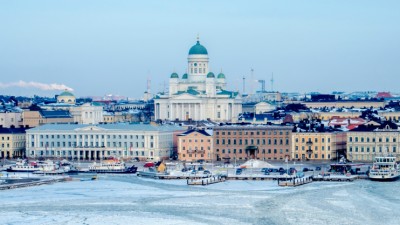
Helsinki is the cultural and transport hub, with museums, architecture, waterfront views, and easy access to the rest of the country.
Beyond the capital, travelers are drawn to the Finnish Lakeland for boating and lakeside stays, to the southwest coast and archipelago for island scenery, and to northern Lapland for winter landscapes and Arctic experiences.
The geography is a major part of the travel appeal: Finland has large areas of forest and water, and those settings shape not only outdoor activities but also the overall pace of travel.
Even within cities, the presence of the sea, parks, and ferry connections makes Finland feel open and breathable.
For LGBTQ+ travelers, Finland’s appeal is partly practical and partly atmospheric.
The country is known for its calm, civic-minded public culture and for being a place where many travelers can move around with little fuss in major urban and tourist areas.
As with any destination, experiences can vary by setting, especially between the capital and smaller or more remote places, but Finland’s overall travel draw is the combination of safety, efficiency, and a high-quality outdoor environment.
It is a country where an LGBTQ+ visitor can comfortably build a trip around city culture, saunas, museums, lake country, and winter or summer nature rather than around a narrow checklist of attractions.
In short, Finland stands out as a destination of clarity and contrast: modern yet natural, quiet yet full of depth, compact in some ways and expansive in others.
Travelers come for Helsinki, but they stay for the landscapes, the light, the design culture, the food rooted in the seasons, and the ability to combine urban and outdoor experiences in a single trip.
If you want a Nordic country that feels polished but not overrun, scenic without being overly staged, and distinctive without being difficult to navigate, Finland is one of the most rewarding choices in northern Europe.
LGBTQ+ Overview
LGBTQ+ overview
Finland is generally a safe and welcoming destination for LGBTQ+ travelers by European standards. Same-sex sexual activity has been legal for decades, and Finland now has broad anti-discrimination protections in law. In practical terms, most visitors will find that major cities such as Helsinki, Turku, and Tampere are comfortable places to travel as an openly LGBTQ+ person, especially in hotels, restaurants, museums, and mainstream tourist settings. Public displays of affection may still attract attention in smaller towns or more traditional settings, but serious harassment is not the norm.
The legal situation is strong overall. Finland has prohibited discrimination on the basis of sexual orientation and gender identity in key areas of public life, and legal gender recognition is available under a separate framework from sterilization requirements that once existed. Same-sex couples can marry, and same-sex partners have access to family rights that reflect Finland’s broader equality framework. That said, legal equality does not always translate into uniform everyday experience: travelers who are visibly gender-nonconforming or trans may still encounter occasional misunderstanding, especially in settings that involve ID checks, security screening, or shared facilities.
Social climate
Finland’s social climate is broadly liberal, particularly in urban areas and among younger Finns. Helsinki is the country’s most visibly LGBTQ+-friendly destination, with a cosmopolitan atmosphere and the widest range of inclusive services. In smaller towns, attitudes are often respectful but more reserved, and travelers may experience less visible LGBTQ+ life rather than outright hostility. Finnish social norms generally favor privacy and low-key interaction, so LGBTQ+ travelers who are direct and self-assured are usually fine, but the culture is not as outwardly expressive as in some other European capitals.
For most visitors, the main traveler risk is not legal danger but uneven social comfort. Overt hostility is uncommon, yet isolated discrimination can happen, and trans travelers may face more friction than lesbian, gay, or bisexual travelers, particularly when documentation, names, or gender markers do not match presentation. As in many Nordic countries, the practical experience is usually best in larger cities and in internationally oriented venues.
Practical safety guidance
For day-to-day travel, most LGBTQ+ visitors do not need special precautions beyond normal urban travel awareness. If you are traveling as a couple, you can generally be open in hotels and tourist areas, but it is still sensible to gauge the setting before deciding how public to be in rural areas, conservative social spaces, or late-night venues that are not specifically LGBTQ+-oriented. If you are trans or nonbinary, carry documentation that matches your booking and transportation details where possible, and allow extra time for airport or border procedures in case of questions.
Finland’s winter travel and remote geography can matter as much as social context. In smaller communities, there may be fewer anonymity and fewer explicitly queer-friendly venues, so some travelers prefer to base themselves in larger cities and make day trips. If you are seeking nightlife or community events, Helsinki offers the most options, but for a general visit the country is typically low-risk and straightforward.
Support resources
Travelers who need local support will usually find the most reliable help through mainstream emergency and public services, alongside Helsinki-based LGBTQ+ community resources. If you experience harassment, threats, or a crime, use the standard emergency number and seek police assistance as you would elsewhere in Europe. For non-emergency issues, larger hotels, university areas, and major cultural institutions in Helsinki and other cities are generally accustomed to international guests and can help direct you to reputable services.
Because venue and community landscapes change, it is best to verify current local support options shortly before travel rather than rely on old listings. A useful general reference for current country-level context is the ILGA-Europe country profile for Finland, which tracks legal and policy developments over time: ILGA-Europe Finland country profile. Travelers who want a broad overview of the country can also consult the general Finland entry: Finland.
Recent trajectory
Finland’s overall trajectory has been positive, with continued movement toward fuller equality and broader social acceptance. The country has been steadily updating its framework to better reflect LGBTQ+ rights, and recent years have reinforced rather than reversed that direction. For travelers, that means the overall environment is improving, not deteriorating, and the practical risk level remains low compared with many parts of the world. The main caveat is that progress is sometimes more complete in law than in daily life, especially outside major urban centers.
In short, Finland is a comfortable destination for most LGBTQ+ travelers, particularly if you are visiting Helsinki or other larger cities. The legal climate is strong, social attitudes are generally favorable, and the main concerns are occasional low-level discrimination and the usual variability between urban and rural areas.