- LGBTQ+ Friendly
- 1 City Guide
- 0 Likes
- Leave a comment
About Estonia
Estonia at a glance
Estonia is one of Northern Europe’s most quietly rewarding destinations: compact, highly walkable, technologically advanced, and shaped by a striking mix of Baltic, Nordic, and Hanseatic influences.
For LGBTQ+ travelers, it offers the appeal of a modern EU capital in Tallinn, a generally low-key and privacy-respecting social culture, and an easygoing pace that makes independent travel straightforward.
It is not a loud or overtly nightlife-driven destination in the way some larger European cities are, but it is appealing precisely because it feels manageable, safe, and genuinely lived-in rather than staged for tourism.
What makes Estonia distinctive is the contrast between its medieval old towns, forested countryside, islands, and sleek digital public life.
Tallinn’s UNESCO-listed center remains the country’s best-known draw, but much of Estonia’s character comes from beyond the capital: long coastlines on the Baltic Sea, quiet bog landscapes, birch forests, wooden seaside villages, and small cities that feel intimate rather than crowded.
Travelers who enjoy culture, design, nature, and history will find that Estonia rewards slow exploration.
Culture, identity, and the travel atmosphere
Estonia’s culture reflects a complicated history of occupation, independence, and reinvention.
The country was shaped by centuries of foreign rule, including Danish, German, Swedish, and Russian influences, before restoring independence in 1991.
That history is visible everywhere: in the architecture, language, cuisine, and the strong emphasis on self-reliance and modern statehood.
Today, Estonia is one of Europe’s most digitally advanced countries, with many everyday services available online and a strong reputation for efficiency.
The social atmosphere can feel reserved at first.
Estonians are often described as private, understated, and not inclined toward forced friendliness, but that should not be mistaken for hostility.
In practice, many travelers experience a calm, matter-of-fact hospitality.
In Tallinn especially, international visitors, younger people, and hospitality staff are accustomed to diverse travelers, and the city is generally accustomed to cosmopolitan norms.
Outside the capital, the mood is quieter and more traditional, though still typically very manageable for visitors who travel with ordinary awareness.
For LGBTQ+ travelers, Estonia’s appeal lies in that balance: a country that is modern in infrastructure and largely comfortable with international visitors, without being overwhelming or performative.
Public expressions of affection may attract more attention in smaller towns than in a large Western European capital, so some travelers may prefer a more discreet style in rural areas.
In Tallinn, however, the atmosphere is generally much more open and travel-friendly.
Landscapes, seasons, and why geography matters
Estonia is small in size but remarkably varied in feel.
The mainland is flat to gently rolling, with extensive forests, wetlands, peat bogs, lakes, and a long Baltic shoreline.
More than two thousand islands are scattered off the coast, though only a handful are commonly visited.
This landscape gives the country a sense of spaciousness and quiet that contrasts with its urban center.
Even short trips outside Tallinn can quickly shift from city streets to pine forests, beaches, and marshland boardwalks.
Seasonality matters a great deal in how Estonia is experienced.
Summer is the easiest and most popular time for travel, with long daylight hours, mild temperatures, outdoor festivals, and lively coastal and island trips.
Late spring and early autumn are often especially pleasant for city breaks and nature travel, with fewer crowds and softer light.
Winter can be beautiful, particularly in Tallinn’s old town, but daylight is limited and temperatures can be brisk.
Travelers who enjoy atmospheric historic settings and cozy interiors may find winter appealing, while those focused on outdoor wandering often prefer the warmer months.
Major destinations and what they offer
Tallinn is the essential first stop for most visitors and remains the country’s strongest draw.
Its old town is one of Europe’s best preserved medieval centers, with cobbled lanes, church spires, defensive towers, merchant houses, and a panoramic upper town that looks over the lower city and harbor.
Beyond the historic core, Tallinn is also a contemporary capital with cafés, museums, design shops, and a busy waterfront.
The city’s mix of heritage and modernity is central to its appeal: you can spend the morning in Gothic streets and the afternoon in sleek neighborhoods, galleries, or seaside promenades.
Outside Tallinn, Tartu offers a different kind of travel experience.
As Estonia’s main university city, it has a more youthful, intellectual, and cultural atmosphere, with museums, riverfront walks, and a strong café culture.
It is a good choice for travelers who want a gentler, less tourist-centered urban experience.
Pärnu, on the other hand, is Estonia’s best-known summer resort, valued for its long sandy beach, spa tradition, and easygoing holiday pace.
It is especially appealing for visitors looking for rest, waterfront time, and low-key seasonal leisure rather than urban sightseeing.
The islands are among Estonia’s most distinctive travel areas.
Saaremaa, the largest island, is known for its windmills, churches, juniper landscapes, and calmer tempo.
Hiiumaa, even quieter, appeals to travelers who want open space, lighthouses, forests, and a sense of retreat.
Inland, the national parks and protected landscapes are a major part of the country’s identity.
Lahemaa National Park, close to Tallinn, is a popular introduction to bogs, forests, manor estates, and coastal scenery.
Soomaa National Park is famous for its wetlands and seasonal flooding, making it one of the best places to appreciate Estonia’s marshland ecology.
These areas are ideal for travelers who want nature that feels pristine and accessible without requiring a long journey.
Food and drink
Estonian cuisine is rooted in local, seasonal, and practical traditions, with strong influences from the Baltic region, Scandinavia, and Germany.
It is not a destination for heavy spice or elaborate culinary spectacle, but it does offer comfort, freshness, and a growing modern food scene.
Rye bread is foundational, and fish, potatoes, mushrooms, berries, dairy products, and pork appear frequently in traditional dishes.
Many travelers also encounter pickled vegetables, soups, smoked foods, and simple seasonal preparations that reflect the northern climate.
In Tallinn and Tartu, contemporary restaurants have expanded the food scene well beyond traditional fare.
Visitors will find Nordic-influenced cooking, farm-to-table menus, excellent bakeries, specialty coffee, and a good range of international cuisine.
The café culture is particularly pleasant for slow urban travel, with many inviting spots for lingering over coffee, pastries, or a light meal.
For LGBTQ+ travelers who enjoy cities through their food, cafés, and neighborhood atmosphere rather than purely through nightlife, Estonia fits that style very well.
Local drinks often include beer, cider, and the occasional traditional liqueur or herbal spirit, though the most memorable food experiences are frequently tied to seasonal ingredients rather than signature dishes.
In summer, berries and fresh produce are especially notable; in cooler months, hearty soups and baked goods become more appealing.
Typical travel appeal
Estonia tends to attract travelers who appreciate compact destinations that are easy to navigate independently.
It is well suited to people who like old towns, museums, architecture, nature excursions, and a quieter urban rhythm.
The country’s size means that it is realistic to combine city sightseeing with day trips into forests, coastal areas, or small towns without complicated logistics.
For many visitors, that ease is a major part of the appeal.
It is also a destination for travelers who value atmosphere over spectacle.
Estonia does not overwhelm with grand scale; instead, it offers a refined, understated experience where medieval streets, modern digital life, and deeply natural landscapes coexist.
For LGBTQ+ visitors, that can be especially attractive if the goal is a trip that feels comfortable, low-stress, and culturally interesting, without needing to rely on a large dedicated queer scene to have a good time.
What makes Estonia distinctive for LGBTQ+ travelers
Estonia stands out because it combines a Northern European level of infrastructure and travel convenience with a distinctly local, often quiet personality.
Tallinn is the anchor: historic, polished, and cosmopolitan enough to feel easy for most international travelers.
Yet the country as a whole remains small, intimate, and close to nature, which gives the trip a different texture from bigger, busier European destinations.
For LGBTQ+ travelers specifically, Estonia is best understood as a place for thoughtful, independent travel rather than a high-energy queer getaway.
It offers a modern setting, practical ease, and enough cultural depth to sustain a well-rounded trip, while its smaller scale encourages travelers to enjoy museums, cafés, architecture, beaches, and landscapes at a relaxed pace.
That mix of efficiency, discretion, and beauty is what makes Estonia memorable.
LGBTQ+ Overview
LGBTQ+ overview: Estonia
Estonia is one of the more LGBTQ+-accessible destinations in the Baltic region. For most travelers, the country presents a generally safe and manageable environment, especially in Tallinn and other larger urban areas. Same-sex sexual activity has been legal for decades, and the country has made meaningful legal progress in recent years, including recognition of registered partnerships for same-sex couples and the later introduction of marriage equality. These legal developments matter for travelers because they signal a broadly improving public framework, even though day-to-day social attitudes can still be uneven.
In practice, Estonia is best understood as a country with relatively strong legal protections and a mixed but improving social climate. You are unlikely to encounter serious problems simply for being visibly LGBTQ+ in mainstream settings, particularly in the capital, where international tourism and a younger, more globally connected population have helped normalize queer visibility. That said, attitudes can be more conservative outside major cities, and some travelers may still prefer discretion in smaller towns, rural areas, or when interacting with older residents or more traditional institutions. Public affection from same-sex couples may attract attention in a way it might not in some Western European destinations, though this is more often about curiosity or social conservatism than direct hostility.
Legal status and practical implications
From a traveler’s perspective, the most important legal point is that same-sex sexual activity is legal, and LGBTQ+ travelers are not dealing with criminalization. Estonia also permits legal recognition for same-sex couples through marriage and has had a pathway for relationship recognition in place in recent years. These changes reflect a significant shift in official treatment and reduce many of the legal uncertainties that LGBTQ+ travelers face in less progressive countries.
Anti-discrimination rules exist in employment and some public areas of life, but legal protection does not always translate into complete social comfort. As in many countries, the experience of a visitor can depend on the setting, the city, and the people involved. If you encounter a problem, it is more likely to be a matter of bias, awkwardness, or service denial in isolated cases than a systemic legal barrier to travel.
Social climate
The social climate is mixed rather than uniformly progressive. Urban Estonia, particularly Tallinn, is generally the most open environment, with a visible queer community and a more cosmopolitan atmosphere. Younger Estonians and people working in international sectors are often more accustomed to LGBTQ+ presence. In contrast, some older residents and more traditional communities may hold conservative views, and public discussion of gender and sexuality can still be polarized.
For travelers, this usually means that comfort levels vary by location and context. Hotels, restaurants, museums, and transport in larger cities are generally unlikely to be problematic, but very public displays of affection may draw more attention than they would in some other parts of Europe. Solo travelers and couples should expect ordinary urban caution rather than a hostile environment, while trans travelers may find that everyday interactions depend more on local familiarity and personal presentation than on any clearly established public norm.
Common traveler risks
The main risks for LGBTQ+ travelers in Estonia are social rather than legal. The most common issue is occasional discomfort, staring, or offhand remarks in less urban or less inclusive settings. Overt harassment is not the norm for most visitors, but it can occur, particularly if someone is openly provocative or if a situation is already tense. Nightlife and alcohol-fueled environments can also carry the usual risk of unwanted attention, as in any destination.
Another practical consideration is that support networks outside Tallinn are more limited. If you are traveling beyond the capital, you may find fewer visibly LGBTQ+-friendly spaces, fewer people who are used to asking and using pronouns carefully, and less immediate access to community-based support. That does not make travel unsafe, but it does mean travelers should plan with realistic expectations and avoid assuming a uniform level of openness throughout the country.
Trans travelers should be aware that, while Estonia is far from hostile by regional standards, public understanding of trans issues may still lag behind legal change. This can affect everything from being read correctly in public to document checks and informal interactions. As always, carry travel documents that match your identity and presentation as closely as possible, and be prepared for the possibility of curiosity rather than outright conflict.
Support resources and where to turn
In Estonia, the most practical support for travelers is likely to come from mainstream services in major cities rather than from a large nationwide tourism infrastructure specifically aimed at LGBTQ+ visitors. Tallinn is the safest bet for finding inclusive accommodation, international-standard hospitality, and people more accustomed to LGBTQ+ travelers. If you need help from local authorities, emergency services and standard consular channels are more likely to be useful than niche community services.
For non-urgent issues, it is sensible to identify your embassy or consulate before you travel, especially if you are trans, traveling with a same-sex partner, or concerned about document questions. If you plan to spend time in Tallinn, look for accommodation and venues that explicitly present themselves as inclusive, but verify current status before relying on online listings, as scenes and venue identities can change. If you experience harassment or discrimination, documenting the incident and moving to a more central, public, or internationally oriented setting is often the most effective immediate response.
Recent trajectory
Estonia’s trajectory has been meaningfully positive. The country has moved from legal tolerance toward broader formal recognition, and the adoption of marriage equality marks a clear shift in the national framework. That change is especially significant in a regional context and suggests that Estonia is continuing to modernize its approach to LGBTQ+ rights, even if public attitudes are evolving more slowly than the law.
For travelers, the practical takeaway is that Estonia is not a place where LGBTQ+ identity is inherently dangerous, but it is also not a destination where every region and social setting will feel equally affirming. Most visitors who use normal city precautions should have a smooth experience, with Tallinn offering the most comfortable environment. Overall, Estonia is a good choice for LGBTQ+ travelers who want a Baltic destination with solid legal foundations and a steadily improving social climate, while still keeping expectations grounded in the realities of a country in transition rather than one that is fully uniformly liberal.
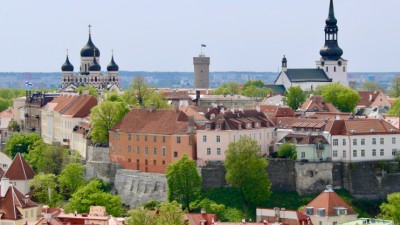
Tallinn
History, sea air, and a quietly progressive city break.