- LGBTQ+ Friendly
- 2 City Guides
- 0 Likes
- Leave a comment
About Ecuador
Overview
Ecuador is one of South America’s most rewarding and compact travel destinations, with an unusual mix of high Andes, Pacific coast, Amazon rainforest, and the famous Galápagos Islands.
For LGBTQ+ travelers, it offers the appeal of a country where dramatic scenery, colonial cities, Indigenous cultures, and wildlife experiences can all fit into a single itinerary.
The mainland’s geography is especially diverse for its size, and the country’s best-known gateways—Quito and Guayaquil—make it relatively easy to combine urban culture with nature-based travel.
The country lies in northwestern South America, bordered by Colombia to the north, Peru to the east and south, and the Pacific Ocean to the west.
Its territory also includes the Galápagos Province, far out in the Pacific Ocean about 1,000 kilometers west of the mainland.
That remote archipelago is one of Ecuador’s biggest draws and a major reason many travelers come at all.
The capital, Quito, is widely used as the starting point for Andes and highland trips, while Guayaquil is the country’s largest city and an important hub for onward travel to the coast and elsewhere.
What makes Ecuador distinctive
Ecuador stands out for packing so much geographic variety into a relatively small area.
In practical terms, that means a traveler can move from cool mountain air to tropical lowlands, from historic urban neighborhoods to wildlife-rich islands, without crossing an enormous distance.
This makes the country especially appealing for visitors who want a varied itinerary without spending every day in transit.
The contrast between the mainland and the Galápagos is one of the most striking features of any trip here: the mainland is rooted in Andean, coastal, and Amazonian cultures, while the islands are best known for their extraordinary wildlife and protected natural landscapes.
For travelers interested in culture as much as scenery, Ecuador is also distinctive for its layered heritage.
Colonial-era architecture, Indigenous traditions, Catholic festivals, and contemporary urban life all coexist in the same journey.
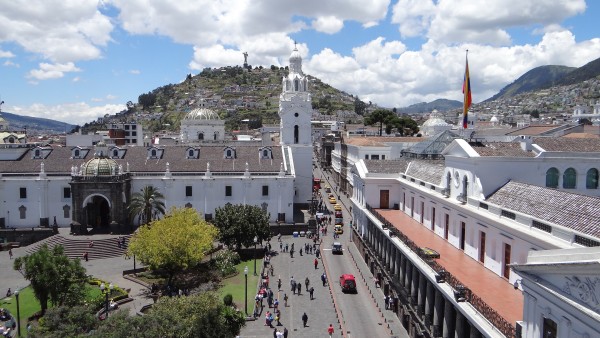
Quito, in particular, is often valued for its historic atmosphere and mountain setting, while the larger cities and market towns provide a sense of everyday Ecuadorian life.
Food is another part of the appeal: the national cuisine varies sharply by region, reflecting the coast, highlands, and rainforest, so eating well is part of the travel experience rather than a side note.
Major travel appeal
Most visitors are drawn to Ecuador for nature, wildlife, and scenery, but the country is also attractive for its sense of scale and accessibility.
Many of the top experiences are concentrated around a few key destinations, which can make planning straightforward.
Travelers can build a trip around Quito and the Andes, a coastal escape, an Amazon extension, or a once-in-a-lifetime Galápagos journey.
Because these regions are so different from one another, even a shorter visit can feel surprisingly rich and varied.
The Galápagos Islands are the signature destination, especially for travelers looking for exceptional wildlife viewing and a strong conservation focus.
On the mainland, Quito’s historic core and high-altitude setting offer a strong cultural introduction, while Guayaquil provides a warmer, more urban counterpoint.
The Andes add landscapes of volcanoes and mountain valleys, and the coastal and Amazon regions broaden the trip further.
This range is part of Ecuador’s enduring appeal: it works as both a destination in its own right and as a country that can serve many different kinds of travelers.
Food and everyday culture
Ecuadorian food is regional and grounded in local ingredients, with meals shaped by altitude, climate, and access to the sea or rainforest.
Along the coast, seafood is a major feature; in the highlands, potatoes, grains, corn, and hearty soups are more common; in the Amazon, tropical ingredients and river fish appear more often.
This regional diversity is one of the most enjoyable parts of traveling in the country, because dishes can change noticeably from one area to the next.
Beyond food, everyday culture in Ecuador is often experienced through markets, churches, plazas, and family-run businesses.
Many travelers find the country appealing because it feels welcoming without being overly polished: there is a lived-in quality to cities and towns, and local routines remain visible even in popular destinations.
That can make the country feel authentic and grounded, though travelers should still approach social settings with the usual awareness of local norms and privacy, especially outside major urban centers.
Key destinations
Quito is the natural starting point for many trips and one of the country’s most important destinations.
As the capital, it combines administrative importance with historic character and serves as a base for exploring the highlands.
Guayaquil, the largest city, is the country’s main urban center and a practical entry point for coastal travel.
The Galápagos Islands, while physically far from the mainland, are an essential part of the Ecuador travel story and often the highlight for visitors who prioritize wildlife and nature.
Beyond those anchors, Ecuador’s appeal is in the connections between regions.
The Andes offer dramatic mountain scenery and cooler temperatures; the coast provides a different pace and climate; the Amazon gives access to rainforest environments; and the islands add a rare, globally significant natural experience.
Travelers who enjoy variety, wildlife, and the feeling of moving through several distinct worlds in one country are often especially well suited to Ecuador.
For LGBTQ+ travelers
As an LGBTQ+ destination, Ecuador is often most practical when approached with the understanding that experiences can vary between big cities, smaller towns, and rural areas.
Major urban centers and established tourism routes generally offer the most comfortable environment for visitors, while more conservative attitudes may still be present elsewhere.
Travelers who prioritize discretion, especially outside Quito and Guayaquil, are likely to have a smoother experience.
What many LGBTQ+ travelers find most useful about Ecuador is not a specific nightlife scene, but the broader travel payoff: a country with major natural attractions, strong regional identity, and enough cultural depth to reward slow travel.
If you are looking for a destination that combines iconic wildlife, mountain scenery, colonial history, and a food culture shaped by distinct regions, Ecuador offers an unusually full and memorable trip.
LGBTQ+ Overview
LGBTQ+ overview
Ecuador is one of the more legally progressive countries in Latin America for LGBTQ+ travelers. Same-sex sexual activity is legal, and the country has constitutional recognition of same-sex civil unions. Ecuador also has legal gender identity recognition for transgender people, including the ability to change legal gender markers, which is an important practical protection when traveling with identity documents.
For travelers, the legal framework is reassuring, but lived experience can still vary widely by place and setting. Major cities such as Quito and Guayaquil are generally more accustomed to LGBTQ+ visibility than smaller towns, rural areas, or conservative communities. Even where discrimination is not common in day-to-day travel, public affection between same-sex couples may draw unwanted attention in some settings, and trans travelers may encounter inconsistent treatment from officials, service staff, or private businesses depending on how their documents and presentation align.
Legal status and traveler implications
The most important legal point is that LGBTQ+ people are not criminalized in Ecuador. That makes a significant difference for ordinary travel, including hotel stays, nightlife, and public movement. In practice, most travelers will not face legal problems simply for being LGBTQ+ or traveling with a same-sex partner.
That said, legal equality does not automatically translate into full social equality. Anti-discrimination protections exist in Ecuador, but enforcement can be uneven, and harassment can still happen. If you are trans or nonbinary, it is especially useful to travel with documents that are as consistent as possible with your presentation and to expect occasional confusion at airports, hotels, and police checkpoints if paperwork and appearance do not match smoothly.
Social climate
Ecuador’s social climate is mixed rather than uniformly welcoming. In urban centers, LGBTQ+ people are more likely to find supportive spaces and relatively open attitudes, especially in hospitality, arts, and tourist-facing settings. In more traditional communities, however, public openness may be met with discomfort, stares, gossip, or judgment rather than outright hostility. Travelers may notice that acceptance often depends on age, neighborhood, and context.
For couples, discretion can still be a practical choice outside established queer-friendly environments. This is less about a specific legal danger than about reducing friction and avoiding uncomfortable scrutiny. Solo LGBTQ+ travelers generally report that ordinary tourism is manageable, but it is wise to stay alert in unfamiliar neighborhoods, especially at night, and to assess each setting before being visibly affectionate or disclosing personal details.
Common traveler risks
The main risks in Ecuador are social rather than legal. Low-level discrimination, verbal harassment, and occasional service refusal can occur, particularly for trans travelers or for anyone whose gender expression does not fit local expectations. In some cases, travelers may encounter intrusive questions or misgendering rather than explicit hostility. This can be frustrating and, at times, stressful, especially when navigating transport, lodging, or public services.
Nightlife can be more comfortable in established urban venues, but travelers should still use standard urban safety habits: avoid isolated areas late at night, keep an eye on drinks, and arrange transport in advance when possible. As in many destinations, dating-app meetups and unfamiliar social contacts deserve caution, not because LGBTQ+ dating is uniquely dangerous, but because opportunistic crime can affect any traveler.
Support resources and practical preparation
Because this source pack does not identify specific current organizations or venues, the safest general advice is to plan before arrival. Choose accommodation with strong reviews, confirm policies in advance if you are traveling as a same-sex couple, and carry identity documents that match your legal name and gender marker where possible. If you anticipate needing assistance, keep embassy or consular contact details handy, along with your travel insurance information.
If you run into discrimination, documentation can help: note dates, locations, names if available, and any witnesses. For serious incidents involving harassment, assault, theft, or police misconduct, contact local emergency services and your embassy or consulate as appropriate. Travelers who want to explore LGBTQ+-friendly social spaces should rely on current local advice from reputable, up-to-date sources rather than assuming that online listings remain accurate.
Recent trajectory
Ecuador’s overall trajectory has been positive in legal terms. The country has moved beyond criminalization and toward formal recognition of same-sex couples and gender identity rights. That said, social change typically lags behind legal reform, so travelers should expect a country that is significantly safer and more accessible for LGBTQ+ people than many places in the region, but not uniformly free of prejudice.
In practical terms, Ecuador is best approached as a destination where most LGBTQ+ travelers can visit without major legal concern, while still using normal judgment about discretion, neighborhood choice, and identity-document preparation. For many visitors, the experience will be straightforward and uneventful; for others, especially trans travelers or those seeking highly visible public expression, the experience may be more uneven.