- LGBTQ+ Friendly
- 2 City Guides
- 0 Likes
- Leave a comment
About Croatia
Travel overview
Croatia is one of Europe’s most compelling all-round destinations: compact enough to combine sea, cities, islands, and inland landscapes in one trip, but varied enough to feel distinctly different from region to region.
On the Adriatic coast, travelers find clear water, limestone islands, fortified old towns, and a long tradition of sailing and summer tourism.
Inland, Croatia shifts into a different rhythm with capital-city culture in Zagreb, mountain scenery, thermal spas, vineyards, and rural agrotourism.
The result is a country that appeals to travelers who want both easy classic sightseeing and a sense of place.
For many visitors, the major draw is the coastline.
Croatia has over 1,000 islands and islets, and the Adriatic is the backbone of the country’s tourism identity.
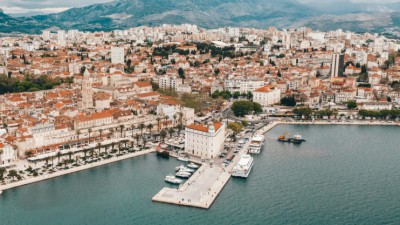
Historic port cities such as Dubrovnik, Split, Zadar, and Šibenik combine waterfront settings with Roman, Venetian, medieval, and Austro-Hungarian layers.
Summer is especially lively, with cultural events, ferries, yacht traffic, and packed beach promenades.
At the same time, Croatia’s coast can still feel practical and approachable: many destinations are walkable, day trips are straightforward, and island-hopping is one of the country’s signature travel experiences.
Landscape, culture, and character
Croatia sits at a crossroads of Central and Southeast Europe, and that layered geography shows up in its culture, architecture, and cuisine.
The coast has a clearly Mediterranean feel, while the interior reflects continental Central European influences.
Travelers will notice this in the built environment, from stone old towns and cathedral squares to café-lined Zagreb streets and rural villages set among vineyards and hills.
Croatia’s identity is closely tied to the sea, but it is not only a beach destination; its appeal also comes from its long historical continuity, its dense network of heritage towns, and the contrast between coast and inland regions.
The country’s cultural tourism is a major strength.
Medieval coastal cities, Roman monuments, and UNESCO-listed heritage sites attract visitors year-round, while summer brings open-air performances, festivals, and a particularly active social atmosphere in coastal towns.
Zagreb, the capital, adds a different kind of urban energy and is often treated as a destination in its own right rather than just a stopover.
Inland Croatia also offers a slower travel style, with opportunities for agrotourism, mountain escapes, and spa stays that can be a useful counterbalance to the busier coast.
What to see and where to go
Dubrovnik is the country’s best-known destination, famous for its intact old city walls, polished historic center, and dramatic setting above the sea.
Split is another essential stop, where the city’s modern life is built around the remains of Diocletian’s Palace.
Zadar and Šibenik are often favored by travelers who want atmospheric coastal cities with strong history but sometimes a less intense pace than Dubrovnik.
Further north, the Istrian peninsula is popular for its hill towns, coastal scenery, and food culture, while the Kvarner area and the island of Krk are useful bases for combining sea and mainland access.
Inland, Zagreb offers museums, cafés, nightlife, and a more year-round city feel than many coastal destinations.
National parks and protected landscapes also form part of Croatia’s travel identity, especially for visitors drawn to hiking, waterfalls, and nature-based itineraries.
Because the country is relatively small and transport links are workable, many travelers build trips that mix a city stay, a coast or island segment, and a short inland detour.
That flexibility is one of Croatia’s biggest advantages.
Food and travel style
Croatian cuisine is regional and shaped by geography.
Along the coast, seafood, olive oil, herbs, pasta, and grilled dishes dominate, reflecting Mediterranean and Adriatic traditions.
Inland food tends to be heartier, with more influence from Central Europe and the Balkans.
Travelers can expect a strong café culture, good local wines in many regions, and a dining scene that ranges from casual konobas to higher-end restaurants in major cities and resort areas.
Food is often a useful window into the country’s regional diversity, especially in Istria and along the Dalmatian coast.
For many LGBTQ travelers, Croatia’s overall travel appeal is that it is a popular, internationally oriented destination with a well-developed tourism infrastructure, especially in coastal hotspots and Zagreb.
Croatia has made significant progress in LGBTQ rights in recent decades, and major urban and tourist centers tend to be the easiest places to travel with confidence.
As in any destination, experiences can vary by location and setting, so travelers may still prefer a more low-key approach outside major cities and resort areas.
The combination of strong sightseeing, beautiful landscapes, and a relatively easy trip structure makes Croatia an appealing choice for travelers who want a classic European holiday with plenty of variety.
Why Croatia stands out
What makes Croatia distinctive is the way it combines a famously beautiful coastline with depth inland, and old-world heritage with a modern tourism industry.
Few countries of its size offer so many islands, such an extensive Adriatic setting, and such a clear contrast between Mediterranean coast and continental interior.
Whether a traveler is looking for island ferries, ancient city walls, café culture, road trips, or quiet rural detours, Croatia delivers a concentrated version of southeastern Europe that feels both accessible and richly textured.
LGBTQ+ Overview
LGBTQ+ Overview
Croatia is one of the more LGBTQ+-friendly destinations in Southeast Europe, with legal protections that are substantially stronger than in many neighboring countries. Same-sex relationships have been legally recognized for years, and Croatia has also moved beyond basic recognition toward broader family protections and anti-discrimination measures. That said, the travel experience can still vary noticeably by setting: large cities and the main coastal and tourist areas are generally much more comfortable than smaller towns or rural inland areas, where public attitudes may be more conservative.
For most travelers, the main practical takeaway is that Croatia is not a high-risk destination, but discretion can still be wise outside the most visibly cosmopolitan areas. Same-sex couples may generally travel without major issues, yet public displays of affection can attract unwanted attention in some places, especially if they are conspicuous. Solo LGBTQ+ travelers and trans travelers are usually unlikely to face official problems, but may encounter awkwardness, stares, or occasional rude behavior rather than direct danger. In busy summer destinations, the sheer volume of international visitors often makes the environment more relaxed.
Legal status
Same-sex relationships are legally recognized in Croatia, and the country has developed a comparatively robust set of protections for LGBTQ+ people by regional standards. Anti-discrimination rules exist, and the legal trajectory over the past two decades has been one of gradual expansion rather than regression. Croatia is also notable in the region for having advanced through the 2010s and 2020s in ways that place it among the more progressive post-socialist countries on LGBTQ+ issues.
Even so, legal equality is not complete. LGBTQ+ travelers should not assume that all family, relationship, or identity-related matters will be treated exactly as they would be in the most protective Western European countries. The legal framework is stronger than the social picture in many parts of the country, which means formal rights can outpace day-to-day acceptance. Travelers who are married, partnered, or traveling with children should be aware that family recognition may still have limits compared with full marriage equality and comprehensive parental recognition regimes elsewhere.
Social climate
Social attitudes in Croatia are mixed. In Zagreb, Split, Rijeka, Dubrovnik, and other major visitor centers, LGBTQ+ travelers are more likely to encounter tolerant, matter-of-fact behavior, especially in hotels, international restaurants, and tourism-focused businesses. Croatia’s long-running tourism industry means staff in many coastal destinations are accustomed to a diverse foreign clientele, which can make day-to-day interactions easier for visitors.
Outside those areas, and especially in smaller inland communities, the social climate can be more conservative. Open displays of affection between same-sex partners may draw looks or remarks, and gender nonconformity can be more visible to others than sexual orientation. This does not mean travelers are likely to face constant hostility, but it does mean that the experience can shift quickly from easygoing to uncomfortable depending on place, crowd, and context. Pride visibility and LGBTQ+ activism exist in the country, but they do not erase the unevenness of public opinion.
Common traveler risks
The most common risks are social rather than legal: unwanted attention, verbal comments, or a sense of being singled out in settings where locals are less accustomed to openly LGBTQ+ people. Nightlife and nightlife-adjacent areas can be more unpredictable, especially late at night or when alcohol is involved. As in many destinations, travelers should also be careful with public affection in contexts where they cannot gauge the mood of the room, such as family-oriented restaurants, small-town bars, or transit hubs.
For trans and gender-diverse travelers, the main challenge is often not formal prohibition but the possibility of misunderstanding, invasive questions, or inconsistent treatment from service staff and strangers. Carrying identity documents that match your presentation can help smooth practical interactions, though travelers should be prepared for occasional scrutiny regardless. If you need medical care or replacement documents, use reputable providers and keep emergency contacts accessible.
General travel safety still matters. Croatia is a popular tourist destination, so petty theft and scams can be more relevant than targeted anti-LGBTQ+ crime in many places. Keep valuables secure, especially in crowded tourist zones, transport hubs, and beach areas. If you are meeting people through apps or social channels, use the same caution you would anywhere else: arrange first meetings in public places, tell someone where you are going, and trust your instincts if a situation feels off.
Support resources and practical help
Croatia has an established civil society presence around LGBTQ+ rights, but travelers should not assume that support services are evenly distributed outside the main cities. If you need help, the safest approach is usually to contact mainstream emergency services, your embassy or consulate if relevant, or a well-known local LGBTQ+ organization based in a major city. Because support availability can change, it is best to verify current contacts before travel rather than relying on outdated listings.
In practice, most visitors will find the easiest support in Zagreb and, to a lesser extent, other major urban or tourist centers. Hotels and international chains are generally more likely to be accustomed to LGBTQ+ guests and may be better equipped to handle problems discreetly. If you need healthcare, use standard medical channels and do not hesitate to ask for an interpreter if needed. Travelers who want a lower-friction trip should book accommodation in larger cities or established resort areas, where anonymity and international norms tend to provide an extra layer of comfort.
Recent trajectory
Croatia’s trajectory has been positive overall. The country has moved toward broader recognition and protection for LGBTQ+ people over the past two decades, with especially notable progress in the 2010s and 2020s. That progress has helped make Croatia one of the more advanced LGBTQ+ destinations in the ex-socialist and broader Yugosphere context. The trend is encouraging for travelers because it suggests a stable direction of travel rather than backsliding.
At the same time, legal progress has not fully translated into uniform social acceptance. Croatia is best understood as a destination where the law is relatively protective but the lived experience still depends heavily on geography and context. For most LGBTQ+ travelers, that means the country is very workable, especially if you focus on the capital and the coastal tourist corridor, but it remains wise to travel with moderate awareness rather than assuming a fully friction-free environment.