- LGBTQ+ Neutral
- 3 City Guides
- 0 Likes
- Leave a comment
About Bolivia
Travel overview
Bolivia is one of South America’s most distinctive destinations: landlocked, high-altitude, and culturally layered, with landscapes that shift dramatically from the Andes to the Amazonian lowlands.
For travelers, that means a country where a single itinerary can include salt flats, colonial cities, Indigenous markets, flamingo-dotted deserts, cloud forests, tropical lowlands, and the immense blue of Lake Titicaca.
It is a place that rewards curiosity and flexibility, especially for visitors who are drawn to authentic local culture and dramatic geography rather than polished mass tourism.
Much of Bolivia’s appeal comes from its sense of scale and contrast.
In the west, the Andean highlands and the Altiplano create an austere, high-elevation world of wide skies, volcanoes, and thin air; in the east, the climate becomes warmer and more tropical, with Amazonian plains and rainforest in the lowlands.
This variety makes the country feel especially vivid and varied, even on a relatively compact South American map.
Bolivia is also known for its strong Indigenous presence and traditions, which are visible in daily life, regional dress, languages, foodways, festivals, and market culture.
For many travelers, that cultural depth is as compelling as the scenery.
What makes Bolivia distinctive
Bolivia stands out for its combination of Indigenous heritage and big, uncompromising landscapes.
It is one of the most multiethnic countries in South America, and many travelers notice that this identity is not confined to museums or ceremonial events; it shapes public life, street markets, regional cuisines, and local customs.
In cities such as La Paz, Sucre, and Cochabamba, you can experience everything from historic colonial architecture to contemporary urban life, while in smaller towns and rural areas the country’s Indigenous traditions remain especially visible.
That cultural continuity is part of what makes Bolivia feel different from many nearby destinations.
The country is also a major draw for adventure and nature travel.
The Uyuni salt flats are among the best-known landscapes in South America, and the surrounding southwestern highlands offer otherworldly desert scenery.
Lake Titicaca, shared with Peru, is a classic stop for travelers interested in high-altitude lake views and local island communities.
In the eastern lowlands, the Amazon basin and the Gran Chaco expand the experience far beyond the Andes, giving Bolivia a breadth of ecosystems that is unusual for a single country.
Because many of these places are at high altitude or in remote regions, travel can be slower and more physically demanding than in some neighboring countries, but that is often part of the appeal.
Culture, food, and everyday travel feel
Bolivian culture is often experienced most vividly through markets, street life, and regional food.
Travelers will find a cuisine shaped by altitude and geography: hearty Andean dishes in the highlands, freshwater fish near lake regions, and more tropical ingredients in the east.
Meals often feel practical, filling, and locally rooted.
Market culture is especially important in Bolivia, both for day-to-day shopping and for understanding how people in different regions live and eat.
For many visitors, wandering a market, trying a local snack, and watching the pace of daily life can be as memorable as visiting a major sight.
Language and customs can vary by region, and many travelers appreciate the way Bolivia preserves local identity across departments and communities.
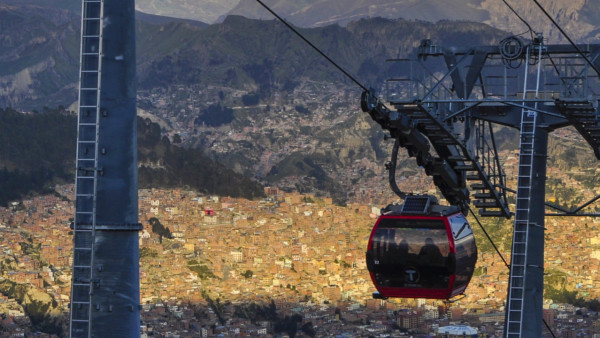
The country’s historic centers, especially in places like Sucre and Potosí, add another layer through colonial-era architecture and mining history, while La Paz offers a more chaotic, steeply dramatic capital experience set in a deep valley beneath the Altiplano.
These contrasts are part of the country’s charm: Bolivia is rarely flat, predictable, or easy in a conventional sense, but it is often deeply rewarding for travelers who enjoy places with character.
Key destinations
La Paz is an essential stop for many visitors, both as a capital city and as a launch point for excursions into the surrounding highlands.
Its setting alone makes it one of South America’s most striking urban destinations.
Sucre, the constitutional capital, is valued for its historic atmosphere and more relaxed pace, while Potosí is important for its mining history and colonial legacy.
Cochabamba offers a different urban experience, often associated with food and a milder climate than the high-altitude west.
Outside the cities, Bolivia’s signature destinations are often landscape-driven.
Uyuni and the surrounding salt-flat region are among the country’s most famous draws, especially for overland tours that include lagoons, geysers, and remote desert scenery.
Lake Titicaca and its Bolivian shoreline are another classic experience, appealing to travelers interested in water views, island communities, and Andean culture.
In the lowlands, Santa Cruz serves as a major gateway to the east, while national parks and wildlife areas in the Amazonian regions show a very different side of the country from the Andes.
Depending on route and season, travelers may combine mountain, lake, desert, and rainforest environments in one trip.
How Bolivia appeals to travelers
Bolivia tends to appeal most to travelers who value scenery, culture, and a sense of discovery over convenience.
It can be adventurous, with long travel times, high altitudes, and infrastructure that may feel less straightforward than in more heavily touristed countries.
But for the same reasons, it can feel more rewarding and less standardized.
The best trips here often mix iconic landmarks with slower, more local experiences: a market morning, a colonial street, a long bus ride into the altiplano, a meal shaped by regional ingredients, or a sunset over a salt flat.
The result is a travel experience that feels grounded and memorable rather than overly curated.
For LGBTQ+ travelers, Bolivia’s broader travel appeal matters because many visitors come for the country’s nature, culture, and history rather than a dedicated queer tourism scene.
That means planning is often centered on the same basics as for any traveler: choosing reliable transport, understanding local customs, and being prepared for altitude and distance.
Bolivia’s legal framework for LGBTQ+ rights has advanced in the 21st century, including constitutional anti-discrimination protections and legal recognition of same-sex civil unions, but social attitudes can still vary widely by place.
In practice, many travelers find larger cities and established tourist routes more familiar and easier to navigate than remote areas, where local conservatism may be stronger.
For more context on the legal landscape, see LGBTQ rights in Bolivia.
Overall, Bolivia is a country for travelers who want a destination with strong identity and dramatic contrasts.
Its highland cities, Indigenous traditions, salt flats, lakes, and lowland wilderness give it a range that is unusual and compelling.
If you are looking for a trip that combines unforgettable landscapes with a living, deeply rooted culture, Bolivia is one of the most distinctive choices in South America.
LGBTQ+ Overview
LGBTQ+ overview
Bolivia is a country where the legal picture for LGBTQ+ travelers is better than its reputation might suggest, but day-to-day experience can still be uneven. Same-sex sexual activity is legal, same-sex civil unions are recognized, and the constitution prohibits discrimination on the basis of sexual orientation and gender identity. Bolivia also adopted a gender identity law in 2016 that is widely regarded as one of the more progressive measures in the region for trans people.
That said, legal protections do not always translate into easy public acceptance. Bolivia remains a socially conservative country in many settings, and LGBTQ+ travelers may encounter discomfort, staring, gossip, or more direct hostility depending on location, context, and presentation. Experiences are often more relaxed in larger cities and in more international or tourist-oriented environments, while smaller towns and rural areas may be less openly accepting. Travelers who are visibly gender nonconforming or traveling as same-sex couples should plan for the possibility of unwanted attention, especially in conservative settings.
Legal status and practical implications
From a legal standpoint, Bolivia is relatively favorable compared with many countries in the region. The main practical concern is not criminalization but uneven implementation. Anti-discrimination protections are on the books, yet enforcement can be inconsistent, and travelers should not assume that police, landlords, employers, or service providers will always understand or respect these rights. If you experience harassment or discrimination, outcomes may depend heavily on the locality and the official you encounter.
For trans travelers, the 2016 gender identity law is an important positive development, but changing documents and having them recognized in practice can still be complicated. As with many countries, mismatches between appearance and identification can create friction during hotel check-ins, transport checks, or encounters with authorities. Carrying clear identification and being prepared for additional questions can reduce stress.
Social climate and traveler experience
Bolivia’s social climate is best described as mixed. There is a meaningful legal framework in place, and the country has made visible progress over the last two decades, but conservative cultural attitudes remain common. Public displays of affection between same-sex partners may draw attention in some settings. Many travelers report that discretion can make day-to-day movement smoother, particularly outside major cities. In urban centers, attitudes are often more varied and can be more tolerant, but acceptance is not uniform.
As a visitor, the main risk is usually not targeted anti-LGBTQ+ violence so much as everyday vulnerability: unwanted scrutiny, verbal harassment, or difficulties if you seek help in a situation where an official or service provider is unsympathetic. Standard travel caution applies, but LGBTQ+ travelers should be especially mindful when using night transport, visiting unfamiliar neighborhoods, or entering settings where alcohol and crowd behavior may increase the chance of harassment.
Common risks and sensible precautions
Common traveler risks are likely to be situational rather than systematic. Hotels or guesthouses may vary in how comfortable they are with same-sex couples, and trans travelers may face document-related complications. Public transport, nightlife, and isolated areas can present more risk than daytime travel in central districts. If you are concerned about privacy, consider booking accommodations with international-style check-in processes and choosing places with clear, professional management.
It is also wise to avoid assuming that local staff will be trained in LGBTQ+ sensitivity. If a problem arises, a calm, low-profile approach is often more effective than confrontation. Keep copies of important documents, know the address of your accommodation in Spanish, and have a backup plan for getting back to where you are staying. If you are traveling with a partner, you may want to gauge the atmosphere before being openly affectionate.
Support resources and where to get help
Bolivia has a number of legal protections, but travelers should not rely on finding specialized LGBTQ+ support services on the ground in every city. In practice, the most reliable help for urgent issues is likely to come from your embassy or consulate, your travel insurer, and your accommodation if it is professionally run. In larger cities, some civil society organizations and human rights advocates may be familiar with LGBTQ+ issues, but their availability and traveler-facing support can vary, so it is better not to assume immediate assistance will be easy to find.
If you need support, start with the safest and most practical options available: hotel management, your embassy or consulate, and local emergency services if there is an immediate safety threat. For non-urgent legal or rights-related questions, consult current human rights resources before traveling or during your stay, as local availability and responsiveness can change. Because this is a country where protections exist on paper but social attitudes remain mixed, planning ahead is especially valuable.
Recent trajectory
The overall trajectory in Bolivia has been positive over the 21st century. The country has moved from a more limited legal environment toward broader recognition and formal protections, including the constitutional anti-discrimination ban and the gender identity law. For travelers, that means Bolivia is not a destination where LGBTQ+ identity itself is criminalized or broadly barred by law. The remaining challenge is social consistency: progress has been real, but acceptance is still uneven and practical safety depends a lot on where you are and how visible you are.
In short, Bolivia is a destination where LGBTQ+ travelers can visit with reasonable confidence, but not complacency. Expect a mixed experience: legally protected in important ways, socially variable in practice, and safest when approached with the same discretion and situational awareness you would use in many more conservative parts of Latin America.